
.png)
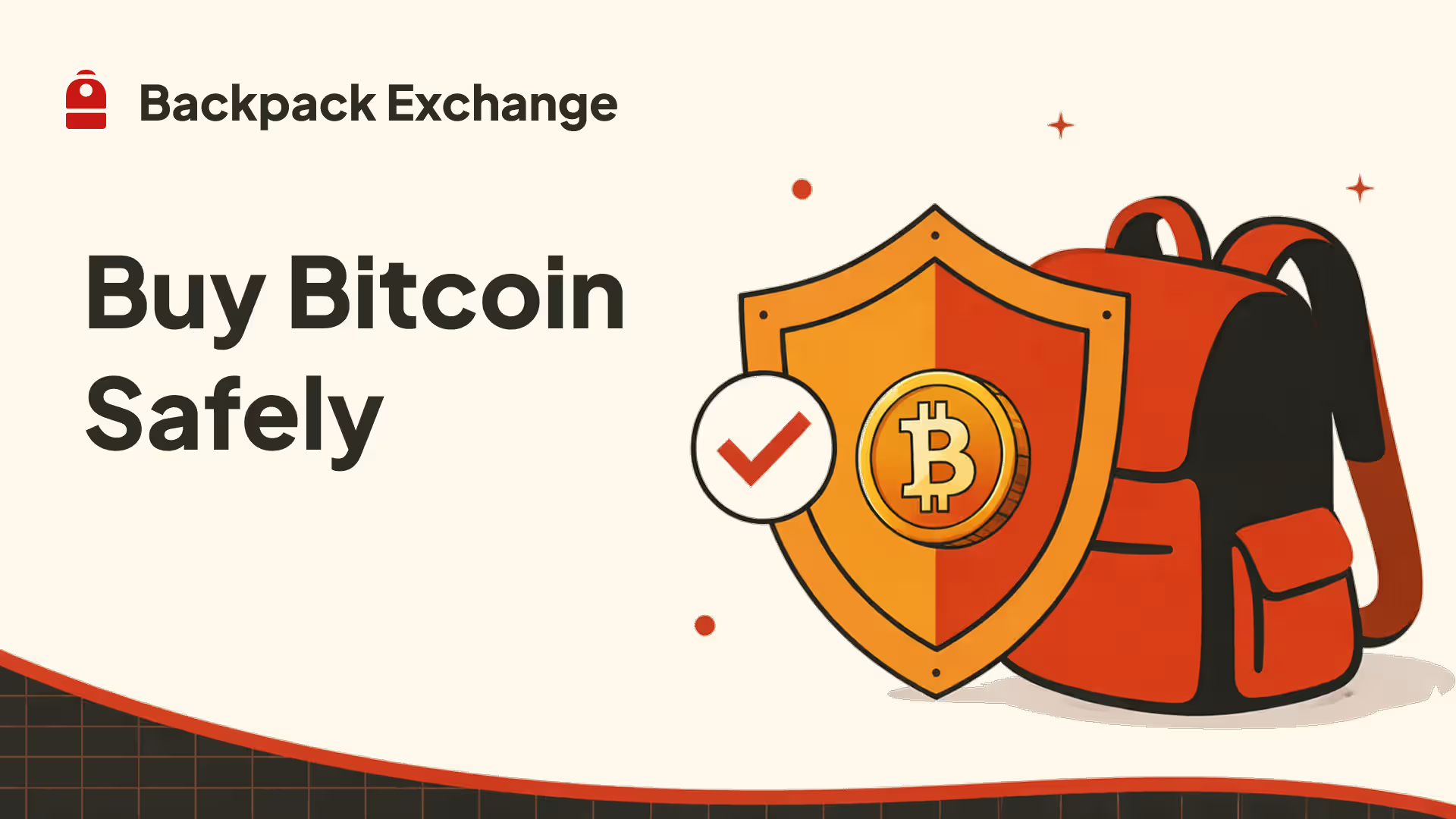
How to Buy Bitcoin Safely: A Step-by-Step Guide for 2026
Key Takeaways
- The safest way to buy Bitcoin is through a regulated exchange with cold storage, proof of reserves, and two-factor authentication.
- Always verify that an exchange holds a valid regulatory license before depositing funds.
- Set up 2FA with an authenticator app (not SMS) before making your first trade.
- Consider dollar-cost averaging instead of buying all at once, especially during volatile markets.
- After purchasing, decide whether to hold on the exchange or withdraw to a self-custody wallet based on your security preferences.
Why Safety Matters When Buying Bitcoin
Bitcoin transactions are irreversible. Once you send BTC to the wrong address or lose access to your account, there's no bank to call and no chargeback to file. This makes choosing where and how you buy Bitcoin one of the most important decisions you'll make.
The crypto industry has a history of exchange failures. FTX collapsed in November 2022, wiping out billions in customer funds. Mt. Gox was hacked in 2014, losing 850,000 Bitcoin. Smaller exchanges have exit-scammed or been breached without warning.
None of this means buying Bitcoin is inherently unsafe. It means you need to pick the right platform and set up proper security from the start.
How to Choose a Safe Exchange
Not all exchanges are equal. Here's what to look for before trusting one with your money.
Regulatory license. A regulated exchange is accountable to a government body. This doesn't eliminate all risk, but it means the exchange has passed compliance checks, follows anti-money laundering rules, and is subject to ongoing oversight. Look for licenses from established regulators, Dubai's VARA, the EU's MiFID II framework, or U.S. state-level money transmitter licenses.
Proof of reserves. After FTX, proof of reserves became a baseline expectation. This means the exchange can publicly verify that customer deposits are fully backed 1:1. Third-party audits by firms like Hacken or Armanino add credibility.
Cold storage. The majority of customer funds should be stored offline in cold wallets, disconnected from the internet. This protects against hacks. Hot wallets (connected to the internet) should only hold enough for daily withdrawal requests.
Security features. At minimum, an exchange should offer two-factor authentication (2FA), withdrawal whitelisting, and email confirmations for withdrawals.
Track record. Has the exchange been hacked before? How long has it been operating? Does the founding team have verifiable identities and backgrounds?
Backpack Exchange checks these boxes. It holds a VARA license from Dubai's Virtual Assets Regulatory Authority and operates under a MiFID II license through its acquisition of FTX EU (Trek Labs Europe Ltd.), regulated by CySEC. Backpack maintains full proof of reserves audited by Hacken, stores the majority of funds in cold storage, and has had zero security breaches since its 2022 launch. The platform also runs an active bug bounty program with rewards up to $100,000 for critical vulnerabilities.
Step-by-Step: Buying Bitcoin Safely on Backpack Exchange
Step 1: Create your account. Go to backpack.exchange and sign up with your email. Choose a strong, unique password that you don't use anywhere else.
Step 2: Enable two-factor authentication. Before depositing any funds, set up 2FA using an authenticator app like Google Authenticator or Authy. Avoid SMS-based 2FA, which is vulnerable to SIM-swapping attacks.
Step 3: Complete KYC verification. Upload a valid government ID and complete the identity verification process. This is required by regulation and protects both you and the platform. Backpack has over 500,000 fully KYC-verified users.
Step 4: Deposit funds. You can deposit crypto (USDT, USDC, SOL, ETH, or BTC) from another wallet. Backpack supports deposits across multiple chains including Solana and Ethereum. Always double-check the deposit address and network before sending.
Step 5: Buy Bitcoin. Navigate to the BTC trading pair (e.g., BTC/USD). You can place a market order to buy at the current price, or a limit order to set a specific price you want to pay. Trading fees start at 0.02% for makers and 0.05% for takers.
Step 6: Secure your Bitcoin. After buying, you have two options. You can keep your BTC on Backpack Exchange, which offers institutional-grade security. Or you can withdraw to a self-custody wallet like the Backpack Wallet, which gives you full control over your private keys.
Common Mistakes to Avoid
Buying on unregulated platforms. Cheap fees don't matter if the exchange disappears with your money. Stick to regulated platforms with proof of reserves.
Skipping 2FA. This is the single easiest step to protect your account, and many people skip it. Set it up before your first deposit.
Sharing your seed phrase or private keys. No legitimate exchange, wallet, or support team will ever ask for your seed phrase. Anyone who does is trying to steal your funds.
Falling for fake giveaways. "Send 0.1 BTC and get 1 BTC back" is always a scam. No exceptions.
Using public Wi-Fi for trading. Public networks can be monitored. Use a VPN or your mobile data when accessing your exchange account.
Sending to the wrong network. If you're depositing Bitcoin, make sure you're using the correct Bitcoin network. Sending BTC to an Ethereum address or vice versa can result in permanent loss of funds.
Should You Self-Custody or Keep Bitcoin on an Exchange?
Both options have tradeoffs.
Exchange custody is convenient. You can trade quickly, access your funds from any device, and rely on the platform's security infrastructure. The risk is that you're trusting a third party.
Self-custody means you hold your own private keys, no one else can access or freeze your funds. But you're responsible for keeping your seed phrase safe. Lose it, and you lose access permanently.
A practical approach is to keep trading funds on a trusted exchange and move long-term holdings to a self-custody wallet. The Backpack Wallet supports Solana, Ethereum, and Bitcoin, with features like hardware wallet integration and NFT collection locking for additional security.
Learn more about Backpack
Exchange | Wallet | Twitter | Discord
Disclaimer: This content is presented to you on an “as is” basis for general information and educational purposes only, without representation or warranty of any kind. It should not be construed as financial, legal or other professional advice, nor is it intended to recommend the purchase of any specific product or service. You should seek your own advice from appropriate professional advisors. Where the article is contributed by a third party contributor, please note that those views expressed belong to the third party contributor, and do not necessarily reflect those of Backpack. Please read our full disclaimer for further details. Digital asset prices can be volatile. The value of your investment may go down or up and you may not get back the amount invested. You are solely responsible for your investment decisions and Backpack is not liable for any losses you may incur. This material should not be construed as financial, legal or other professional advice.