Gold vs Bitcoin: Which Is the Better Store of Value?
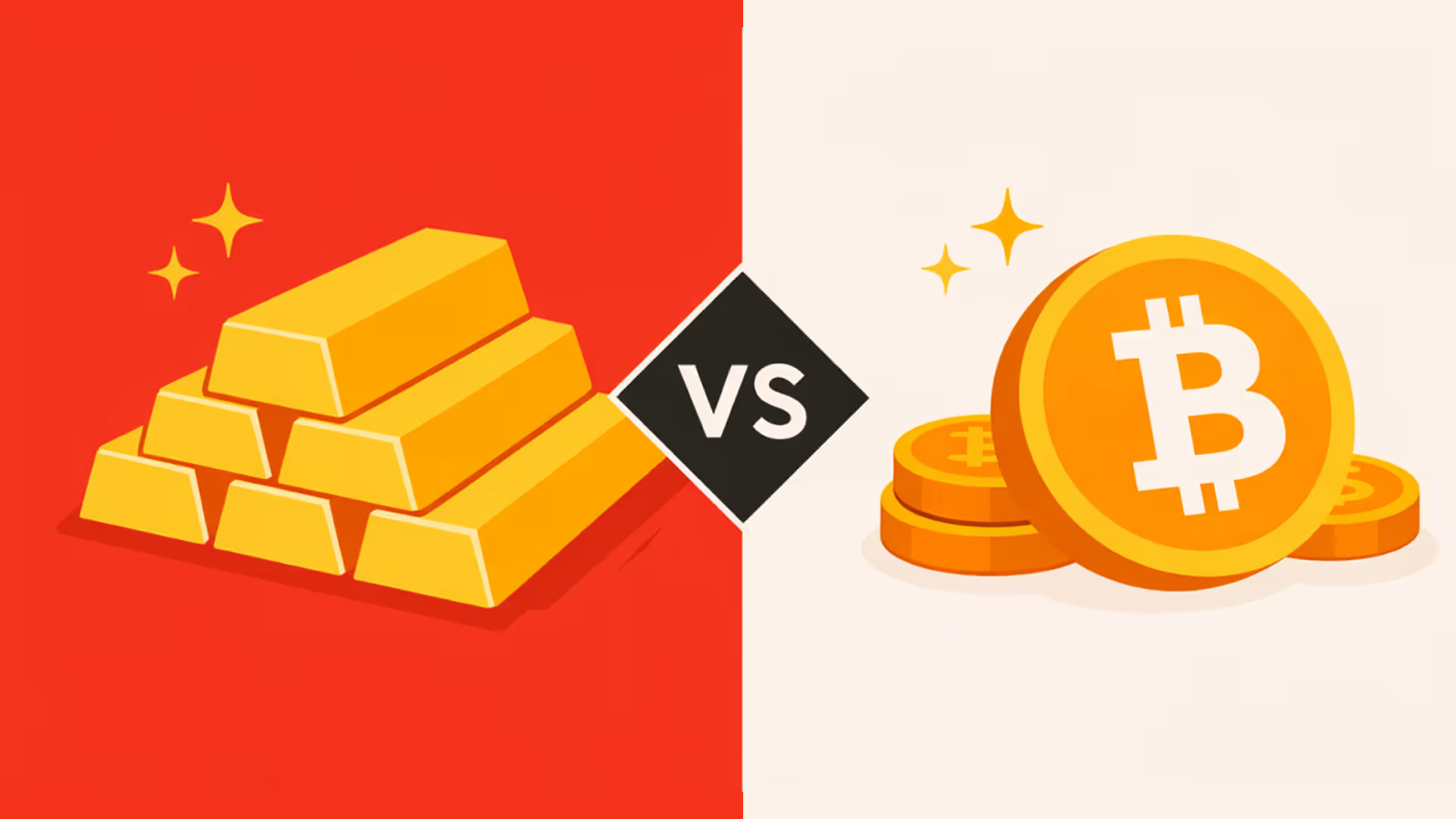
Gold and Bitcoin are often compared as stores of value during times of economic uncertainty. Both are seen as hedges against inflation, currency devaluation, and financial instability, but they behave very differently.
Gold has preserved wealth for thousands of years and remains a core reserve asset for central banks.
Bitcoin, by contrast, is a digital asset introduced in 2009, designed to operate outside traditional financial systems with a fixed supply and decentralized control.
This article explores the key differences between gold and Bitcoin, their roles in modern portfolios, risks to consider, and which type of investor each asset may be best suited for.
What Is Gold?
Gold is a physical precious metal that has been used as money, jewelry, and a store of value throughout human history.
Key characteristics of gold:
- Tangible, physical asset
- Limited supply, but new gold can still be mined
- Widely held by central banks as a reserve asset
- Traditionally performs well during economic crises
- Relatively low volatility compared to stocks and cryptocurrencies
Because of its long track record and global acceptance, gold is often viewed as a “safe haven” asset.
What Is Bitcoin?
Bitcoin is a decentralized digital currency that operates on a blockchain network without reliance on governments or central banks.
Key characteristics of Bitcoin:
- Fully digital and borderless
- Fixed supply of 21 million coins
- Secured by cryptography and decentralized consensus
- Highly portable and divisible
- More volatile than traditional assets
Bitcoin is frequently referred to as “digital gold” due to its scarcity and independence from fiat monetary systems, though it is still much younger and riskier.
Gold vs Bitcoin: Key Differences
This comparison highlights why gold and Bitcoin serve similar purposes but behave very differently in practice.
Performance During Inflation and Economic Uncertainty
Gold has historically performed well during periods of high inflation, geopolitical instability, and financial crises. Investors often turn to gold when trust in fiat currencies weakens.
Bitcoin’s performance is more complex. In the short term, it often behaves like a risk asset, reacting to market sentiment and liquidity conditions. Over longer periods, however, Bitcoin has shown strong performance during phases of monetary expansion and declining trust in traditional financial systems.
As a result, gold is often seen as a defensive hedge, while Bitcoin is viewed as a higher-risk, higher-upside alternative.
Risks to Consider
Risks of Gold
Storage and insurance costs
Limited upside compared to growth assets
Historical risk of government confiscation or restrictions
Risks of Bitcoin
High price volatility
Regulatory uncertainty in some regions
Requires responsible self-custody to avoid loss or theft
Understanding these risks is essential before allocating capital to either asset.
Gold vs Bitcoin for Long-Term Investors
Gold tends to appeal to conservative investors focused on capital preservation, stability, and wealth protection.
Bitcoin, on the other hand, attracts investors willing to tolerate volatility in exchange for potential long-term growth and exposure to a new financial paradigm.
Time horizon plays a crucial role: short-term price swings matter far less to long-term holders of either asset.
Can Gold and Bitcoin Coexist in a Portfolio?
Gold and Bitcoin are not mutually exclusive. Many modern portfolios include both assets to balance risk and return.
Gold can provide stability and downside protection, while Bitcoin can add asymmetric upside and diversification from traditional financial systems.
For many investors, a small allocation to Bitcoin alongside a core gold position offers a balanced approach.
Final Verdict: Gold or Bitcoin?
There is no single winner in the gold vs Bitcoin debate.
Gold remains a proven, stable store of value with centuries of trust.
Bitcoin represents a newer, digital alternative with higher risk but significant long-term potential.
The better choice depends on individual risk tolerance, investment horizon, and belief in the future of digital assets. For some, holding both may be the most resilient strategy.
Learn more about Backpack
Exchange | Wallet | Twitter | Discord | Reddit
Disclaimer: This content is presented to you on an “as is” basis for general information and educational purposes only, without representation or warranty of any kind. It should not be construed as financial, legal or other professional advice, nor is it intended to recommend the purchase of any specific product or service. You should seek your own advice from appropriate professional advisors. Where the article is contributed by a third party contributor, please note that those views expressed belong to the third party contributor, and do not necessarily reflect those of Backpack. Please read our full disclaimer for further details. Digital asset prices can be volatile. The value of your investment may go down or up and you may not get back the amount invested. You are solely responsible for your investment decisions and Backpack is not liable for any losses you may incur. This material should not be construed as financial, legal or other professional advice.