Introduction
The idea of a store of value is one of the most important concepts in finance. It describes any asset that can reliably preserve purchasing power over long periods of time. In traditional markets, gold, government bonds, and certain commodities have often been used as stores of value. In the crypto ecosystem, Bitcoin has increasingly been discussed in this context.
As crypto matures, more investors and institutions are exploring whether digital assets can serve as a store of value, how to evaluate them, and how to manage them safely using platforms such as Backpack.
What Is a Store of Value
A store of value is an asset that maintains its value without rapid depreciation. Economists widely agree that a strong store of value should meet the following criteria:
- Scarcity: Supply is limited or predictable
- Durability: The asset does not degrade over time
- Portability: It can be moved or transferred easily
- Divisibility: It can be broken into smaller units for transactions
- Liquidity: It can be easily bought or sold
Traditional examples include precious metals, fiat currencies of stable economies, and real estate.
Store of Value in Crypto
Digital assets have emerged as a new class of potential stores of value, largely driven by demand for assets that are global, verifiable, and not controlled by any single government. Blockchain technology improves transparency and auditability, which helps investors evaluate supply, transactions, and ownership at any time.
In the crypto ecosystem, users often evaluate assets based on scarcity, decentralization, security, and long term adoption trends. These factors determine whether an asset can act as a store of value crypto option.
Why Bitcoin Is Often Considered a Store of Value
Bitcoin’s supply is capped at 21 million coins, a design feature that creates digital scarcity similar to precious metals. In 2024 and early 2025, institutional participation increased following regulatory clarity in several major markets. This has strengthened the narrative of store of value Bitcoin among long term investors.
Factors supporting Bitcoin as a store of value
- Fixed supply: Hard cap enforced by code
- Widespread adoption: Bitcoin accounts for more than half of total crypto market capitalization according to 2025 data from Coin Metrics
- Security: Large decentralized network with extensive mining infrastructure
- Global liquidity: Traded across most major exchanges and financial markets
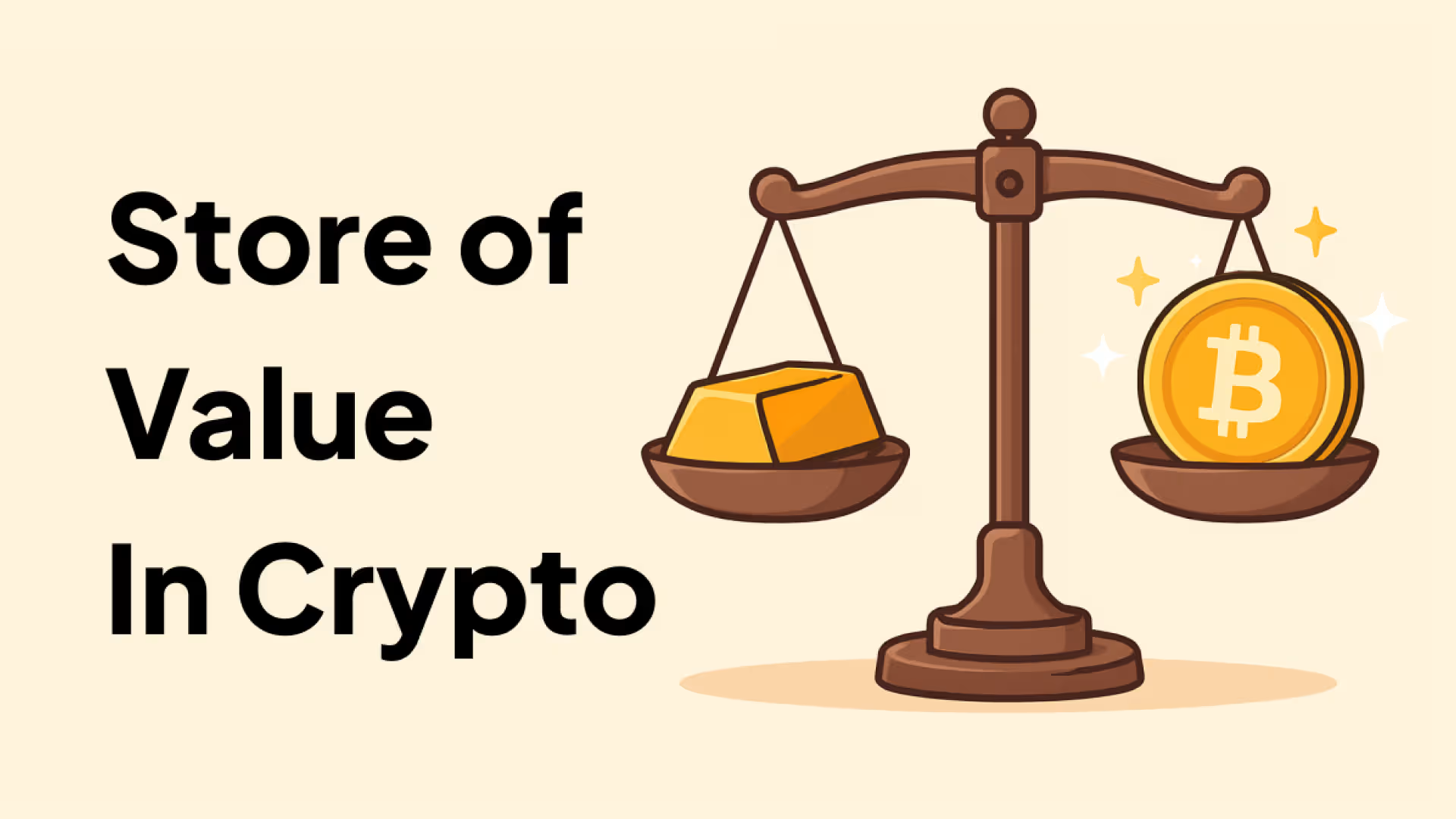
Bitcoin is increasingly compared to gold as a digital alternative due to its portability, verifiability, and ease of storage.
Comparing Traditional and Crypto Stores of Value
Crypto assets offer strong technological advantages, but also come with higher short term volatility.
Store of Value: How Users Can Evaluate Assets
Crypto investors should evaluate potential store of value crypto assets using measurable on chain and economic indicators.
Key factors to analyze
- Supply schedule: Is it fixed or inflationary
- Network security: Size of validator set or mining hash rate
- Adoption metrics: Wallet activity, transaction count, developer activity
- Liquidity: Availability across exchanges, volume consistency
- Regulatory standing: Clearer frameworks often reduce long term risk
Users can track these indicators using blockchain explorers and reputable data providers.
Conclusion
The concept of a store of value is central to both traditional finance and the evolving world of digital assets. Bitcoin leads discussions in the crypto sector due to its scarcity, security, and global adoption. As more regulatory clarity and institutional interest develop through 2025, the role of crypto assets as long term stores of value is becoming more widely recognized.
Backpack users can benefit by understanding the economic principles behind stores of value, evaluating crypto assets using transparent data, and securing holdings through reliable tools provided by Backpack Exchange and Backpack Wallet.
Learn more about Backpack
Exchange | Wallet | Twitter | Discord | Reddit
Disclaimer: This content is presented to you on an “as is” basis for general information and educational purposes only, without representation or warranty of any kind. It should not be construed as financial, legal or other professional advice, nor is it intended to recommend the purchase of any specific product or service. You should seek your own advice from appropriate professional advisors. Where the article is contributed by a third party contributor, please note that those views expressed belong to the third party contributor, and do not necessarily reflect those of Backpack. Please read our full disclaimer for further details. Digital asset prices can be volatile. The value of your investment may go down or up and you may not get back the amount invested. You are solely responsible for your investment decisions and Backpack is not liable for any losses you may incur. This material should not be construed as financial, legal or other professional advice.