
This article is for informational purposes only and is not financial advice.
Why AI Tokens Matter in 2026 to 2030
AI tokens are becoming essential infrastructure for decentralized intelligence. They support the economic, computational and coordination layers required for AI systems to operate at scale in transparent and permissionless environments.
1. Infrastructure for Compute and Model Training
AI tokens help coordinate:
- decentralized GPU and compute networks
- distributed model training
- on-chain inference and verifiable computation
2. Intelligence Layer for Agents and Automation
As AI becomes more autonomous, tokens enable:
- machine-to-machine payments
- coordination among autonomous agents
- programmable incentives for AI behavior
3. Economic Systems for Data and Participation
These tokens support:
- tokenized data markets
- rewards for valuable data contributions
- governance around AI models and datasets
Long-Term Relevance Beyond 2025
Demand for compute and high-quality data will continue to expand through 2030. AI tokens offer a permissionless alternative to centralized AI infrastructure, positioning them as a major component of the next technology cycle.
Together, these elements explain why AI tokens are expected to remain central to the AI and crypto ecosystem.
Top AI Tokens for 2026 to 2030
This list focuses on AI crypto projects with proven adoption, strong technology and meaningful ecosystem development.
Bittensor (TAO)
Category: Decentralized AI training and incentive network
Bittensor is a decentralized machine learning network that rewards participants for contributing models, data or compute. Performance scoring determines how TAO is distributed, encouraging continuous improvement of the system.
Why TAO Matters
- Open and permissionless AI training
- Incentives that encourage model specialization
- Growing participation from compute providers and researchers
- Potential for a community-driven AI ecosystem
Outlook
As AI moves toward open-source development, Bittensor’s decentralized structure positions it as a core network for AI training.
Render Network (RNDR)
Category: Decentralized GPU compute
Render Network originally provided distributed GPU rendering for graphics but expanded into AI inference workloads. It offers competitive compute pricing and attracts users across both creative and AI industries.
Why RNDR Matters
- Scalable GPU supply for AI workloads
- Lower cost alternative to centralized cloud infrastructure
- Increasing real-world adoption
Outlook
Demand for decentralized inference is accelerating. Render is well positioned as a major provider of GPU compute for AI systems.
Fetch.ai (FET)
Category: Autonomous AI agents
Fetch.ai develops autonomous agents capable of performing tasks across digital environments. These agents can transact, negotiate and coordinate activities without direct human input.
Why FET Matters
- Supports automation in finance, mobility and logistics
- Integrates machine-to-machine transactions
- Strong early lead in agent-based ecosystems
Outlook
Autonomous agents are expected to become mainstream by 2030. Fetch.ai is one of the most established networks in this category.
SingularityNET (AGIX)
Category: Marketplace for AI services
SingularityNET enables developers to publish AI services that others can access through an open marketplace. Pricing is set on-chain, allowing global distribution of AI capabilities.
Why AGIX Matters
- Provides modular access to AI services
- Supports composability across models
- Established ecosystem and strong developer base
Outlook
As AI evolves toward smaller, modular services, decentralized marketplaces like AGIX will play a larger distribution role.

The Graph (GRT)
Category: Data indexing for Web3
While not traditionally categorized as an AI token, The Graph is crucial for AI systems that rely on structured blockchain data. AI agents and models require accurate, indexed on-chain information.
Why GRT Matters
- Core infrastructure for AI-driven applications
- Provides machine-readable data across blockchain ecosystems
- Benefits from broader AI adoption
Outlook
As AI tools become more integrated with Web3, demand for high-quality data indexing will increase.

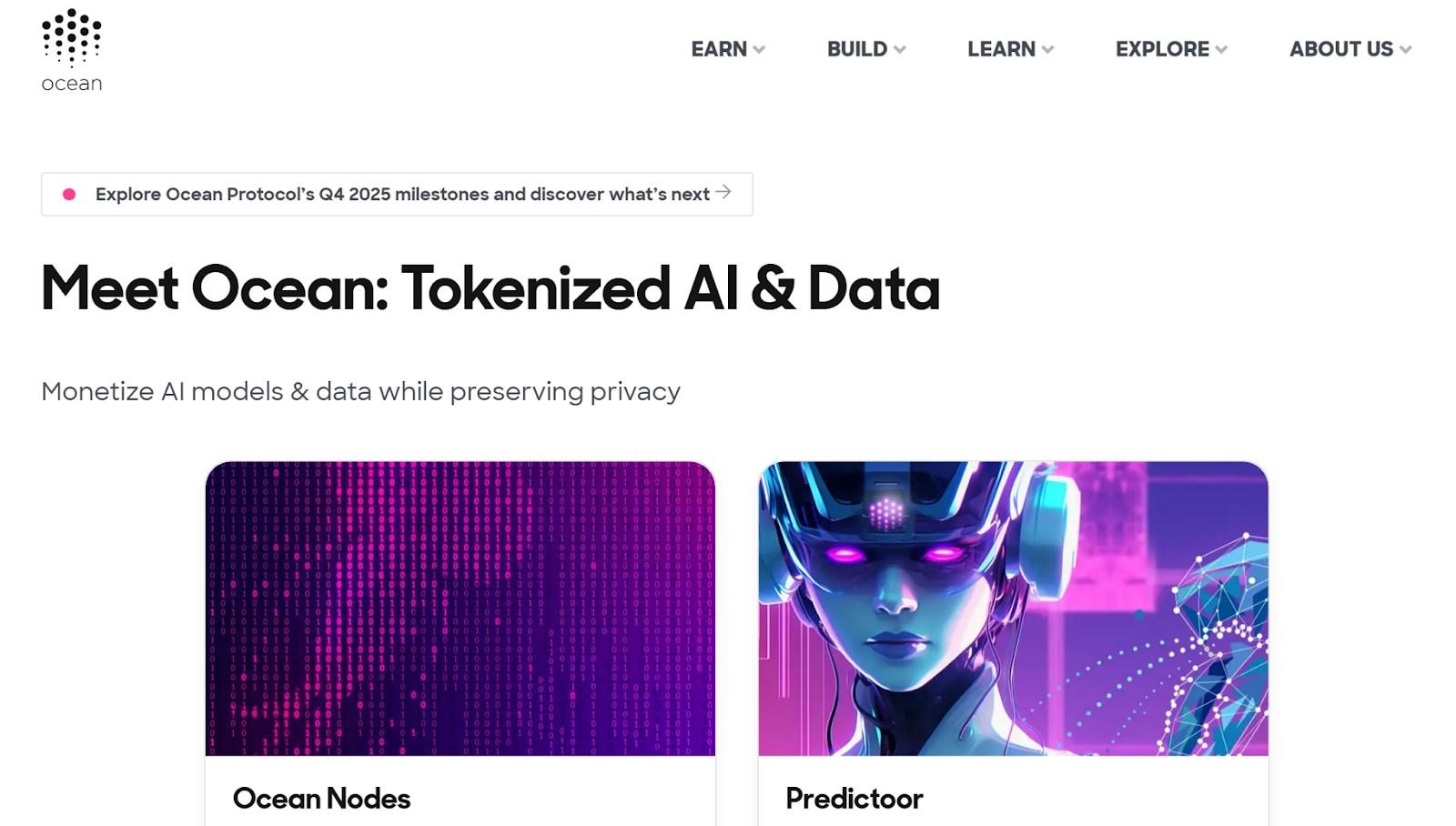
Ocean Protocol (OCEAN)
Category: Tokenized data markets
Ocean Protocol enables organizations and individuals to share, monetize and control access to datasets. High-quality training data is essential for AI development.
Why OCEAN Matters
- Supports data monetization without losing ownership
- Enables privacy-preserving data markets
- Provides access to specialized datasets
Outlook
As data becomes the primary driver of model performance, Ocean’s infrastructure will continue to grow in importance.
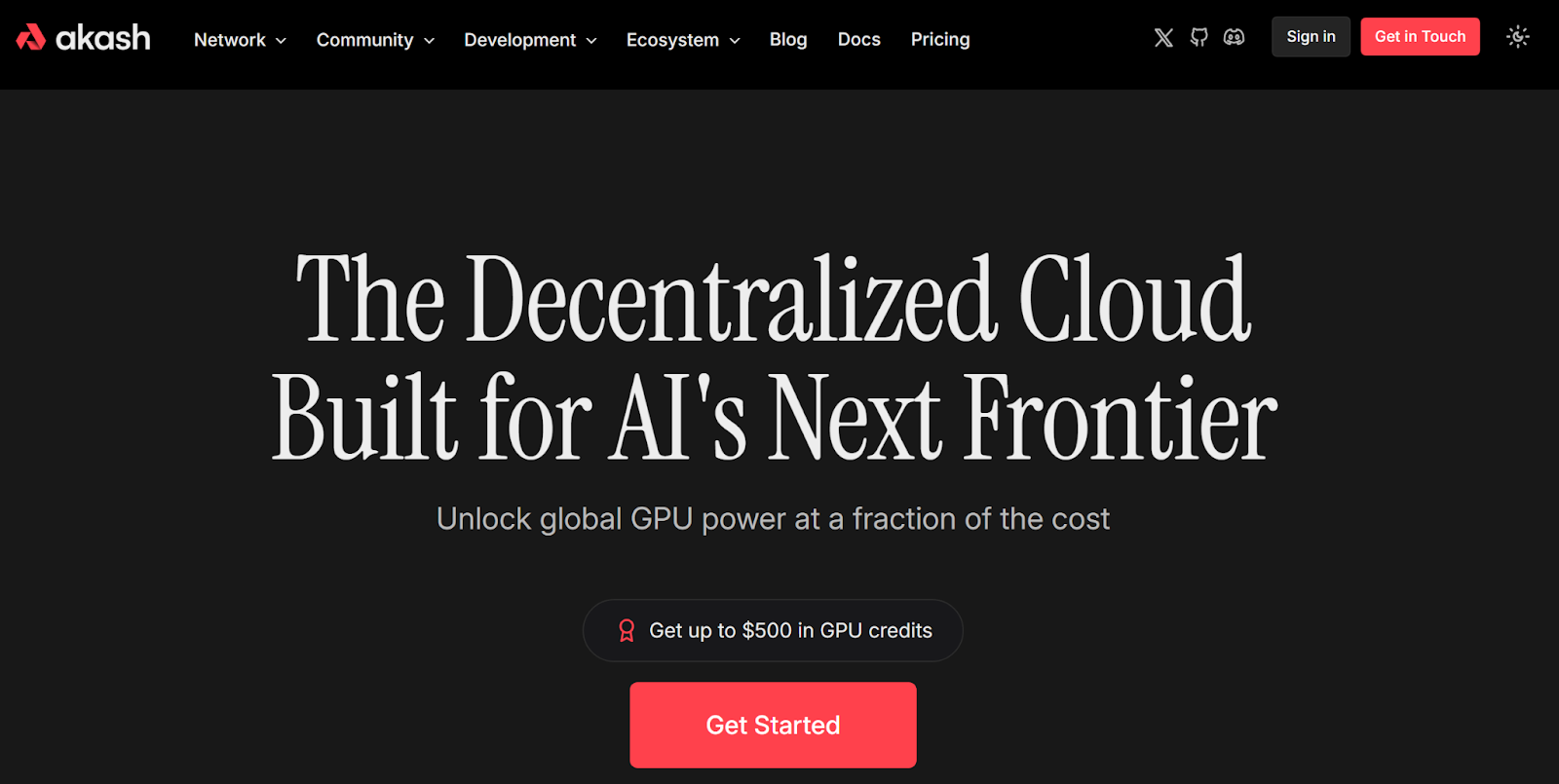
Akash Network (AKT)
Category: Decentralized cloud infrastructure
Akash offers decentralized cloud services with support for GPU-based workloads. It provides a flexible, cost-efficient alternative to centralized cloud providers.
Why AKT Matters
- Accessible compute for training and inference
- Competitive pricing
- Permissionless deployment
Outlook
With global GPU demand outpacing supply, decentralized cloud networks like Akash are positioned for significant expansion.
Emerging AI Tokens to Watch (2026 to 2030)
Beyond the leading AI crypto projects, several emerging categories are gaining traction. These early-stage ecosystems are still developing but focus on solving critical challenges in AI infrastructure, trust, interoperability and data quality.
AI Verification and Security Layers
Protocols that develop tools for verifying AI outputs, proving model integrity and preventing tampering. These systems are important for transparency in high-stakes AI applications.
Decentralized Inference Networks
Networks that provide on-demand model inference through distributed nodes. They support pay-per-use access and cryptographic verification of results.
Agent Tooling and Coordination Frameworks
Projects building communication standards, execution layers and incentive systems for autonomous AI agents operating across decentralized applications.
AI-Optimized Blockchains
New blockchains designed specifically for AI workloads, offering higher throughput, parallel computation and AI-focused virtual machines.
Data Integrity and Synthetic Data Protocols
Protocols focused on improving data quality through provenance verification, dataset scoring and markets for domain-specific or synthetic data.
These categories represent some of the strongest long-term opportunities in the AI and crypto convergence.
Key Trends Driving AI Tokens Toward 2030
Several structural trends will shape how AI tokens evolve over the next decade.
Growing Compute Demand
AI workloads continue to expand faster than centralized GPU supply. Decentralized compute networks are becoming viable alternatives.
Adoption of Autonomous Agents
AI agents will handle more operational and transactional tasks, increasing demand for networks that support coordination and agent payments.
Expansion of the Data Economy
High-quality training data is becoming one of the most valuable resources in AI development. Data-focused protocols will benefit from this shift.
Rising Need for AI Governance
As AI influences more decisions, projects with transparent and community-driven governance models will gain relevance.
Advances in Verifiable AI
New cryptographic methods are enabling the verification of AI outputs on-chain, which will support more trustworthy decentralized AI systems.
How to Evaluate AI Tokens for Long-Term Potential
Assessing AI tokens requires a focus on fundamentals rather than short-term narratives.
Real Adoption and Usage: Look for evidence of developers, compute contributors or data providers actively using the network.
Clear Token Utility: Tokens should play essential roles such as paying for compute, accessing datasets, coordinating agents or supporting governance.
Strong Technical Foundation: Evaluate the network’s ability to deliver meaningful technical advantages including verifiable computation, scalable data systems or agent frameworks.
Sustainable Economic Design: Review token supply, emissions, incentives and fee mechanisms to ensure long-term sustainability.
Active and Open Ecosystem: Open-source development, community participation and accessible tooling are important indicators of project resilience.
Risks to Consider
AI tokens operate in fast-moving environments and carry several risks that must be considered.
Rapid Technological Change: Newer and more efficient technologies can quickly outpace existing projects.
Competitive Pressure: Multiple AI networks are developing similar solutions. Only a few will maintain long-term adoption.
Regulatory Uncertainty: AI and digital assets face evolving regulatory frameworks that could impact operations and token utility.
Market Volatility: AI tokens often experience significant price swings driven by market narratives and technological milestones.
Dependence on External Infrastructure: Projects may rely on third-party compute providers, data sources or developer communities, creating operational dependencies.
Conclusion
From 2026 to 2030, AI tokens are expected to evolve from a speculative narrative into a critical layer of the digital economy. Whether through decentralized compute networks, data markets, autonomous agents or distributed model training, these tokens form the foundation of decentralized intelligence.
The projects highlighted in this guide, including Bittensor, Render, Fetch.ai, SingularityNET, The Graph, Ocean Protocol and Akash, demonstrate strong technological bases and clear roles within the growing AI ecosystem. As the convergence of AI and blockchain accelerates, these networks are positioned to play leading roles in the next decade of innovation.
Learn more about Backpack
Exchange | Wallet | Twitter | Discord | Reddit
Disclaimer: This content is presented to you on an “as is” basis for general information and educational purposes only, without representation or warranty of any kind. It should not be construed as financial, legal or other professional advice, nor is it intended to recommend the purchase of any specific product or service. You should seek your own advice from appropriate professional advisors. Where the article is contributed by a third party contributor, please note that those views expressed belong to the third party contributor, and do not necessarily reflect those of Backpack. Please read our full disclaimer for further details. Digital asset prices can be volatile. The value of your investment may go down or up and you may not get back the amount invested. You are solely responsible for your investment decisions and Backpack is not liable for any losses you may incur. This material should not be construed as financial, legal or other professional advice.
.avif)