Every time you send cryptocurrency, trade a token or interact with a smart contract on a blockchain you pay a small fee for transaction processing. This fee is known as a gas fee. If you’ve ever been surprised by a high Ethereum cost or wondered about the near-free Solana transactions gas fees explain it. These fees differ from traditional gasoline prices.
This guide explains what gas fees are, why they exist, how they differ across blockchains, and how to keep them low.
Key Takeaways
- Gas fees are the costs paid to blockchain validators or miners to process and confirm your transaction.
- They exist because blockchain networks have limited capacity — fees prioritise which transactions get processed first.
- Gas fees fluctuate based on network demand. The busier the network, the higher the fees.
- Ethereum gas fees are paid in ETH and can range from cents to hundreds of dollars depending on congestion.
- Solana gas fees are consistently near zero — typically fractions of a cent per transaction.
- Trading on a centralised exchange like Backpack Exchange means you never pay on-chain gas fees for trades executed within the platform.
What Are Gas Fees?
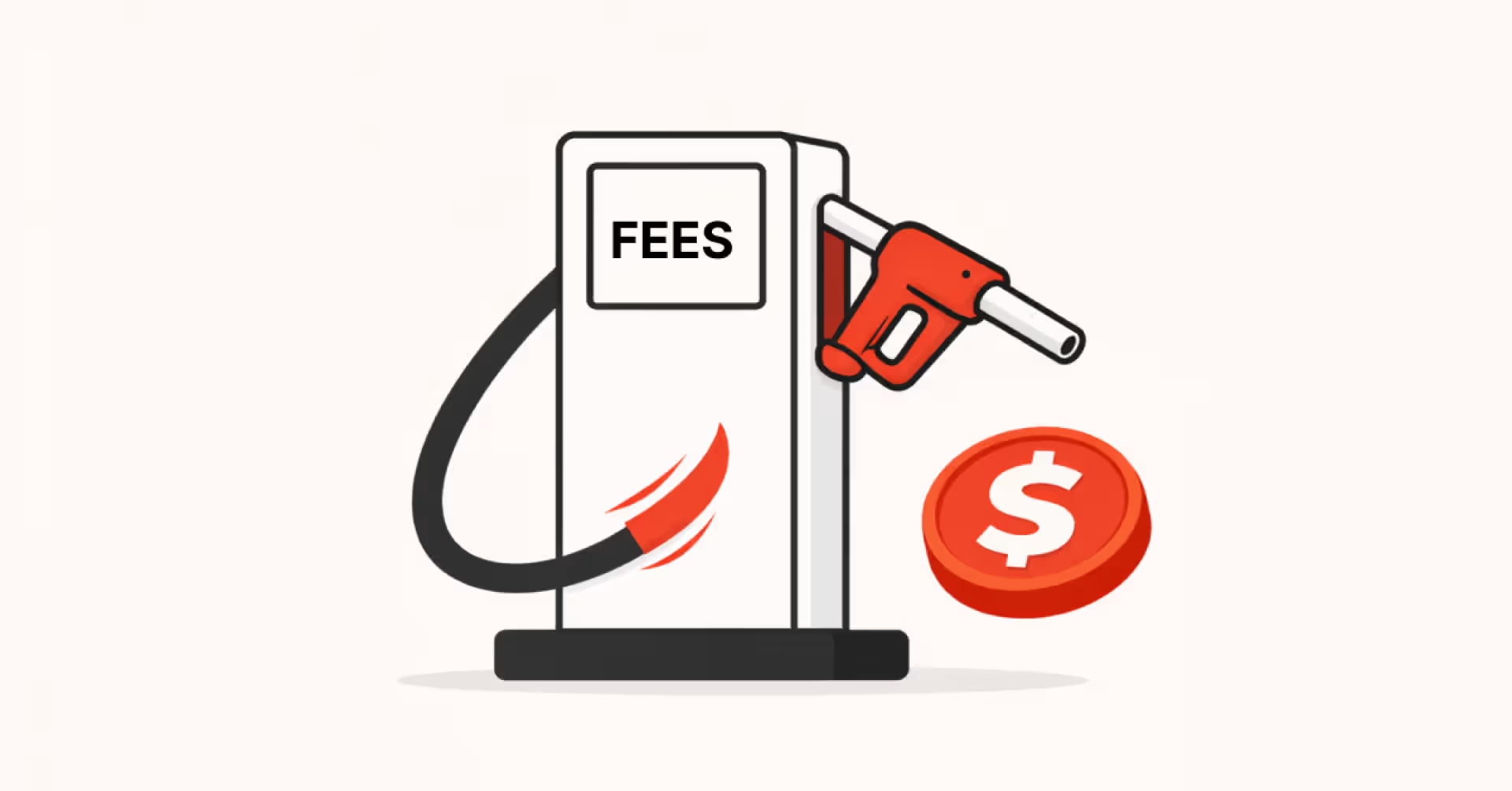
Gas fees are the charges you pay to a blockchain network in exchange for processing your transaction. Think of them as the network's service charge — the price of getting your action included in the next block.
The term "gas" comes from Ethereum, where it was used as a metaphor: just as a car needs fuel to run, a blockchain transaction needs gas to execute. Gas measures the computational effort required to perform an operation on the network.
Simple transactions like sending ETH from one wallet to another require less gas. Complex operations like deploying a smart contract or executing a multi-step DeFi trade require more gas because they involve more computation.
Why Do Gas Fees Exist?
Gas fees solve two problems: compensation and congestion.
Compensation: Validators and miners spend real resources — electricity, hardware, and time — to process transactions and secure the network. Gas fees compensate them for this work, making it economically rational to participate in maintaining the blockchain.
Congestion management: Every blockchain has a limited throughput — it can only process a certain number of transactions per second. When demand exceeds capacity, users bid up gas fees to get their transactions prioritised. Higher fees signal higher urgency to validators, who include higher-paying transactions first.
Without gas fees, anyone could spam a blockchain with thousands of worthless transactions at no cost, overwhelming the network. Fees create an economic barrier against this kind of attack.
How Gas Fees Are Calculated
On Ethereum, gas fees are calculated as:
Gas Fee = Gas Units Used × Gas Price per Unit
Gas units measure the computational complexity of your transaction. A standard ETH transfer uses 21,000 gas units. A complex DeFi interaction might use 200,000 or more.
Gas price is denominated in Gwei (one billionth of an ETH). When the Ethereum network is congested, the base fee rises automatically and users can add a priority tip to get processed faster.
Gas Fees Across Different Blockchains
Ethereum
Ethereum has the most developed DeFi and smart contract ecosystem, but also the highest gas fees during periods of congestion. Fees can reach tens or even hundreds of dollars during peak network usage.
Solana
Solana gas fees are typically fractions of a cent — around $0.00025 per transaction. This makes Solana practical for frequent trading and micro-transactions. Backpack Exchange is built on Solana-native infrastructure, meaning withdrawals settle in seconds at minimal cost.
Ethereum Layer 2s
Layer 2 networks like Arbitrum, Optimism, and Base process transactions off the main Ethereum chain and batch them for settlement, reducing fees to $0.01–1.00 per transaction.
Bitcoin
Bitcoin transaction fees fluctuate based on mempool congestion — from a few cents during quiet periods to tens of dollars during high demand.
Learn more about Backpack
Exchange | Wallet | Twitter | Discord | Reddit
Disclaimer: This content is presented to you on an “as is” basis for general information and educational purposes only, without representation or warranty of any kind. It should not be construed as financial, legal or other professional advice, nor is it intended to recommend the purchase of any specific product or service. You should seek your own advice from appropriate professional advisors. Where the article is contributed by a third party contributor, please note that those views expressed belong to the third party contributor, and do not necessarily reflect those of Backpack. Please read our full disclaimer for further details. Digital asset prices can be volatile. The value of your investment may go down or up and you may not get back the amount invested. You are solely responsible for your investment decisions and Backpack is not liable for any losses you may incur. This material should not be construed as financial, legal or other professional advice.