
Key Takeaways
- Kintsu is a liquid staking protocol on Monad that allows users to stake MON and receive sMON in return.
- sMON represents a user’s share of Kintsu’s pooled MON stake and can later be redeemed for MON.
- The underlying MON is delegated across validators through Kintsu’s onchain validator registry.
- sMON remains transferable and can be used in supported DeFi applications while the underlying MON continues to earn staking rewards.
- Users can stake MON through a Monad-compatible wallet, such as Backpack Wallet, by connecting to the official Kintsu app.
- Kintsu also operates a Points program linked to participation in its ecosystem and describes Points as a path to KSU.
Liquid staking allows users to earn staking rewards without fully giving up access to their assets. Instead of locking MON and waiting to unstake, users receive a liquid token that can be transferred or used in supported DeFi applications.
Kintsu is a liquid staking protocol on Monad. Users can stake MON and receive sMON, which represents their share of the pooled stake and accumulated rewards.
This article explains how Kintsu works, what sMON is, and the main benefits and risks to consider.
What Is Kintsu?
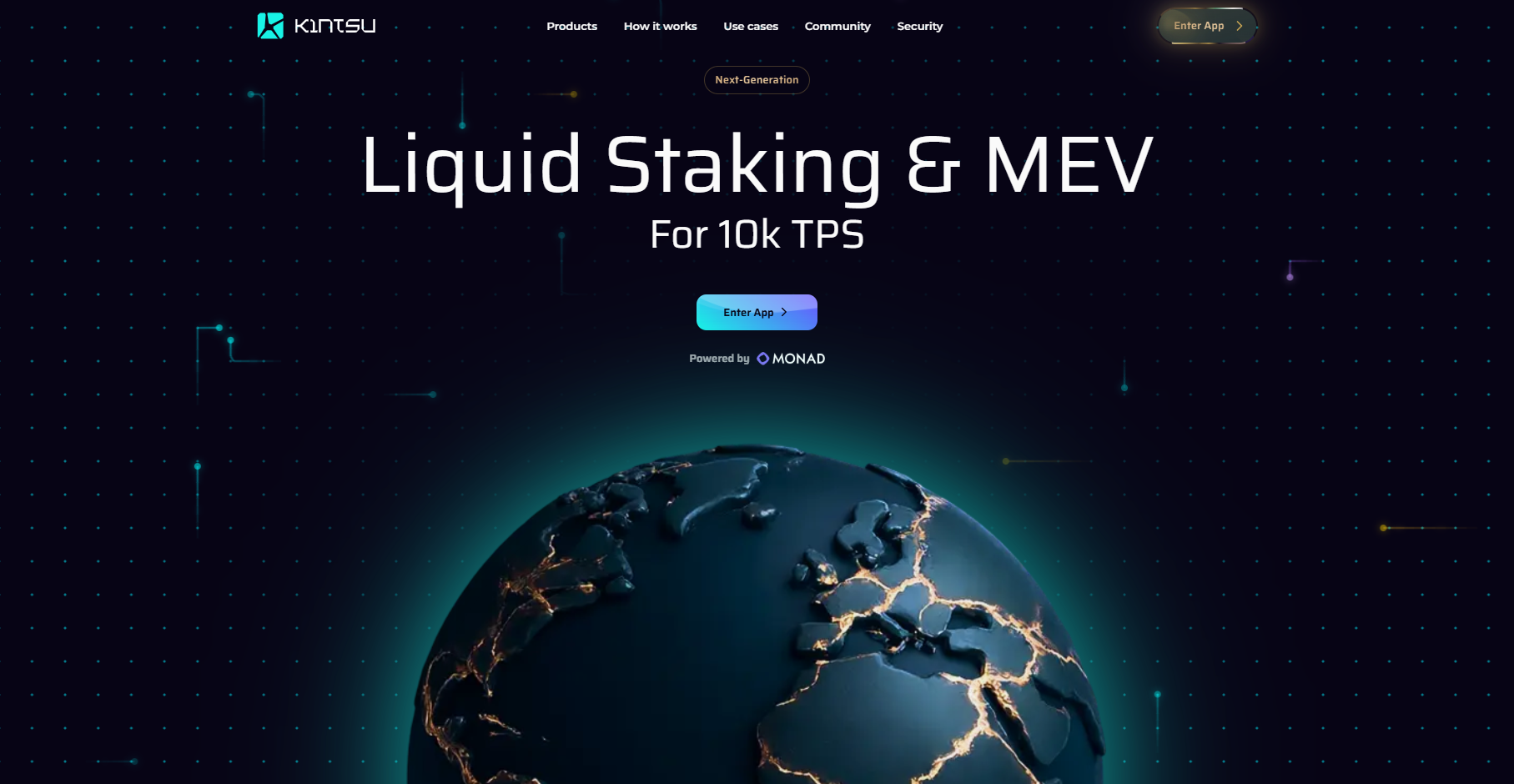
Kintsu is a liquid staking protocol built for Proof-of-Stake blockchains, including Monad. It allows users to stake MON while receiving sMON, a liquid staking token that represents their share of the protocol's staked MON pool.
Instead of requiring users to choose and delegate to individual validators, Kintsu pools deposited MON and delegates it across participating validators. In return, users receive sMON, which can later be redeemed for MON based on the protocol's current redemption ratio.
Because sMON is transferable, it can also be used in supported DeFi applications while the underlying MON continues to earn staking rewards.
Key Features of Kintsu
Liquid Staking
Users can stake MON through Kintsu and receive sMON in return. sMON represents their share of the protocol’s pooled stake and can later be redeemed for MON.
DeFi Utility
Unlike directly staked MON, sMON remains transferable and can be used in supported DeFi applications. Kintsu highlights potential uses across trading, liquidity pools, lending, futures, and other onchain activities.
DAO-Managed Validator Registry
Kintsu delegates pooled MN across validators through an onchain registry. Validator allocation weights are designed to be controlled by the Kintsu DAO, while validators compete for stake delegation based on the registry’s governance process.
How to Stake MON With Kintsu
Staking MON with Kintsu only takes a few steps.
1. Set Up a Monad-Compatible Wallet
Before staking, you'll need a wallet that supports Monad Mainnet, such as Backpack Wallet. Make sure your wallet is connected to the correct network and contains enough MON for both staking and transaction fees.
2. Connect to the Kintsu App
Visit the official Kintsu website and connect your wallet. Always verify that you're using the official domain before approving any wallet connection or transaction.
3. Stake Your MON
Enter the amount of MON you want to stake and review the transaction details before confirming. Once the transaction is complete, you'll receive sMON, which represents your share of the protocol's pooled stake.
4. Monitor Your Position
You can view your staked position through the Kintsu app. If you later decide to exit your position, you can redeem your sMON for MON through Kintsu's unstaking process, subject to the protocol's applicable redemption process and waiting period.
Kintsu Points and KSU
Kintsu operates a Points program that rewards participation in its Monad ecosystem. Users can earn Points by staking MON, providing liquidity, and referring other users. Their accumulated Points and leaderboard position can be viewed through the official Kintsu Points page.
KSU is the Kintsu token intended to govern validator delegation and the development of the Kintsu DAO. Kintsu describes Points as a path to KSU, through which participants may gain influence over validator inclusion and delegation weights.
Kintsu has not publicly confirmed a KSU token generation date, a fixed conversion rate between Points and KSU, or a final token allocation. Users should therefore rely on official Kintsu announcements rather than assuming that Points guarantee a specific token allocation.
Conclusion
Kintsu is a liquid staking protocol on Monad that allows users to stake MON while maintaining access to a liquid staking token, sMON. By combining staking with additional flexibility for supported DeFi applications, it offers an alternative to traditional staking for users who want to keep their assets productive.
Before participating, users should understand how liquid staking works, how to stake and unstake MON, and the role of Kintsu Points and KSU within the ecosystem. As with any DeFi protocol, it's also important to review the latest documentation and announcements before depositing funds.
To get started, users can set up Backpack Wallet, add Monad Mainnet, and connect to the official Kintsu app.
Learn more about Backpack
Exchange | Wallet | Twitter | Discord | Reddit
Disclaimer: This content is presented to you on an “as is” basis for general information and educational purposes only, without representation or warranty of any kind. It should not be construed as financial, legal or other professional advice, nor is it intended to recommend the purchase of any specific product or service. You should seek your own advice from appropriate professional advisors. Where the article is contributed by a third party contributor, please note that those views expressed belong to the third party contributor, and do not necessarily reflect those of Backpack. Please read our full disclaimer for further details. Digital asset prices can be volatile. The value of your investment may go down or up and you may not get back the amount invested. You are solely responsible for your investment decisions and Backpack is not liable for any losses you may incur. This material should not be construed as financial, legal or other professional advice.