
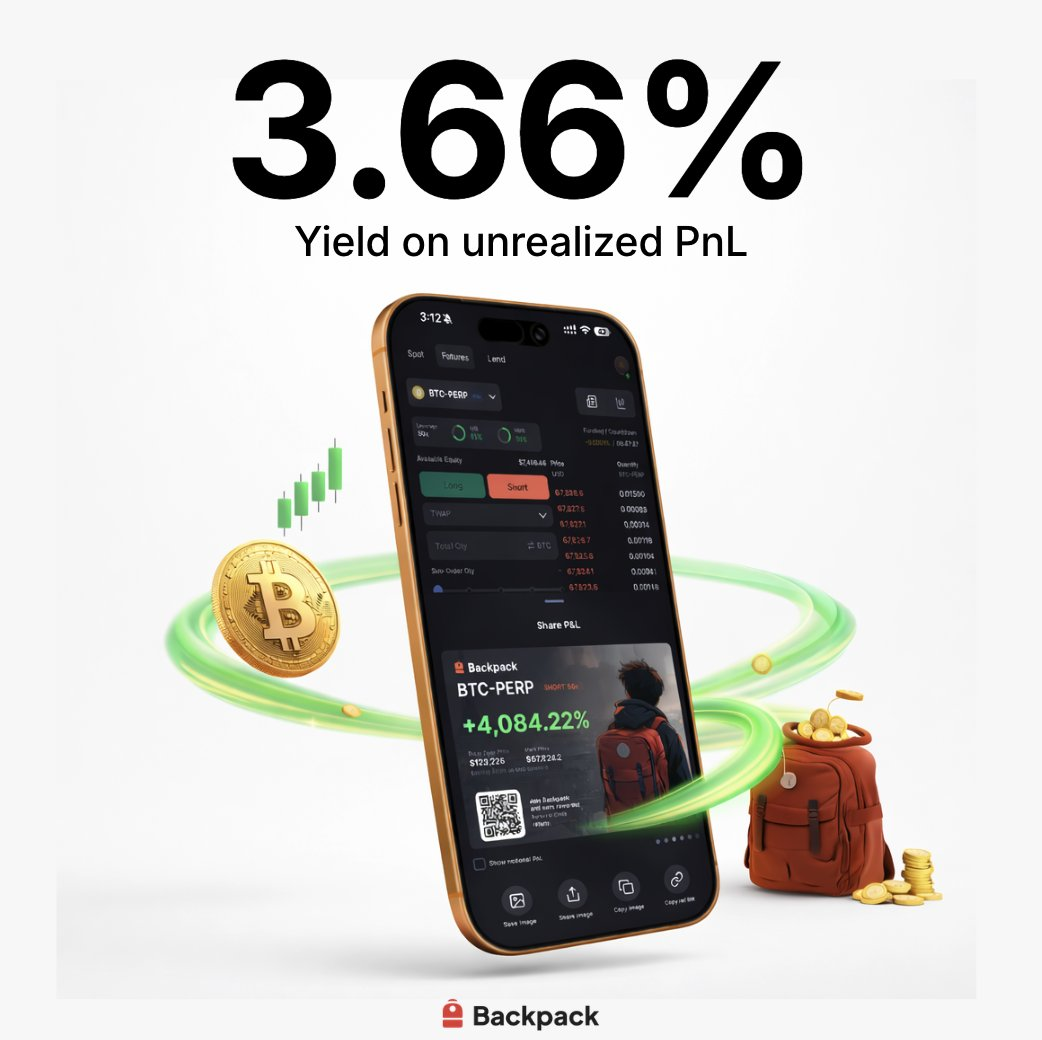
On most exchanges, unrealized PnL sits idle until you close your position. On Backpack, unrealized profits are continuously settled into USDC and automatically lent into the platform's lending pool. At the time of writing, the USDC pool yields approximately 3.66% APY, allowing profitable positions to generate additional yield without reducing exposure.
The Capital Efficiency Problem in Futures Trading
Futures trading is built around leverage, speed, and capital efficiency. Yet one inefficiency has long gone unnoticed.
When your position is profitable, your unrealized PnL is typically locked inside the derivatives engine. It appears in your account equity, but it does not earn yield. It cannot be deployed elsewhere. It simply remains inactive until you close or reduce the trade.
To access those profits, you usually have two options:
- Close the position and realize gains
- Borrow against your increased equity
Closing removes your market exposure. Borrowing introduces additional costs. Neither option fully preserves capital efficiency.
This structural limitation exists because of how most exchanges are built.
Why Unrealized PnL Usually Earns Nothing
On many centralized exchanges, spot balances, futures margin, and lending products operate in separate systems. These silos prevent unrealized gains from automatically flowing into yield generating mechanisms.
Settlement traditionally happens only when a position is closed. Until then, unrealized PnL is informational rather than functional capital.
Even if your trade is significantly in profit, that value cannot actively work for you. For a deeper look at how Backpack compares to other exchanges on this front, see our exchange comparison guide.
A Unified Margin Architecture
Backpack approaches exchange design differently.
Instead of separating trading and lending into disconnected accounts, Backpack operates on a unified cross margin system. All balances, collateral, realized PnL, and borrowed funds exist within the same risk engine and connect directly to the same lending pool.
This unified structure enables two automated mechanisms to work together seamlessly: Auto Realize PnL and Auto Lend.
Together, they allow profitable perpetual futures positions to generate yield without altering exposure.
Auto Realize PnL: Continuous Profit Settlement
Backpack introduces Virtual PnL Realization, or vPNL.
Every 10 seconds, unrealized profits are settled into your USDC balance without changing your position size.
If you are long BTC and the market moves higher, your exposure remains intact. Your contracts stay open. However, the profit portion is periodically converted into real USDC inside your account.
Unlike traditional settlement models, you do not need to close the trade to transform unrealized gains into usable capital.
Profits become part of your available balance while your position continues running.
Auto Lend: Turning Realized Profits Into Yield
Once profits are settled into USDC, Auto Lend activates automatically.
Available USDC is deposited into Backpack's lending pool, where borrowers pay interest for liquidity. In return, lenders earn yield.
At the time of writing, the USDC lending pool yields approximately 3.66% APY. Rates are variable and adjust dynamically based on supply and demand within the lending market.
Importantly, because of the unified margin architecture, lent assets continue to count 100% toward your net equity and margin requirements. There is no collateral haircut simply for participating in the lending pool.
This means your realized profits can earn yield while still supporting your open futures position.
What This Looks Like in Practice
Consider a BTC perpetual long position that accumulates 2,000 dollars in unrealized profit over several hours.
On most exchanges, that 2,000 dollars remains unrealized and inactive until you close the trade.
On Backpack:
- Portions of that profit are settled into USDC every 10 seconds
- The USDC is automatically lent into the pool
- It begins earning yield, currently around 3.66% APY
- Your BTC position remains fully open and unchanged
You do not reduce size. You do not close the trade. You do not manually transfer funds. The system continuously optimizes capital in the background.
Stacking Multiple Yield Sources
The efficiency becomes more pronounced when combined with other return mechanisms. As explained in the overview of trading on Backpack, the entire margin system is designed to eliminate idle capital across every layer.
Collateral yield. Deposited USDC, BTC, or SOL can earn lending yield while serving as margin.
Unrealized PnL yield. Profits are continuously realized and lent, earning yield at prevailing market rates.
Funding payments. Traders positioned correctly relative to funding may collect periodic funding income on top of lending yield.
For example, a trader running a basis strategy could hold spot SOL earning lending yield, short SOL perpetual potentially collecting funding, and have unrealized PnL from either leg automatically settled and lent within the same margin system simultaneously.
Risk and Rate Considerations
Interest rates in the lending pool are variable. The approximately 3.66% APY referenced above reflects current pool conditions and may fluctuate as utilization changes.
Losses are also realized continuously. Just as profits are periodically settled into USDC, losses reduce your balance in real time.
Liquidation mechanics operate the same as in standard cross margin systems. Continuous settlement improves capital efficiency but does not eliminate market risk or leverage risk.
Traders should monitor position size, volatility, and funding dynamics carefully.
A More Capital Efficient Futures Model
Futures trading has traditionally focused on leverage and execution speed. Less attention has been given to idle capital trapped inside unrealized profits.
By combining continuous profit realization with automated lending inside a unified margin system, Backpack allows profitable positions to generate additional yield without sacrificing exposure. For the full technical background on how this system was designed, read Armani Ferrante's original post on Interest Bearing Perpetual Futures.
At current rates, that yield is approximately 3.66% APY on USDC in the lending pool, though it may vary over time.
For traders who value capital efficiency, unrealized PnL no longer needs to sit idle.
Get Started on Backpack
New to the platform? The Backpack Beginner's Guide walks you through account setup step by step.
Ready to trade? Open your first perpetual futures position at backpack.exchange.
Learn more about Backpack
Exchange | Wallet | Twitter | Discord | Reddit
Disclaimer: This content is presented to you on an “as is” basis for general information and educational purposes only, without representation or warranty of any kind. It should not be construed as financial, legal or other professional advice, nor is it intended to recommend the purchase of any specific product or service. You should seek your own advice from appropriate professional advisors. Where the article is contributed by a third party contributor, please note that those views expressed belong to the third party contributor, and do not necessarily reflect those of Backpack. Please read our full disclaimer for further details. Digital asset prices can be volatile. The value of your investment may go down or up and you may not get back the amount invested. You are solely responsible for your investment decisions and Backpack is not liable for any losses you may incur. This material should not be construed as financial, legal or other professional advice.