Backpack Securities connects real securities ownership with onchain distribution.
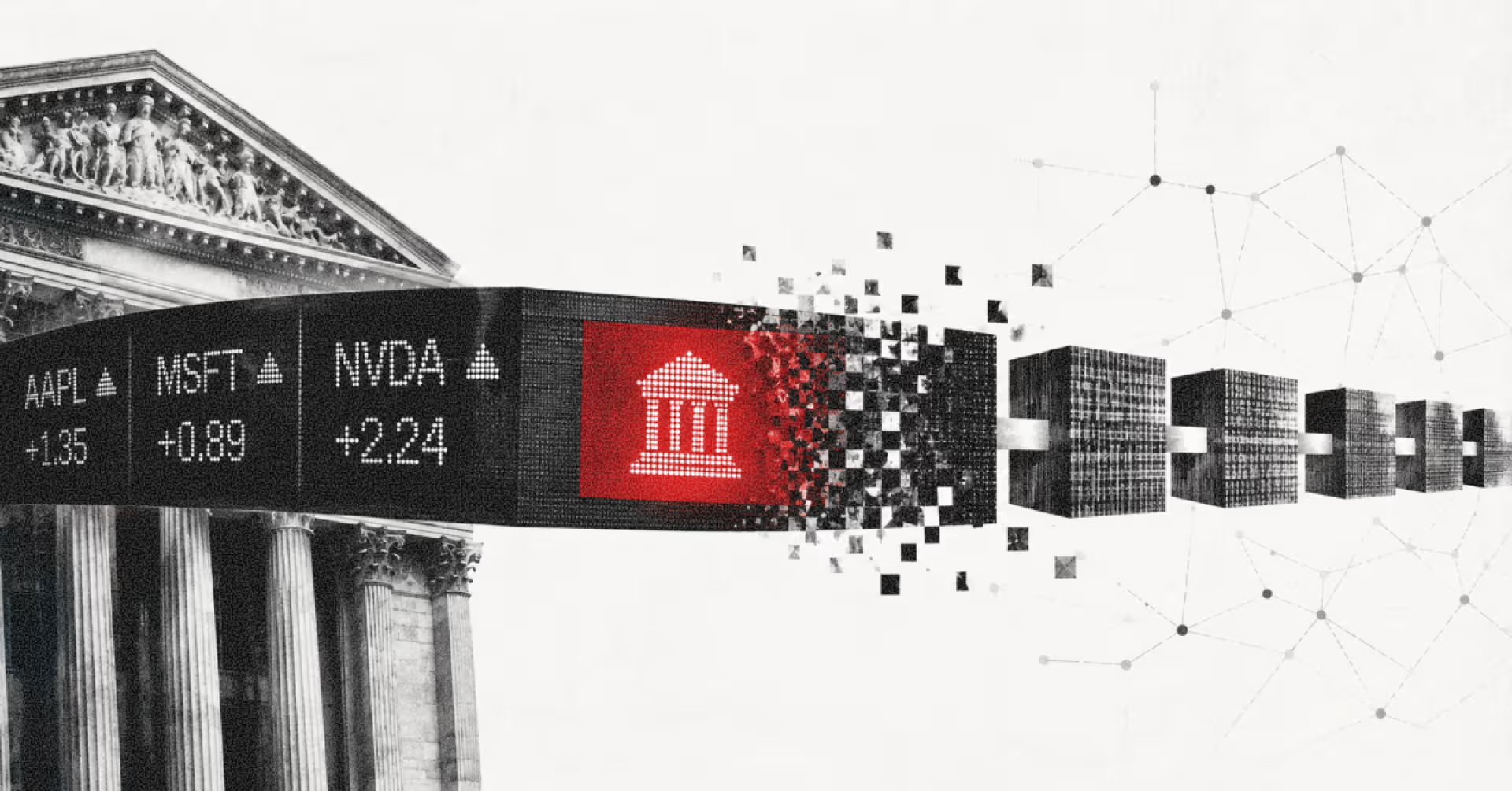
Investors can hold eligible securities through established brokerage infrastructure, tokenize them into tokenized securities on Solana, and redeem those tokenized securities back into the corresponding security entitlement through Backpack Securities.
This is a direct, two-way pathway between traditional securities infrastructure and blockchain networks. It gives investors access to both traditional securities infrastructure and blockchain-native markets from a single platform.
Traditional Securities on Backpack
Traditional securities on Backpack are real security entitlements governed by New York law under UCC Article 8.
They are supported by established brokerage, clearing, custody, and transfer infrastructure, with real ownership rights including cash dividends, corporate actions, brokerage transfers, and applicable tax treaty benefits.
Traditional securities are held in a Backpack Securities account and use traditional brokerage infrastructure. They provide access to real U.S. market liquidity through NYSE and Nasdaq, trade 24/5, and settle through traditional securities settlement infrastructure.
Traditional securities are not wallet transferable and are not DeFi compatible. They can, however, be tokenized and withdrawn to Solana as tokenized securities.
Tokenized Securities Issued by Backpack
Tokenized securities issued by Backpack are self-custodied tokenized securities on Solana.
They support 24/7 trading, wallet-to-wallet transfers, and DeFi compatibility. They are held in a Solana wallet, settle onchain, and are accessible through self-custody wallets.
Tokenized securities use Solana DEXs and onchain liquidity. They can also be redeemed into the underlying real shares through Backpack Securities.
The ownership form for tokenized securities is a tokenized claim. The legal framework is a claim on an SPV holding the underlying assets. Price exposure is anchored 1:1 through a mint and redemption mechanism.
Moving Between Traditional Securities and Solana
Backpack supports a two-way conversion flow between traditional securities infrastructure and Solana.
Withdrawal
Traditional securities on Backpack are tokenized and withdrawn to Solana in the form of tokenized securities.
Deposit
Tokenized securities are converted back into traditional securities holdings.
Together, these create an on/off-ramp between traditional brokerage infrastructure and Solana through Backpack Exchange deposits and withdrawals.
Brokerage transfers are also supported through ACATS- and DTCC-compatible infrastructure.
Dividends and Corporate Actions
Dividends and corporate actions are supported across both ownership models.
For securities held through Backpack Securities, cash dividends and corporate actions are processed through traditional brokerage infrastructure.
For tokenized securities, dividend payouts are automatically reinvested into additional tokenized shares. Applicable corporate actions are reflected through proportional token balance adjustments designed to maintain economic equivalence with the underlying security.
Summary
Backpack Securities creates a direct pathway between traditional securities ownership and onchain distribution.
Investors can hold eligible securities through established brokerage infrastructure, withdraw them to Solana as tokenized securities, and deposit tokenized securities back into traditional securities holdings.
This gives investors access to both traditional securities infrastructure and blockchain-native markets from a single platform.
Learn more about Backpack
Exchange | Wallet | Twitter | Discord | Reddit
Disclaimer: This content is presented to you on an “as is” basis for general information and educational purposes only, without representation or warranty of any kind. It should not be construed as financial, legal or other professional advice, nor is it intended to recommend the purchase of any specific product or service. You should seek your own advice from appropriate professional advisors. Where the article is contributed by a third party contributor, please note that those views expressed belong to the third party contributor, and do not necessarily reflect those of Backpack. Please read our full disclaimer for further details. Digital asset prices can be volatile. The value of your investment may go down or up and you may not get back the amount invested. You are solely responsible for your investment decisions and Backpack is not liable for any losses you may incur. This material should not be construed as financial, legal or other professional advice.