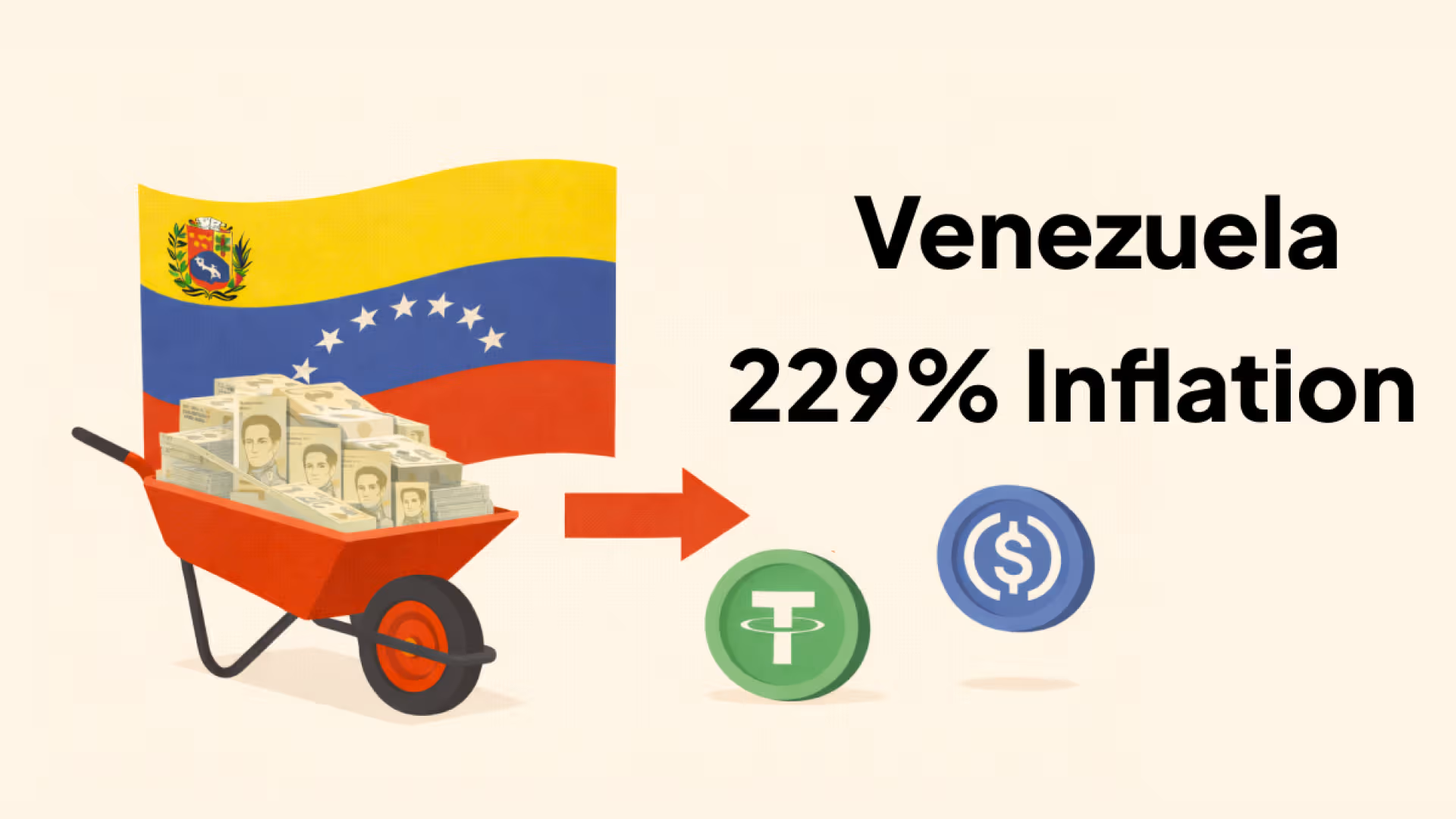
In 2025, Venezuela recorded 229% annual inflation, one of the highest rates in the world. As the local currency, the bolívar, continued to lose value, millions of Venezuelans turned to cryptocurrency not for speculation, but for day-to-day financial survival.
Venezuela’s rise as a top-20 crypto adoption country is driven by extreme inflation that led people to use stablecoins and peer-to-peer crypto payments as everyday financial tools.
Venezuela now appears among the top-ranked countries for crypto adoption in multiple industry reports. This article explains why inflation accelerated crypto use, how Venezuelans use crypto in daily life, and why stablecoins became central to the country’s informal dollar economy.
Venezuela’s Inflation Problem and the Collapse of Trust in the Bolívar
High inflation does more than raise prices. It breaks the basic function of money as a reliable store of value.
As inflation climbed, many Venezuelans faced the same pattern:
- Salaries lost purchasing power quickly
- Prices changed frequently
- Saving in bolívars became increasingly risky
- Access to US dollars was limited by availability, banking friction, and cost
When people stop trusting a currency, they look for alternatives that hold value more reliably. In Venezuela, crypto became one of the fastest and most accessible ways to do that.
Why Crypto Adoption Grew in Venezuela
In many markets, crypto adoption is driven by investing and speculation. In Venezuela, adoption has been driven largely by utility.
Crypto helped solve specific problems:
- People needed a way to preserve value during rapid inflation
- Families needed cheaper, faster ways to move money across borders
- Some workers needed a payment method that worked outside local banking limits
- Merchants and individuals needed a digital alternative to cash and bank transfers
This is the key point for understanding Venezuela’s crypto growth: people used crypto as financial infrastructure, not as a trade.
Why Stablecoins Became the Default Choice
Stablecoins, not Bitcoin, are the backbone of everyday crypto usage in inflation-hit economies.
Stablecoins are widely used in Venezuela because they are:
- Pegged to the US dollar, which helps protect purchasing power
- Easier for merchants to price goods and services
- More practical for payments than volatile assets
- Commonly available on major exchanges and in peer-to-peer markets
For many users, stablecoins function like digital dollars. They are used for saving, sending, and spending in a way that closely matches how people already think about value in a high-inflation environment.
How Venezuelans Use Crypto in Daily Life
Crypto usage in Venezuela is often high-frequency and small-value. Common real-world uses include:
- Receiving salaries, freelance pay, or side income in stablecoins
- Converting bolívars to stablecoins to protect value
- Sending remittances from abroad with lower fees than traditional services
- Paying individuals and some merchants through wallet-to-wallet transfers
A large share of this activity happens through peer-to-peer flows because P2P markets can offer faster conversion and broader access than traditional rails.
Why Venezuela Ranks Among the Top Crypto Adoption Countries
Venezuela’s ranking is not mainly about large speculative trades. It is typically driven by:
- High transaction frequency
- Strong stablecoin usage
- Practical payments and savings behavior
- Consistent peer-to-peer activity
Industry rankings differ by methodology, but Venezuela commonly appears among the leading countries for grassroots adoption, especially when measured by everyday usage patterns rather than institutional volume.
What Venezuela Teaches About Inflation and Crypto Adoption
Venezuela illustrates a repeatable pattern seen in other high-inflation economies.
When inflation is high:
- People prioritize assets that preserve value
- Stablecoins become more important than volatile coins
- Payment and remittance use cases grow faster than investing narratives
- Adoption spreads through peer-to-peer networks and informal merchant rails
Similar dynamics have been observed in other markets facing currency pressure, including Argentina and Turkey, where stablecoin demand tends to rise when local currency trust declines.
Risks and Limits of Crypto Use in Venezuela
Crypto can reduce financial stress, but it does not remove all risk.
Key limitations include:
- Regulatory uncertainty and enforcement changes
- Platform outages or account restrictions on centralized services
- Internet reliability and access constraints
- Scams and education gaps for new users
Even so, many users weigh these risks against a more immediate alternative: holding a rapidly devaluing local currency.
Frequently Asked Questions
Why did crypto adoption grow so quickly in Venezuela?
Because inflation reduced trust in the local currency and crypto provided a more reliable way to store and transfer value.
What cryptocurrency is most used in Venezuela?
Stablecoins such as USDT are used more widely than Bitcoin for daily transactions.
Is Venezuela a major crypto adoption country?
Yes. Venezuela regularly appears among the top 20 countries globally for crypto adoption, particularly on a per-capita basis.
Is crypto legal in Venezuela?
Crypto usage exists in a regulatory gray area, but everyday use remains widespread.
Conclusion
Venezuela did not become a top-20 crypto adoption country because of hype. It happened because extreme inflation made daily financial life unstable, and people adopted tools that helped them preserve value and move money more efficiently.
Stablecoins and peer-to-peer crypto rails became practical replacements for failing monetary functions. As inflation pressures affect more economies, Venezuela’s experience remains one of the clearest examples of how crypto adoption can emerge from real-world need.
Learn more about Backpack
Exchange | Wallet | Twitter | Discord | Reddit
Disclaimer: This content is presented to you on an “as is” basis for general information and educational purposes only, without representation or warranty of any kind. It should not be construed as financial, legal or other professional advice, nor is it intended to recommend the purchase of any specific product or service. You should seek your own advice from appropriate professional advisors. Where the article is contributed by a third party contributor, please note that those views expressed belong to the third party contributor, and do not necessarily reflect those of Backpack. Please read our full disclaimer for further details. Digital asset prices can be volatile. The value of your investment may go down or up and you may not get back the amount invested. You are solely responsible for your investment decisions and Backpack is not liable for any losses you may incur. This material should not be construed as financial, legal or other professional advice.
.avif)