
Earnings season is the recurring stretch, four times a year, when most publicly traded companies report their quarterly results. It runs for roughly six weeks after each calendar quarter ends, and it's when single stocks make many of their biggest moves of the year which is why traders plan around it the way sailors plan around weather. This guide explains how a season is structured, what actually moves a stock on earnings day, and how to prepare using the Backpack earnings calendar to track every report date in one place.

When Is Earnings Season?
There are four seasons a year, each starting about two weeks after a quarter closes: mid-January (for Q4 and full-year results), mid-April (Q1), mid-July (Q2), and mid-October (Q3). Each follows the same rhythm. The big U.S. banks report first and serve as the unofficial kickoff. The bulk of the S&P 500 reports over the following two to three weeks, with the mega-cap technology names clustered near the peak. Then the season tapers as smaller companies trail off.
The current Q2 2026 season is a live example: JPMorgan, Goldman Sachs, Bank of America, Citigroup, and Wells Fargo opened it on July 14, the same morning June CPI hit the tape, with Morgan Stanley the next day, and the mega-cap tech reports cluster in late July, landing right around the Federal Reserve's July 28–29 meeting. When a Fed decision and a mega-cap print share a week, single-session volatility tends to be larger than either event would produce alone.
Why Do Stocks Move So Much on Earnings?
The counterintuitive part first: stocks don't move on whether results were good or bad. They move on results relative to expectations. A company can grow profits 30% and fall on the news if the market expected 40%; it can shrink and rally if the market braced for worse. This season offered a textbook case: Tesla reported deliveries well above analyst consensus in early July and still dropped sharply, because expectations embedded in the price ran ahead of even a strong print.
Three numbers frame every report. Consensus is the average of analyst estimates for earnings per share and revenue the published expectation. The surprise is the gap between the actual result and consensus, and it's the raw fuel for the initial move. And guidance, management's outlook for coming quarters frequently matters more than the quarter itself, since markets price the future, not the past. A modest beat with raised guidance often outperforms a big beat with a cautious outlook. Seasoned traders also know the "whisper number": the unofficial expectation the market really trades against, which can sit above or below published consensus after a strong run in the stock.
How the Reporting Day Actually Works
Almost no company reports during regular U.S. market hours. Results come out either before the open (roughly 6:00–8:30 a.m. ET typical for banks) or after the close (4:00–5:00 p.m. ET typical for tech). The earnings call with analysts follows, usually an hour or two later, and stocks often make a second move during the call when guidance and management commentary land.
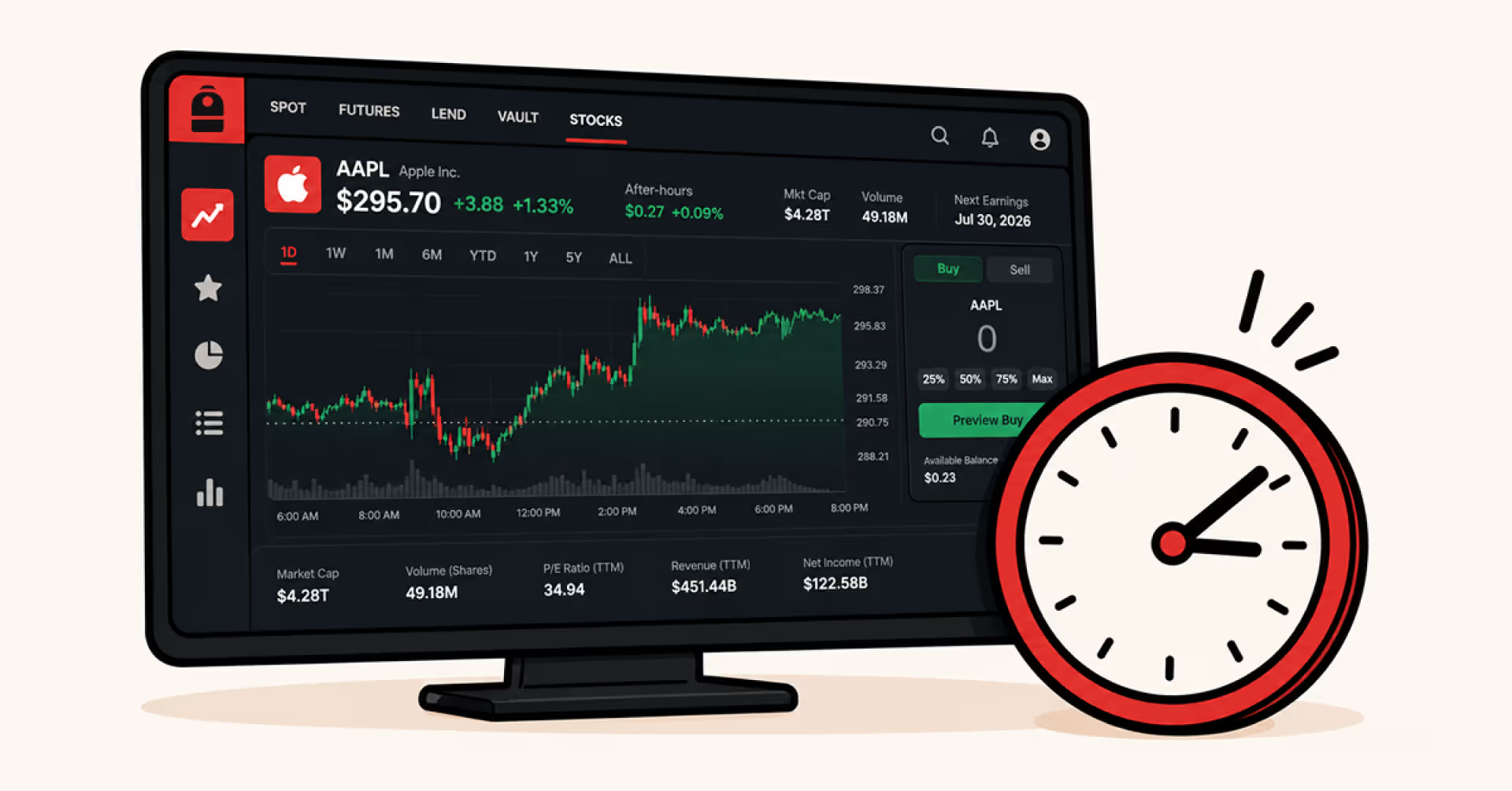
This timing is why after-hours access matters during earnings season. On a traditional exchange schedule, much of an earnings move happens when regular trading is closed. Stocks on Backpack trade 24/5, spanning the pre-market and after-hours windows where reports actually drop and eligible tokenized stocks trade 24/7 on Solana so a reaction to an 8 p.m. print doesn't have to wait for the next morning's open. The honest caveat: liquidity is thinner outside regular hours everywhere, spreads are wider, and the first minutes after a release are the most volatile and most expensive to trade. Around-the-clock access is a tool for flexibility, not a promise of good fills.
How Traders Prepare for an Earnings Report
Preparation is mostly about knowing what's scheduled and what's expected, before it happens. A typical routine looks like this. First, map the calendar: check the earnings calendar at the start of each week for every watchlist name reporting, and note whether each reports before the open or after the close. Second, know the expectations: the consensus EPS and revenue figures, and what guidance the market is hoping for. Third, check the context: how the stock has run into the print (a big rally raises the bar), what peers reported (the first bank or chipmaker to report often moves the whole group), and what macro events share the week this season's late-July FOMC/mega-cap overlap being the current example. Fourth, decide your posture in advance: holding through a report accepts overnight gap risk that can't be managed in real time; trading the reaction accepts fast, volatile conditions; staying flat and letting the dust settle is also a position. There is no universally right answer only a deliberate one made before the number hits, not during the first minute after it.
What Earnings Season Means If You're Not Trading It
For long-term investors, earnings season is less about the day-of move and more about the information: is the business tracking the thesis you own it for? Quarterly reports are the highest-density updates you get revenue trend, margins, and management's read on demand. Single-quarter noise rarely changes a long-term case, and reacting to every print is how long-term investors accidentally become short-term traders. The calendar is still useful here, just differently: knowing your holdings' report dates tells you when volatility is scheduled, even if your plan is to do nothing.
The Bottom Line
Earnings season is the market's quarterly reckoning: a scheduled six-week window when expectations meet results, four times a year. The moves are driven by surprises and guidance rather than raw numbers, the releases land outside regular hours, and the single most practical habit for traders and long-term investors alike is simply knowing what reports when. That part is solved with one bookmark: the Backpack earnings calendar.
Learn more about Backpack
Exchange | Wallet | Twitter | Discord | Reddit
Disclaimer: This content is presented to you on an “as is” basis for general information and educational purposes only, without representation or warranty of any kind. It should not be construed as financial, legal or other professional advice, nor is it intended to recommend the purchase of any specific product or service. You should seek your own advice from appropriate professional advisors. Where the article is contributed by a third party contributor, please note that those views expressed belong to the third party contributor, and do not necessarily reflect those of Backpack. Please read our full disclaimer for further details. Digital asset prices can be volatile. The value of your investment may go down or up and you may not get back the amount invested. You are solely responsible for your investment decisions and Backpack is not liable for any losses you may incur. This material should not be construed as financial, legal or other professional advice.