
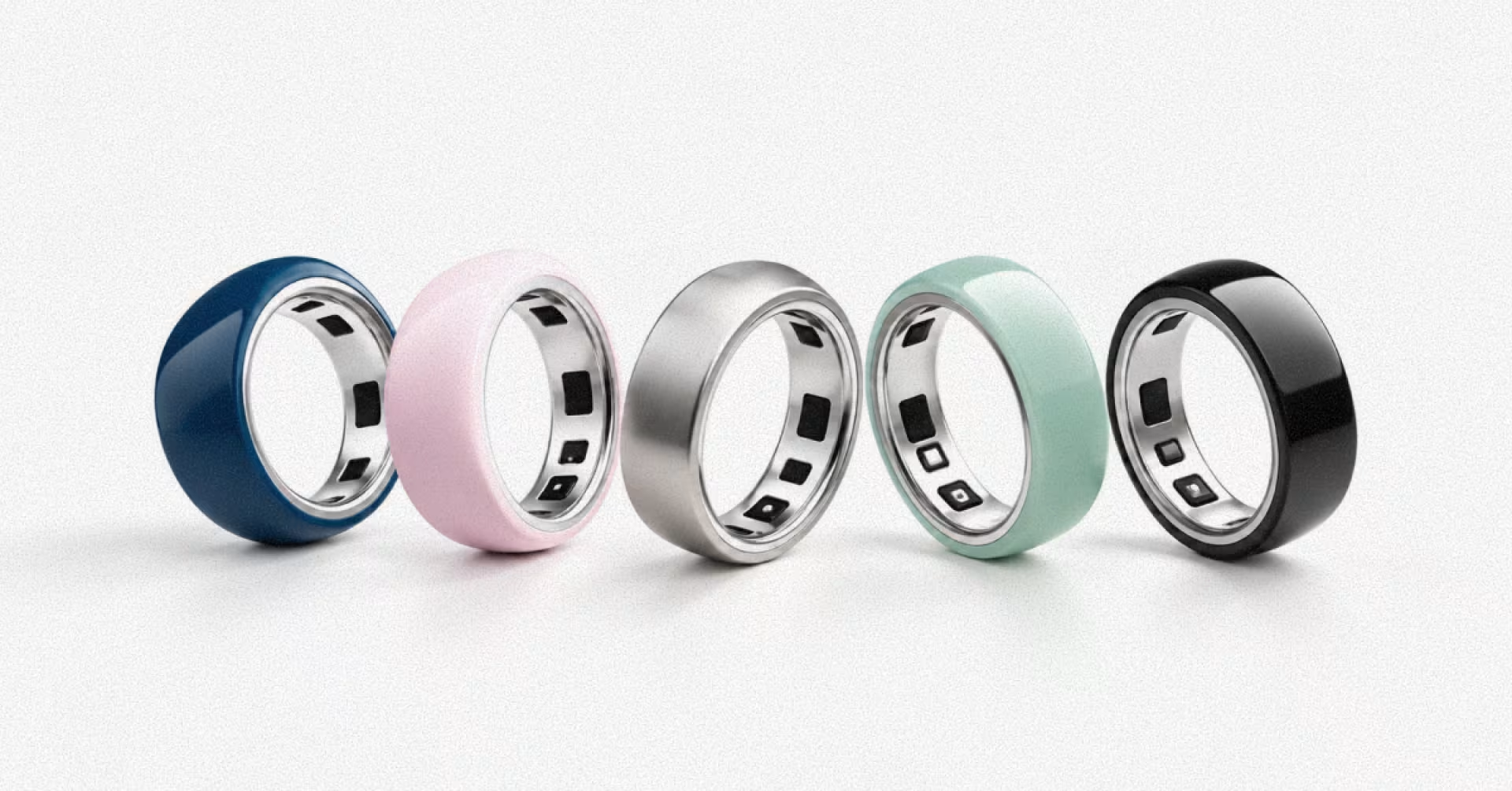
Oura is a wearable health technology company best known for Oura Ring, a smart ring that tracks signals related to sleep, activity and recovery. Its business combines physical devices with a paid app membership that turns those signals into personalized insights.
Oura is also preparing to bring its shares to the public market. This guide explains the product, how the company makes money and the key details of its proposed listing.
Key Facts
- Origins: Oura was founded in Oulu, Finland, in 2013, growing from a Finnish startup into a business combining wearable hardware and health software
- Core product: Oura Ring, paired with the Oura App.
- Business model: Hardware sales and recurring membership revenue.
- Main use cases: Sleep, recovery, activity and longer-term wellness tracking.
- Proposed stock symbol: OURA on Nasdaq, according to the company's IPO announcement.
What Does Oura Do?
Oura collects physiological signals through a ring worn on the finger, then presents the results in a mobile app. The product helps users follow patterns in their sleep, recovery and daily activity over time.
The experience has three connected parts:
The app presents Sleep, Readiness and Activity Scores, while membership unlocks detailed insights and features related to stress and longer-term wellbeing. The app is available on iOS and Android.
For users, the value lies in interpreting everyday patterns. For Oura, the commercial opportunity is keeping that interpretation useful enough to become part of a daily routine.
How Does Oura Ring Work?
Oura combines sensor readings with software to estimate health and wellness metrics. Its Sleep Score draws on information including heart rate, movement, temperature and estimated sleep stages.
Its Readiness Score brings together overnight measurements and recent activity to summarize recovery. Individual readings become more meaningful when compared with the user's usual patterns.
For example, a user might review whether later bedtimes coincide with shorter sleep or changes in their recovery scores. The experience is built around repeated observation, rather than a single measurement.
Oura describes the ring as a wellness product rather than a medical device; its scores help users interpret patterns rather than diagnose conditions.
How Does Oura Make Money?
Oura's business combines revenue from selling hardware with recurring payments for membership.
Hardware Sales
The ring creates the initial customer relationship. A purchase generates hardware revenue, while future replacements or upgrades can create additional sales.
The economics depend on more than the number of rings sold. Manufacturing costs, distribution, returns, warranties and customer acquisition all affect what the company earns from each device.
New hardware can attract first-time buyers or persuade existing customers to upgrade. However, a customer can remain active in the software without buying a new ring every year.
Membership Revenue
Oura Membership provides ongoing access to personalized insights and app features. As of this article's update, Oura advertises a U.S. monthly price of $5.99, with a free first month for new members. Pricing and terms vary by market.
The business logic is straightforward: customers who keep finding the app useful can continue generating revenue between hardware purchases.
This makes retention an important part of the model. Strong device sales bring in potential subscribers; continued engagement determines how long those relationships last.
Organizational Customers
Oura also serves organizations. Its Oura Teams platform allows authorized coaches, administrators and other professionals to review participating members' metrics across a group.
Organizational customers can bring multiple users into the product through one relationship, expanding distribution beyond individual consumers.
How Large Is Oura's Business?
Oura's September 2026 registration statement reports the following results:
Paid membership reached 5.0 million as of June 30, 2026. Revenue measures activity over nine months; the membership count is a snapshot at the period end.
The two bottom-line figures are not contradictory. Oura reported net income of $60.8 million from operations, while a $985.0 million deemed dividend, an accounting charge from repurchasing preferred shares above their carrying value, produced the larger loss attributable to common stockholders. This is why some coverage describes Oura as profitable while other reports cite a large loss.
Calculated from the reported totals, hardware contributed approximately 80% of revenue and membership approximately 20%.
The mix suggests a useful way to assess Oura: a hardware-led company building a recurring software relationship. Subscription growth can strengthen the business, while device economics remain important to overall performance.
Oura IPO: Date, Price and Stock Symbol
As of September 27, 2026, Oura is preparing for its public-market debut. The company has applied to list on the Nasdaq Global Select Market under OURA. Its IPO launch announcement sets out a proposed 50-million-share offering at $40 to $44 per share.
The offering is expected to price on September 29, 2026, with Nasdaq trading normally beginning the morning after pricing. Timing and final pricing remain subject to change.
Who Does Oura Compete With?
Oura competes for consumers' wearable spending and their daily health-tracking habits. Relevant alternatives include smart rings, smartwatches and subscription-based fitness wearables.
Oura's competitive proposition centers on the ring format and its software experience. The strategic question is whether users prefer that combination enough to pay for it and continue using it when alternatives are available.
What Could Support Oura's Growth?
The product and revenue model point to three areas worth following.
A larger active membership base. Growth can come from new customers and longer-lasting relationships with existing ones. Membership revenue is more durable when people continue using and valuing the product.
More useful software. Features that help users interpret their own patterns can increase engagement between hardware upgrades. The commercial test is whether those features improve retention or willingness to pay.
Broader organizational distribution. Oura's offerings for organizations create opportunities to reach users through employers, teams and other partners. Scaling those relationships requires a product that works for both the organization and participating individuals.
What Challenges Should Investors Understand?
The main challenge is sustaining both sides of the model: selling desirable hardware and maintaining a subscription people want to renew.
For research, four questions are especially useful:
- Retention: Do customers keep wearing the ring and renewing membership after the initial novelty fades?
- Hardware economics: Can the company maintain margins as it develops new devices and expands distribution?
- Competition: Does Oura offer enough differentiation to support its pricing?
- Trust: Can it preserve confidence in its insights and handling of sensitive personal information?
Oura states in its privacy commitment that it does not sell users' data. For a business built around personal health information, trust is part of the customer relationship.
Learn more about Backpack
Exchange | Wallet | Twitter | Discord | Reddit
Disclaimer: This content is presented to you on an “as is” basis for general information and educational purposes only, without representation or warranty of any kind. It should not be construed as financial, legal or other professional advice, nor is it intended to recommend the purchase of any specific product or service. You should seek your own advice from appropriate professional advisors. Where the article is contributed by a third party contributor, please note that those views expressed belong to the third party contributor, and do not necessarily reflect those of Backpack. Please read our full disclaimer for further details. Digital asset prices can be volatile. The value of your investment may go down or up and you may not get back the amount invested. You are solely responsible for your investment decisions and Backpack is not liable for any losses you may incur. This material should not be construed as financial, legal or other professional advice.