Every stock quote you see includes a "previous close" figure, usually labeled "Prev. Close." It is the last official price the stock changed hands at when the market shut for the previous day. For U.S. stocks, the regular session ends at 4:00 PM Eastern, and that closing price becomes the previous close carried into the next trading day.
This single number anchors the day's percent change, serves as the reference point for spotting gaps between sessions, and feeds the charts and alerts that summarize how a stock is moving.
Key Takeaways
- Previous close is the last traded price from the prior regular session. For U.S. stocks, the 4:00 PM ET close.
- It is the baseline for a stock's daily percent change: (Current Price − Previous Close) ÷ Previous Close × 100.
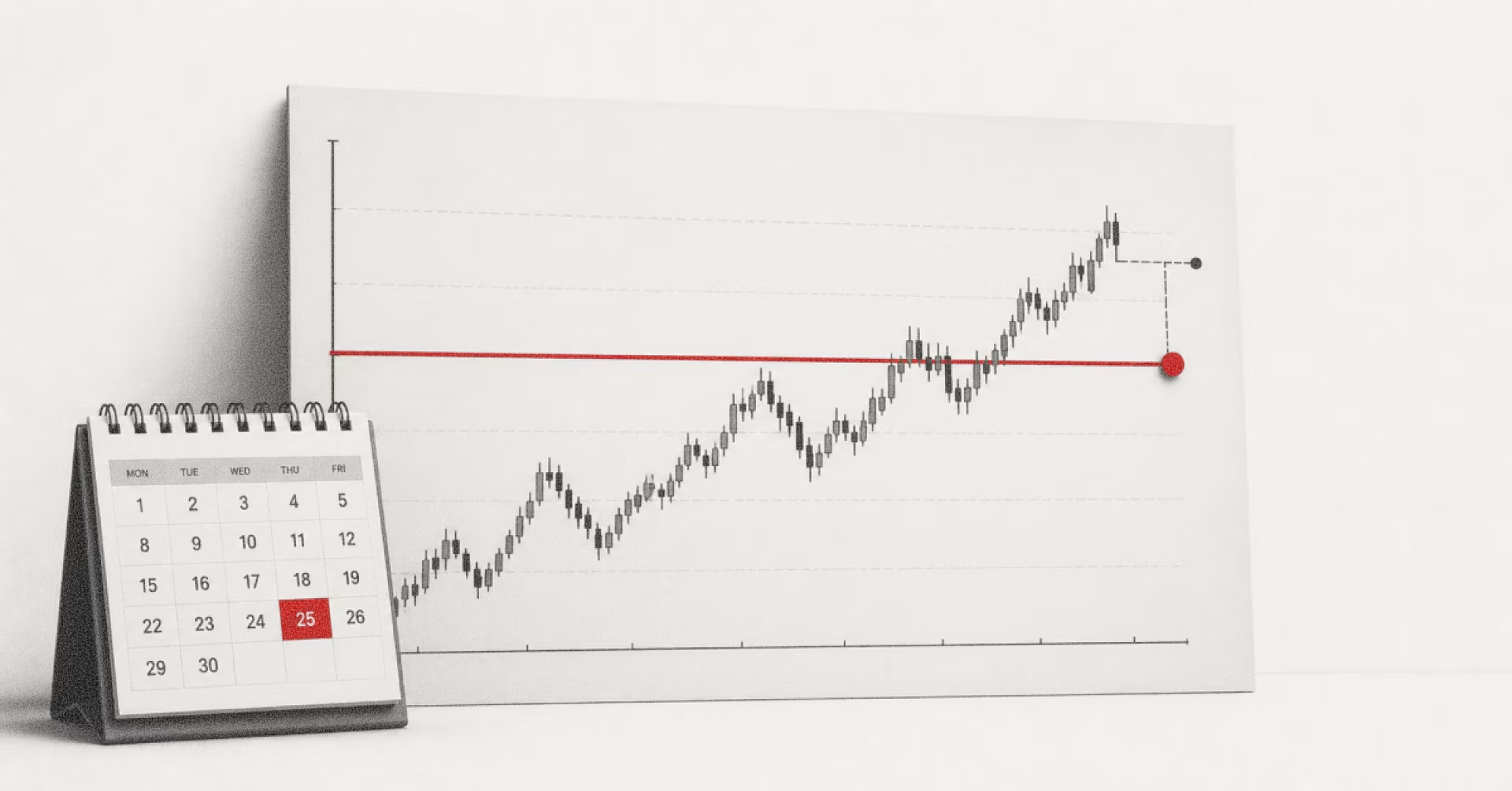
- A stock rarely opens at exactly its previous close because overnight news and pre-market orders create a "gap."
- Up-gap: the open is above the previous close. Down-gap: the open is below it.
- After-hours trades generally do not change the official previous close for the regular session.
- Adjusted close differs from the raw close after splits or dividends, keeping historical comparisons accurate.
Understanding Previous Close
Why the open differs from the previous close
Stocks rarely open at the same price they closed at the day before. Markets keep reacting to news while the exchange is shut, including earnings, economic data, and announcements often land after hours. By the time trading reopens, buyers and sellers have re-priced the stock, so the first trade can sit above or below the previous close. That difference is called a gap.
Previous close vs last traded price vs adjusted close
The previous close is the prior session's official closing price. The last traded price is the most recent transaction price, which keeps moving during the day. The adjusted close restates past prices to account for corporate actions like splits and dividends, so a chart's percentage moves stay meaningful over time.
What happens after a split or dividend
Corporate actions can change the previous close even with no trading. After a stock split, the previous close is divided by the split ratio. For example, a 2-for-1 split halves it, so the price lines up with the new share count. After a cash dividend, the previous close is typically reduced by the dividend amount. These adjustments keep day-to-day comparisons honest.
Previous Close vs Related Price Points
- Previous close: the final price from the prior regular session.
- Open: the first traded price of the current session.
- Last traded price: the most recent transaction price, updating continuously.
- Adjusted close: a past close restated for splits and dividends.
Real-World Example
Suppose a stock closed yesterday at $100. After the bell, the company reports strong earnings, and the next morning the first trade is $105, an up-gap of $5. Using the percent-change formula, the stock is up ($105 − $100) ÷ $100 × 100 = 5% versus the previous close, even though no trades happened overnight in between. That $100 previous close is what every "+5%" display is calculated from until a new session closes and resets the baseline.
The Bottom Line
Previous close is a small number that anchors much of what you see on a trading screen, including daily percent changes, gap analysis, and candlestick charts. Knowing what it measures helps you read price moves accurately. To go further, explore how tokenized stocks trade and how Backpack Securities combines tokenized and real equities.
Learn more about Backpack
Exchange | Wallet | Twitter | Discord | Reddit
Disclaimer: This content is presented to you on an “as is” basis for general information and educational purposes only, without representation or warranty of any kind. It should not be construed as financial, legal or other professional advice, nor is it intended to recommend the purchase of any specific product or service. You should seek your own advice from appropriate professional advisors. Where the article is contributed by a third party contributor, please note that those views expressed belong to the third party contributor, and do not necessarily reflect those of Backpack. Please read our full disclaimer for further details. Digital asset prices can be volatile. The value of your investment may go down or up and you may not get back the amount invested. You are solely responsible for your investment decisions and Backpack is not liable for any losses you may incur. This material should not be construed as financial, legal or other professional advice.