What Is SpaceX?
SpaceX is an aerospace and space infrastructure company founded by Elon Musk in 2002. The company is best known for reusable rockets, launch services, Starlink satellite internet, and Starship, its next-generation launch system.
SpaceX helped change the economics of orbital launch by developing Falcon 9 boosters that can land after launch and fly again. Reusability has allowed the company to increase launch frequency and lower the cost of sending payloads to orbit.
In 2025, SpaceX completed 165 orbital launches, setting another annual launch record. Most of those missions were Falcon 9 launches, and many supported the continued expansion of Starlink.
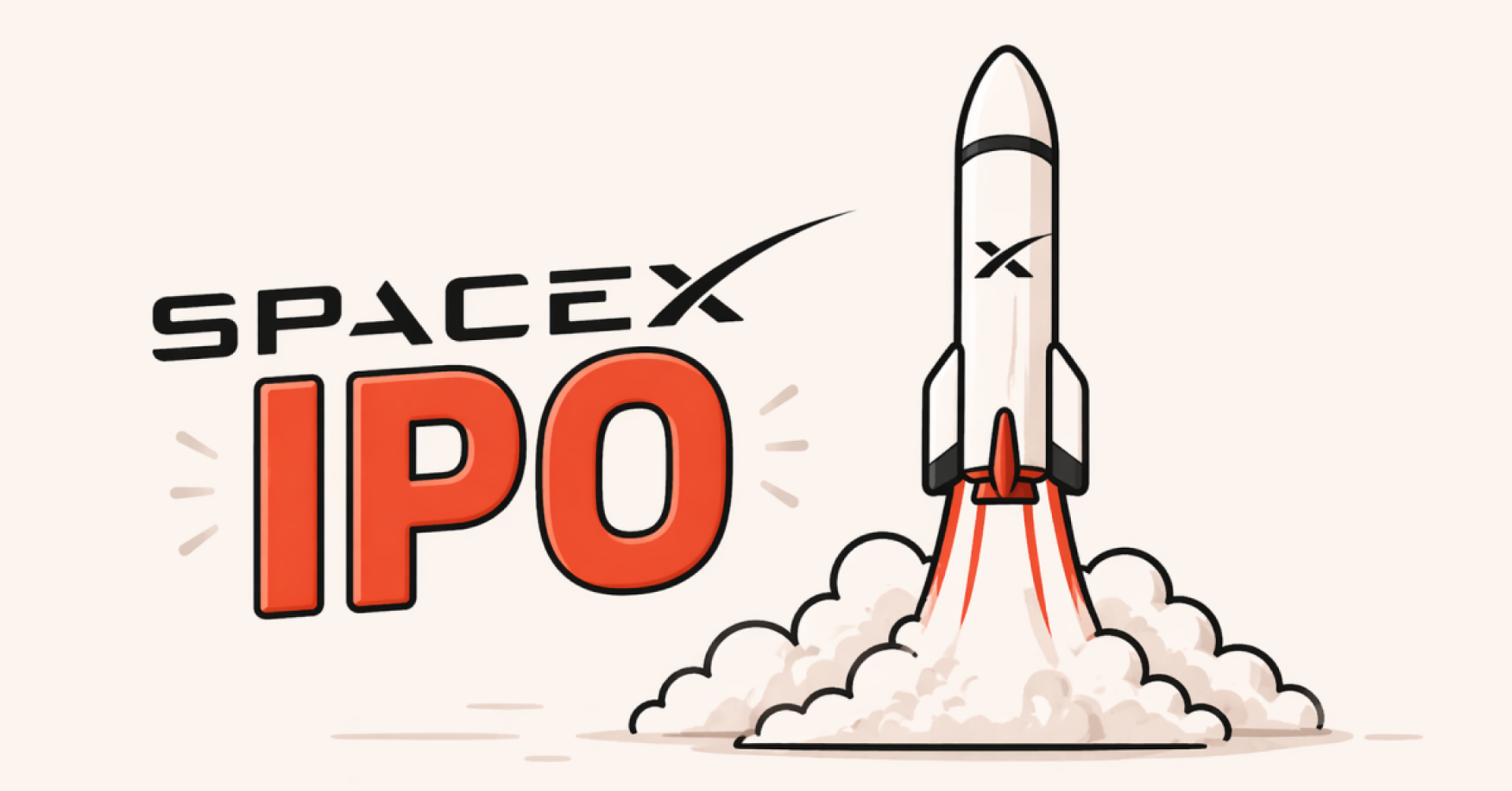
SpaceX is now a public company. On June 12, 2026, SpaceX began trading on Nasdaq under the ticker SPCX after pricing its IPO at $135 per share. The offering reportedly raised about $75 billion and valued the company at roughly $1.77 trillion at the IPO price.
What Does SpaceX Do?
SpaceX operates across several major business areas.
Launch Services
SpaceX provides launch services using Falcon 9, Falcon Heavy, and Starship. Falcon 9 is the company’s reusable workhorse rocket, while Falcon Heavy is used for heavier payloads. Starship remains central to SpaceX’s long-term plans for higher-capacity launch, lunar missions, Mars exploration, and future space infrastructure.
Starlink
Starlink is SpaceX’s satellite broadband network. It uses low Earth orbit satellites to provide internet connectivity to consumers, businesses, governments, and other customers.
Starlink has become one of SpaceX’s most important revenue drivers. According to recent reporting, Starlink generated the largest share of SpaceX’s 2025 revenue.
Government and Defense Services
SpaceX also works with government and defense customers. This includes launch contracts, satellite services, and related infrastructure.
These contracts can provide meaningful revenue, but they also come with regulatory, political, technical, and execution risks.
AI and Data Infrastructure
SpaceX’s public-market story now includes artificial intelligence exposure. Recent reporting says xAI has become part of the SpaceX business, adding AI products and infrastructure to the company’s broader strategy.
Investors should review SpaceX’s official filings to understand how AI-related revenue, costs, capital spending, and risks are reported.
SpaceX IPO at a Glance
SpaceX began trading on Nasdaq under the ticker SPCX on June 12, 2026.
The IPO was priced at $135 per share and reportedly raised about $75 billion. At that price, SpaceX was valued at approximately $1.77 trillion, making it one of the largest public listings in history.
Early trading was volatile. Reports from the first day of trading said SPCX opened above the IPO price and quickly pushed SpaceX’s market value above $2 trillion.
IPO prices and first-day trading prices can differ significantly. Investors should distinguish between the IPO price, the opening trade, and the market price after public trading begins.
How to Invest in SpaceX Stock
Now that SpaceX is publicly listed, investors can generally access SPCX in two ways: through an IPO allocation, if they received one, or by buying shares after listing through a brokerage platform that supports Nasdaq-listed equities.
On Backpack, there are two ways to hold SpaceX shares: as traditional securities through Backpack Securities, or as tokenized securities issued by Backpack on Solana.
Through Backpack Securities, investors can hold SpaceX shares through established brokerage infrastructure. Traditional securities on Backpack are real security entitlements governed under New York law (UCC Article 8), supported by established brokerage, clearing, custody, and transfer infrastructure.
These holdings include real ownership rights, including cash dividends, corporate actions, brokerage transfers, and applicable tax treaty benefits.
Traditional securities on Backpack are held in a Backpack Securities account. They can also be tokenized and withdrawn to Solana in the form of tokenized securities.
Tokenized $SPCX issued by Backpack Securities is redeemable for a real SpaceX share through Backpack Securities. Tokenized securities issued by Backpack are self-custodied tokenized securities on Solana with 24/7 trading, wallet-to-wallet transfers, and DeFi compatibility.
Investors can move between traditional securities and tokenized securities through Backpack Securities deposits and withdrawals. Traditional securities on Backpack can be tokenized and withdrawn to Solana, while tokenized securities can be deposited and converted into traditional securities holdings.
SpaceX and Bitcoin
Some sources have reported that SpaceX holds Bitcoin. Investors should treat exact Bitcoin balance estimates as unconfirmed unless they appear in official company filings.
If SpaceX discloses digital asset holdings as a public company, investors should review the size of the position, custody arrangements, accounting treatment, and potential impact on quarterly earnings.
Key Risks for SpaceX Investors
Valuation Risk
SpaceX listed at a very high valuation relative to reported revenue. If growth slows, costs rise, or market expectations reset, SPCX could be volatile.
Execution Risk
SpaceX operates technically complex and capital-intensive businesses. Launch delays, Starship development setbacks, satellite network costs, regulatory reviews, or infrastructure buildout delays could affect results.
Starlink Risk
Starlink is an important part of SpaceX’s growth story. Subscriber growth, pricing, network capacity, satellite replacement costs, competition, and spectrum rules may affect performance.
AI Integration Risk
AI-related infrastructure may create new revenue opportunities, but it can also require heavy capital investment. Investors should monitor whether AI-related spending improves long-term returns or weighs on profitability.
Governance Risk
Investors should review SpaceX’s final prospectus for voting rights, share structure, related-party transactions, and control provisions. If insiders retain significant voting control, public shareholders may have limited influence over major decisions.
Market Risk
IPO stocks can be volatile after listing. First-day enthusiasm does not guarantee long-term performance. Investors should compare SpaceX’s actual quarterly results with the expectations implied by its market valuation.
The Bottom Line
SpaceX is one of the most important companies in launch services, satellite broadband, and space infrastructure. Its public listing gives investors access to a business with major growth potential, but also major risks.
The company’s valuation depends on continued execution across reusable launch, Starlink, government services, Starship, and AI infrastructure. Investors should read the final prospectus, review official financial statements, and understand the risks before buying SPCX.
Disclaimer: This article is for informational purposes only and should not be construed as financial, legal, tax, investment, or other professional advice. You are solely responsible for your own investment decisions.
Learn more about Backpack
Exchange | Wallet | Twitter | Discord | Reddit
Disclaimer: This content is presented to you on an “as is” basis for general information and educational purposes only, without representation or warranty of any kind. It should not be construed as financial, legal or other professional advice, nor is it intended to recommend the purchase of any specific product or service. You should seek your own advice from appropriate professional advisors. Where the article is contributed by a third party contributor, please note that those views expressed belong to the third party contributor, and do not necessarily reflect those of Backpack. Please read our full disclaimer for further details. Digital asset prices can be volatile. The value of your investment may go down or up and you may not get back the amount invested. You are solely responsible for your investment decisions and Backpack is not liable for any losses you may incur. This material should not be construed as financial, legal or other professional advice.