The Crypto Fear & Greed Index dropped to 5 on February 6, 2026 — the lowest reading in the index's recorded history. For context, the index hit 6 during the Terra/Luna collapse in June 2022 and bottomed around 12 during the FTX implosion in November 2022.
Bitcoin has fallen roughly 45% from its October 2025 all-time high near $126,000, and the total crypto market has shed nearly $1 trillion in value in under a month. Over $2.6 billion in leveraged positions were liquidated in a single 24-hour period, and Bitcoin ETFs saw $545 million in outflows on February 4 alone.
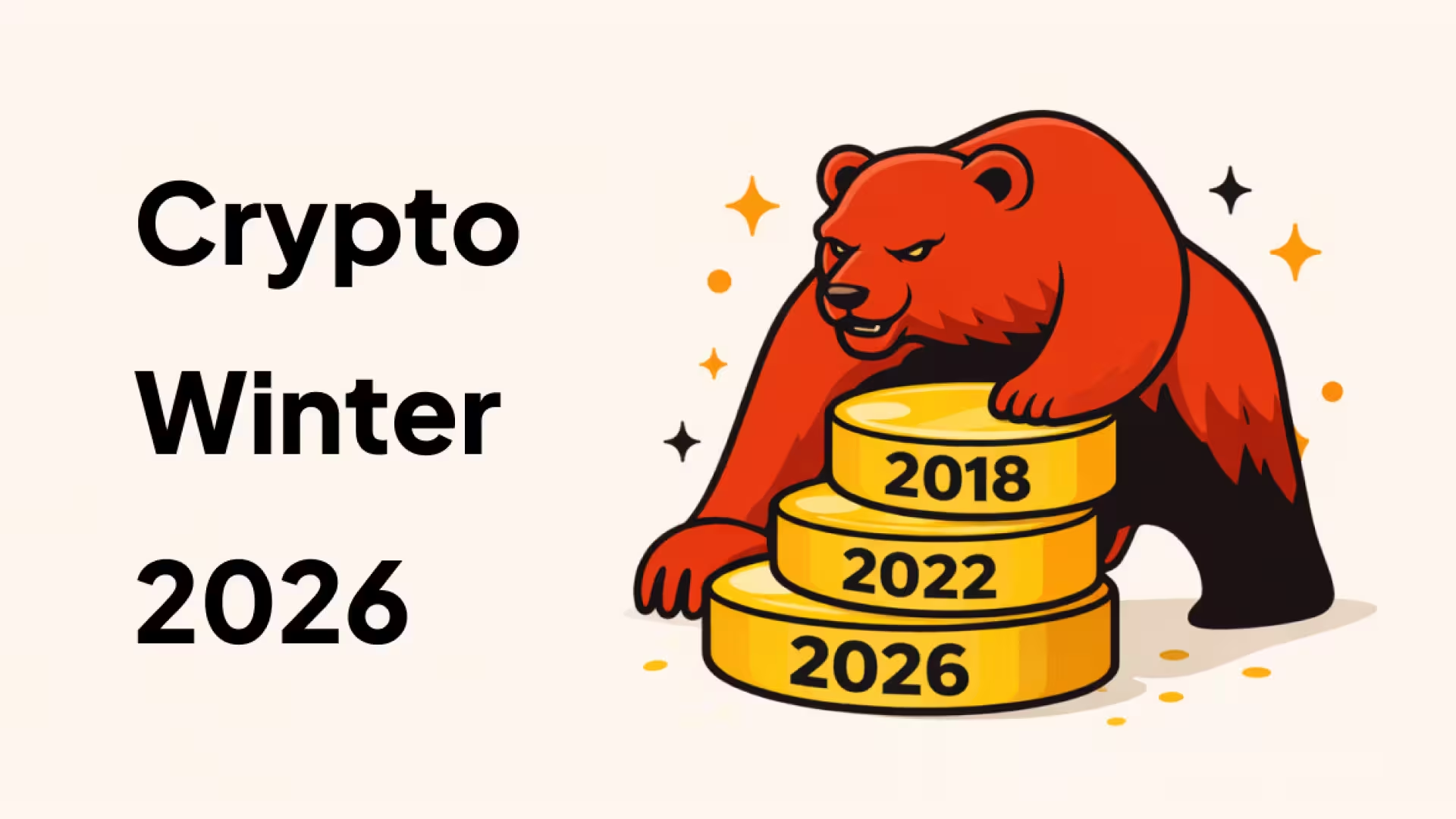
Is this another crypto winter? And how does it compare to 2018 and 2022?
What Triggered the 2026 Crash?
Unlike 2022, there is no single catastrophic event driving this downturn. No exchange has collapsed. No major protocol has imploded. Instead, the 2026 crash appears driven by a combination of factors:
- Post-cycle correction: The October 2025 peak followed the classic 12–18 month post-halving rally, and the drawdown aligns with historical bear market timing
- Macro pressure: Elevated interest rates and a strong U.S. dollar have compressed risk appetite across all markets
- Institutional de-risking: As Bitcoin increasingly trades like a high-beta tech stock, institutional allocators are trimming exposure as part of standard risk management
- Quantum computing FUD: Growing awareness of quantum threats to Bitcoin's cryptography has added a new dimension of uncertainty
- Leverage flush: The "Black Sunday" event on February 1, 2026, saw Bitcoin briefly crash below $76,000 during thin weekend liquidity, triggering cascading liquidations
Comparing the Numbers: 2018 vs 2022 vs 2026
*Still unfolding as of February 2026
Key Differences in 2026
No industry collapse. In 2022, the dominoes fell: Terra/Luna, Three Arrows Capital, Celsius, Voyager, FTX. Each failure exposed counterparty risk and drained liquidity from the system. In 2026, major crypto companies, exchanges, and protocols remain operational. Ethereum processes over $1 trillion in monthly stablecoin transactions. Solana transaction fees and activity are at all-time highs.
Institutional infrastructure exists. Spot Bitcoin ETFs, regulated custody solutions, and stablecoin frameworks (including the GENIUS Act passed in 2025) provide structural support that did not exist in previous winters.
The drawdown is shallower (so far). Previous bear markets saw 78–84% peak-to-trough declines. The current drawdown of roughly 45–52% is significant but structurally less severe. The ETF cost basis around $80,000 may provide a floor that previous cycles lacked.
Leverage was the amplifier, not fundamentals. The February 1 "Black Sunday" crash was driven by thin weekend liquidity and cascading liquidations, not fundamental deterioration. Open interest collapsed from $103 billion to $61 billion, with 335,000 traders liquidated in a single day.
Sentiment: Extreme Fear as a Historical Signal
Every previous Extreme Fear reading at these levels has eventually preceded major rallies:
- 2018: Extreme fear persisted for weeks at the bottom. Bitcoin eventually rallied from ~$3,200 to $69,000 — a 20x return for holders who endured the full recovery, though it took over two years
- March 2020: The COVID crash produced single-digit fear readings. Bitcoin rallied from ~$4,000 to $69,000 within 20 months
- 2022: The Terra/Luna collapse pushed fear to 6. Recovery was slow but led to new all-time highs by late 2024
The pattern is consistent: extreme fear marks seller exhaustion, not the end of the asset class. But recovery timelines vary dramatically — from months to years.
What Analysts Are Saying
- Fidelity's Jurrien Timmer: Expects support in the $65,000–$75,000 range, consistent with a standard bear year in the 4-year cycle
- Canary Capital's Steven McClurg: Forecasts Bitcoin could fall to $50,000 by summer 2026
- K33 Research: Identifies $60,000 as a likely bottom, expecting consolidation between $60,000–$75,000
- Citi's Alex Saunders: Warns of further downside below $70,000, potentially reaching $39,000–$53,000
- Standard Chartered: Slashed their Bitcoin price prediction from $150,000 to $100,000, warning Bitcoin may drop to $50,000 as the crypto winter continues
Is This Actually a Crypto Winter?
It depends on your definition. If a crypto winter means 80%+ drawdowns, industry-wide collapses, and years of recovery — 2026 hasn't met that bar yet. The infrastructure is stronger, the regulatory framework is more developed, and no major players have failed.
But if a crypto winter means sustained fear, widespread capitulation, and months of sideways-to-down price action after a cycle peak — then the conditions are clearly present.
The most honest assessment: 2026 is a correction with crypto winter characteristics, but without the structural damage that defined 2018 and 2022. Whether it deepens into a full-blown winter depends on macro conditions, particularly Fed policy and global liquidity.
What to Watch
- Fed rate decisions: Dovish pivots have historically ended crypto bear markets
- ETF flows: Sustained outflows would signal institutional exit; stabilization would suggest a floor
- Fear & Greed Index: The shift from extreme fear back above 20–25 has historically marked the point where the worst was over
- On-chain accumulation: Whale buying during fear has been a reliable leading indicator in previous cycles
Conclusion
Every previous crypto winter felt like the end. None of them were. The 2026 downturn shares characteristics with both 2018 and 2022, but the structural context is fundamentally different — stronger infrastructure, institutional participation, and no systemic collapses.
History doesn't guarantee a recovery, but it does provide a framework: extreme fear has consistently preceded the best long-term entry points in Bitcoin's history. The question isn't whether the market will recover — it's how long the process takes.
Learn more about Backpack
Exchange | Wallet | Twitter | Discord | Reddit
Disclaimer: This content is presented to you on an “as is” basis for general information and educational purposes only, without representation or warranty of any kind. It should not be construed as financial, legal or other professional advice, nor is it intended to recommend the purchase of any specific product or service. You should seek your own advice from appropriate professional advisors. Where the article is contributed by a third party contributor, please note that those views expressed belong to the third party contributor, and do not necessarily reflect those of Backpack. Please read our full disclaimer for further details. Digital asset prices can be volatile. The value of your investment may go down or up and you may not get back the amount invested. You are solely responsible for your investment decisions and Backpack is not liable for any losses you may incur. This material should not be construed as financial, legal or other professional advice.