How Geopolitical Events Move Crypto Markets: Oil, Gold, and the Strait of Hormuz
The relationship between geopolitics and crypto markets became impossible to ignore in early 2026. When US and Israeli forces struck Iran on February 28, the immediate effects rippled through every major asset class — oil, gold, equities, and crypto included.
Understanding how geopolitical events transmit through financial markets is no longer optional knowledge for crypto traders. The Strait of Hormuz, central bank policy responses, oil price shocks, and safe-haven flows all directly influence the assets you trade on platforms like Backpack Exchange.
The Transmission Chain: From Conflict to Crypto
Step 1: Supply disruption. Military conflict near critical infrastructure — like oil production facilities or shipping routes — creates immediate supply concerns. The Strait of Hormuz handles approximately 20% of global oil shipments. Any threat to this chokepoint sends oil prices higher.
Step 2: Oil prices rise. During the February 28 strikes, Brent crude jumped to $77-82 per barrel, a gain of 6-13% in some sessions.
Step 3: Inflation expectations increase. When energy costs rise, market participants expect broader inflation. This shifts expectations for central bank policy — particularly whether the Federal Reserve will cut or hold interest rates.
Step 4: Risk repricing. Higher inflation expectations and geopolitical uncertainty trigger a “risk-off” environment. Investors move capital from higher-risk assets (equities, crypto) into perceived safe havens (gold, US Treasuries, the Swiss franc).
Step 5: Crypto responds. Bitcoin dropped 3.8% to $63,000 before recovering. Tokenized commodities like PAXG saw strong demand on 24/7 crypto exchanges.
The Strait of Hormuz: Why It Matters
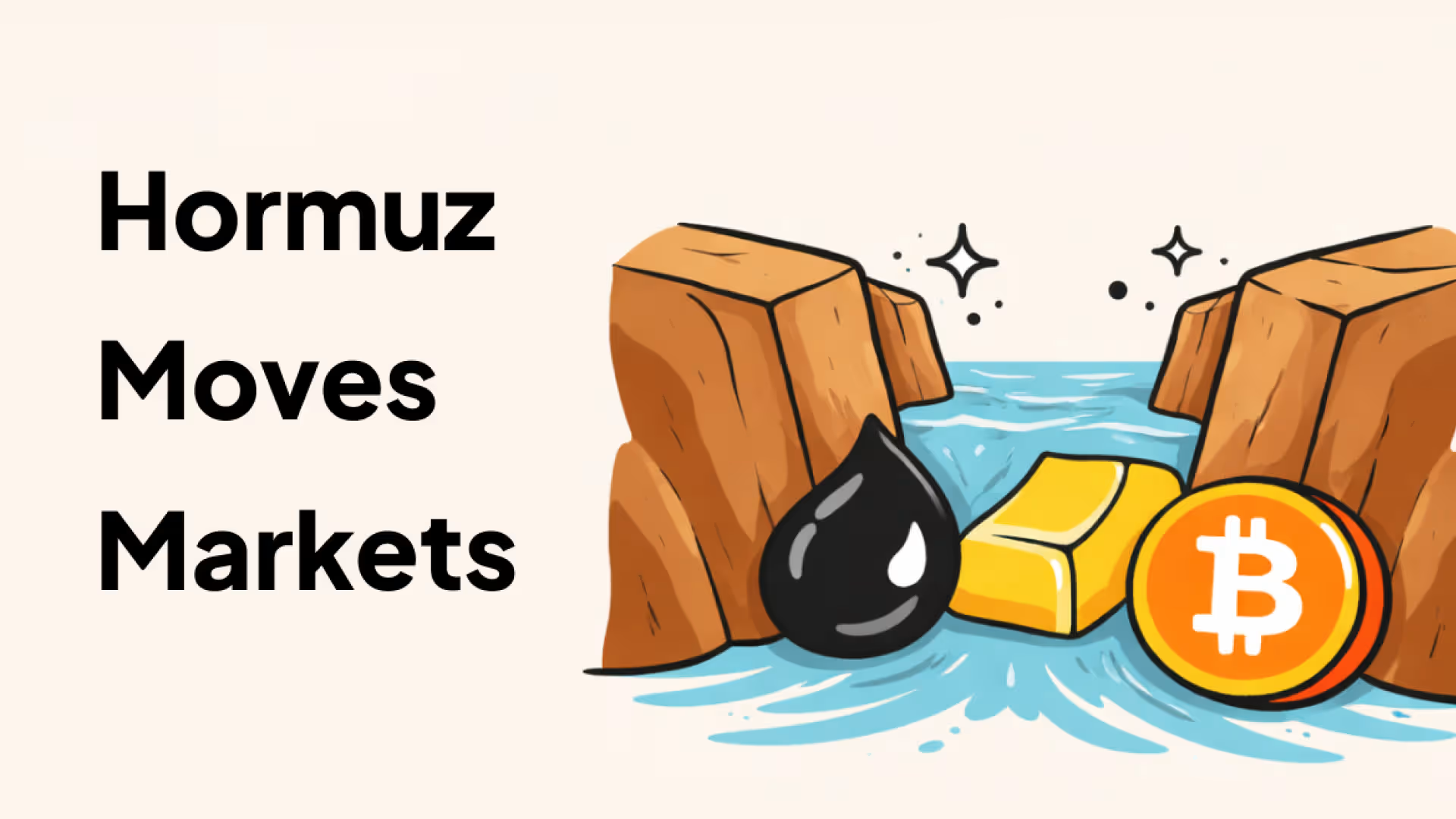
The Strait of Hormuz is the most important oil chokepoint in the world. Roughly 20 million barrels of oil pass through it daily. Iran controls the northern coast.
When the US-Iran conflict escalated, President Trump pledged to escort tankers through the Strait. The S&P 500 partially recovered from a 2.5% intraday plunge on that reassurance alone. Bitcoin also held ground better than equities during that specific moment.
For crypto traders, Strait of Hormuz risk translates into higher oil, which means inflation fears, which means pressure on risk assets. But sustained conflict could prompt Fed rate cuts — a longer-term crypto tailwind.
How Different Assets Responded (Feb 28 Weekend)
Gold (XAU). Surged to $5,400+ — traditional safe haven.
PAXG. Rallied with gold, 24/7 — tokenized safe haven.
Oil (Brent). Jumped to $77-82/barrel — supply disruption trade.
Bitcoin. Dropped to $63K, recovered to $68K+ — risk asset / settlement layer.
Ethereum. Dropped to ~$1,836, recovered to ~$1,965.
S&P 500 futures. Down 1-2%.
US Dollar (DXY). Strengthened to 99+.
The standout observation: crypto markets provided continuous price discovery while traditional markets were dark. Perpetual futures volume spiked as traders used the 24/7 infrastructure to hedge, rebalance, and express views on macro risk.
Strategies for Trading During Geopolitical Uncertainty
Diversify across uncorrelated assets. Hold some allocation to safe-haven instruments alongside risk assets. On Backpack, this could mean holding PAXG spot alongside BTC or SOL positions. PAXG moved in the opposite direction of crypto during the Iran crisis.
Use perpetual futures for hedging. If you hold spot BTC and expect short-term downside from geopolitical events, a BTC-PERP short position can offset losses. Backpack’s Interest Bearing Perpetuals mean your collateral continues earning yield even while hedging.
Enable Auto Lend. During periods of high volatility, lending rates typically increase as demand for borrowing spikes. With Auto Lend enabled, your idle assets capture this yield automatically.
Watch funding rates. During the Iran crisis, Bitcoin perpetual funding rates swung to -6% — meaning shorts were paying a premium. Extreme negative funding historically signals panic and often precedes a bounce. Understanding how funding rates work can help identify capitulation moments.
Consider the broader portfolio. Backpack is expanding into tokenized equities through its partnership with Superstate. As on-chain equities become available, the ability to hold stocks, tokenized gold, and crypto in one cross-margined account creates more tools for managing geopolitical risk. Join the waitlist for early access.
Learn more about Backpack
Exchange | Wallet | Twitter | Discord | Reddit
Disclaimer: This content is presented to you on an “as is” basis for general information and educational purposes only, without representation or warranty of any kind. It should not be construed as financial, legal or other professional advice, nor is it intended to recommend the purchase of any specific product or service. You should seek your own advice from appropriate professional advisors. Where the article is contributed by a third party contributor, please note that those views expressed belong to the third party contributor, and do not necessarily reflect those of Backpack. Please read our full disclaimer for further details. Digital asset prices can be volatile. The value of your investment may go down or up and you may not get back the amount invested. You are solely responsible for your investment decisions and Backpack is not liable for any losses you may incur. This material should not be construed as financial, legal or other professional advice.