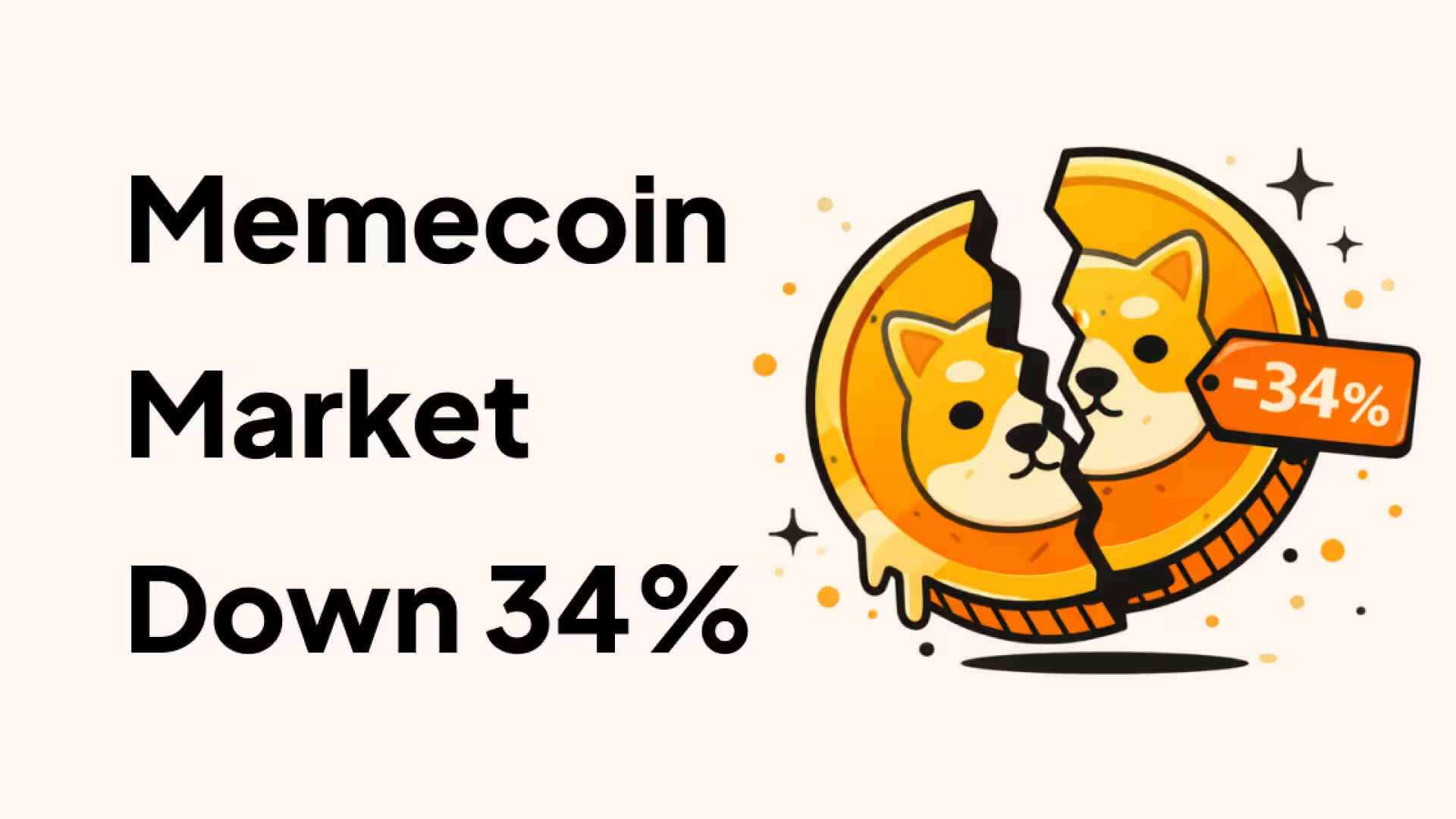
The total memecoin market capitalization has dropped 34% to approximately $31 billion over the past 30 days, according to CoinMarketCap data as of mid-February 2026. The decline coincided with a broader crypto market sell-off that pushed Bitcoin near $60,000 on February 3 — its lowest level since October 2024.
Social media sentiment has turned sharply negative, with traders increasingly writing off meme tokens as a failed trend. But analytics firm Santiment argues that this level of pessimism may actually be a contrarian signal.
What's Happening to Memecoins?
The numbers paint a clear picture of sector-wide pain:
- Dogecoin (DOGE): Down approximately 32% over 30 days
- Dogwifhat (WIF): Down approximately 42% over 30 days
- BONK: Down approximately 47% over 30 days
- PEPE and SHIB: Both showing steep 30-day drawdowns
Trading volumes in smaller meme tokens have thinned significantly compared to earlier peaks. Retail participation appears weaker than in previous meme-driven cycles, and brief rallies are being quickly sold into.
The broader market context matters: meme tokens are high-beta risk assets that amplify swings in the wider market. When Bitcoin de-risks, memecoins typically see sharper drawdowns because they are more sensitive to leverage, thinner liquidity, and momentum-driven participation.
The "Permanently Dead" Narrative
In a report published February 15, 2026, crypto sentiment analytics platform Santiment identified what it describes as a classic capitulation signal across the memecoin sector.
Santiment noted a growing narrative of "nostalgia" around memecoins, with traders treating the sector as if it is permanently finished. Social media conversations have shifted from speculation about the next meme rally to a collective acceptance that the "meme era is over."
"This collective acceptance of the 'end of the meme era' is a classic capitulation signal," Santiment said. "Watch sectors that the crowd has left for dead; max pain often marks the bottom."
The firm quantified the sentiment shift by pointing to a bullish-to-bearish comment ratio sitting below 1.0 (approximately 0.89), meaning more negative than positive commentary across major platforms — a condition that has historically coincided with rebounds when expectations become one-sided.
Why Capitulation Can Be Contrarian Bullish
Santiment's framework is based on a consistent historical pattern: markets tend to move against consensus expectations when pessimism becomes entrenched.
The logic is straightforward:
- When everyone believes an asset is dead, the remaining holders have already sold
- Selling pressure diminishes as fewer traders remain engaged
- Any positive catalyst can trigger outsized moves because positioning is one-sided
- The absence of attention reduces incremental selling pressure
This doesn't guarantee a rebound. But it does suggest that the risk/reward profile shifts when sentiment reaches extreme levels.
What the Data Shows
Among the top 100 cryptocurrencies, memecoin performance over the past week (as of mid-February 2026) has been mostly flat, with a few notable exceptions:
- Pippin (PIPPIN): Surged 243% over 7 days — a significant outlier
- Official Trump (TRUMP): Up 1.37%
- Shiba Inu (SHIB): Up 1.11%
The pattern of isolated spikes amid broad weakness is typical of late-stage capitulation — a few tokens catch short-term bids while the majority continue to bleed.
How This Compares to Previous Memecoin Crashes
Memecoins have experienced multiple boom-and-bust cycles:
2021 DOGE/SHIB rally and crash: Dogecoin rallied from under $0.01 to over $0.70 in early 2021, then crashed over 90% during the subsequent bear market. SHIB followed a similar trajectory. Both eventually recovered during the next cycle.
2024 Solana memecoin season: Tokens like BONK, WIF, and POPCAT saw explosive gains during Solana's network revival, followed by sharp corrections.
2025 political memecoins: The launch of Trump-themed and other political meme tokens created a speculative frenzy that eventually faded as attention shifted elsewhere.
In each case, the "memecoins are dead" narrative preceded the next rally. The timing was unpredictable — sometimes weeks, sometimes months — but the pattern of capitulation preceding recovery has been consistent.
Will This Time Be Different?
There are arguments on both sides:
Case for recovery:
- Extreme negative sentiment has historically preceded rebounds
- Memecoins tend to rally when broader market risk appetite returns
- The underlying infrastructure (Solana, Ethereum L2s) that supports memecoin activity is stronger than ever
- Cultural attention cycles are short — what feels "dead" today can resurface quickly
Case for continued weakness:
- Institutional participation in crypto is concentrated in Bitcoin and Ethereum, not memecoins
- Narrative rotation toward fundamentals-driven sectors (RWAs, DeFi infrastructure) may redirect capital away from speculative tokens
- Previous altcoin seasons saw broad-based rallies; the next one may be more selective, benefiting only a small number of tokens
- The macro environment (elevated rates, risk-off positioning) disproportionately hurts the most speculative assets
What to Watch
Several signals could indicate whether memecoins are setting up for a genuine recovery:
- Bitcoin stabilization: Memecoins typically can't rally while Bitcoin is in freefall. A BTC floor in the $60,000–$70,000 range would be a prerequisite
- Volume return: Sustained increases in trading volume across multiple meme tokens (not just isolated spikes) would signal renewed interest
- Social sentiment flip: When the bullish-to-bearish ratio crosses back above 1.0, it would suggest the capitulation phase is ending
- Broader altcoin rotation: In previous cycles, Bitcoin rallied first, followed by Ethereum, then altcoins, then memecoins. If this sequence begins, memecoins would be a late-stage beneficiary
Conclusion
The memecoin market is in clear distress. A 34% decline in 30 days, plummeting social sentiment, and thinning volume all paint a picture of capitulation.
Whether this marks the end of the meme era or the setup for the next rally depends on factors largely outside the memecoin sector itself — primarily Bitcoin's trajectory, macro liquidity, and broader market risk appetite.
Santiment's framework is worth considering: when everyone agrees that something is dead, the remaining selling pressure is often exhausted. That doesn't mean a rebound is guaranteed or imminent. But it does mean the sector deserves attention precisely when the consensus says to look away.
Learn more about Backpack
Exchange | Wallet | Twitter | Discord | Reddit
Disclaimer: This content is presented to you on an “as is” basis for general information and educational purposes only, without representation or warranty of any kind. It should not be construed as financial, legal or other professional advice, nor is it intended to recommend the purchase of any specific product or service. You should seek your own advice from appropriate professional advisors. Where the article is contributed by a third party contributor, please note that those views expressed belong to the third party contributor, and do not necessarily reflect those of Backpack. Please read our full disclaimer for further details. Digital asset prices can be volatile. The value of your investment may go down or up and you may not get back the amount invested. You are solely responsible for your investment decisions and Backpack is not liable for any losses you may incur. This material should not be construed as financial, legal or other professional advice.