Stablecoin stocks are shares of public companies connected to stablecoin issuance, crypto trading, blockchain payments, tokenized assets, or digital dollar settlement.
In this article, the term stablecoin stock refers to public companies whose businesses may be affected by the growth of stablecoin usage, digital payments, and blockchain-based settlement.
Examples include Circle Internet Group (CRCL), Coinbase (COIN), PayPal (PYPL), Robinhood (HOOD), Visa (V), and Mastercard (MA). Each company has a different level of exposure through issuance, payments, trading, custody, settlement, or crypto infrastructure.
For background on the stablecoin most closely tied to public equity markets, read Backpack’s guide to USDC and how Circle’s dollar-backed stablecoin works. For the public-market angle, see what Circle’s IPO means for USDC, CRCL stock, and Solana’s stablecoin market.
Key Takeaways
- Public companies can have different levels of exposure to stablecoin adoption.
- CRCL gives investors exposure to Circle, the company behind USDC.
- COIN has stablecoin exposure through Coinbase, USDC distribution, and Base.
- PYPL has stablecoin exposure through PayPal USD, also known as PYUSD.
- Visa and Mastercard have payment network exposure through blockchain settlement initiatives.
What Are Stablecoin Stocks?
Stablecoin stocks are publicly traded companies with business exposure to stablecoins or stablecoin-related infrastructure.
This can include stablecoin issuers, crypto exchanges, payment companies, blockchain settlement networks, brokerages with crypto products, tokenized asset platforms, and companies building on-chain dollar infrastructure.
Their performance depends on the underlying business, including revenue growth, market share, regulation, and investor demand.
If you are new to how markets work, start with Backpack’s guide to how stock markets work.
Stablecoin Stocks List
Circle (CRCL): Stablecoin Issuer Exposure
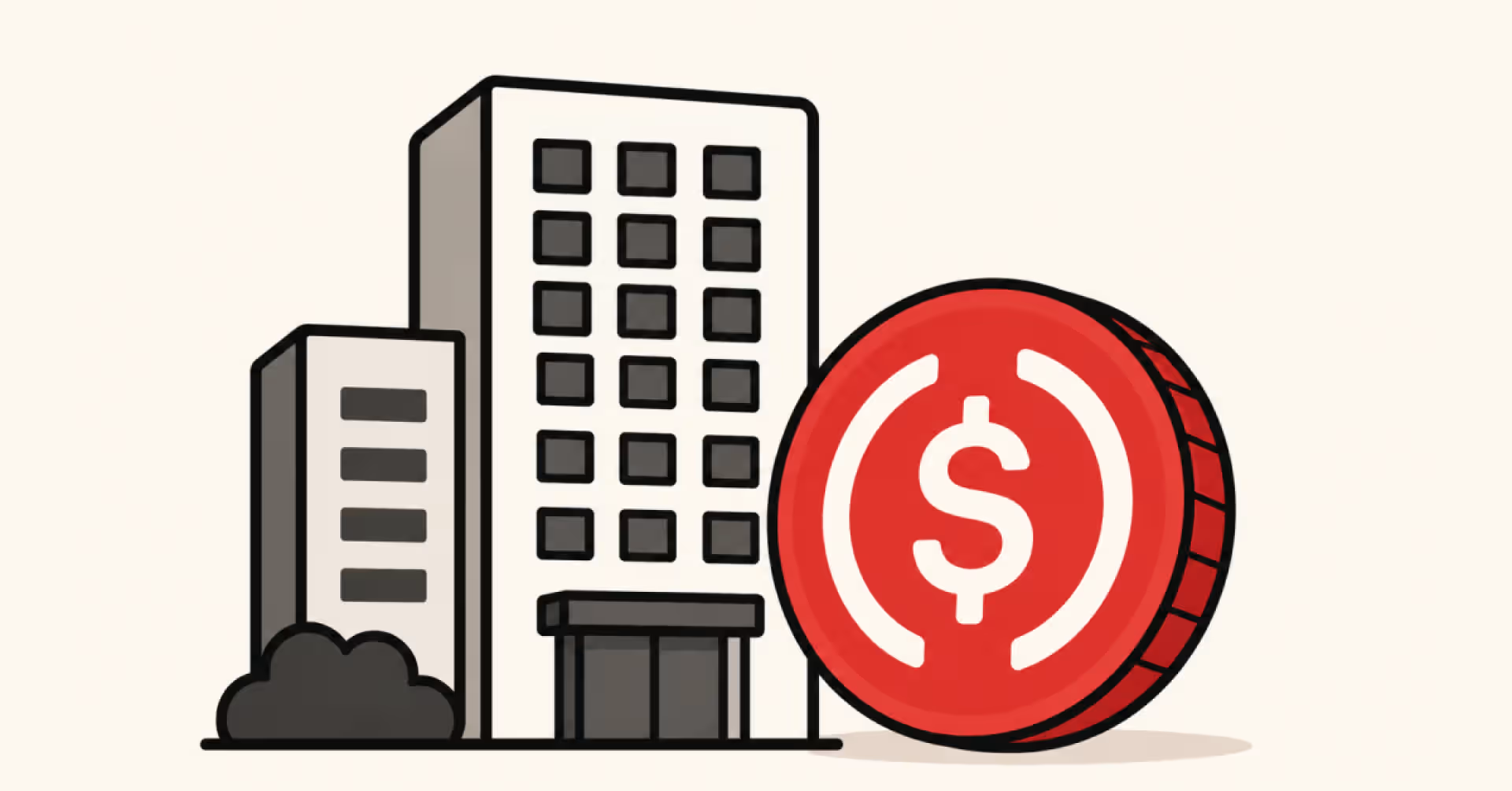
Circle Internet Group is the company behind USDC, one of the largest U.S. dollar-backed stablecoins. Because Circle is publicly traded under the ticker CRCL, it gives equity investors exposure to a business built around stablecoin issuance, reserve income, payments infrastructure, and institutional adoption.
Its stock price can move based on Circle’s revenue, interest rates, regulation, growth expectations, and broader market conditions.
Coinbase (COIN): USDC Distribution and Base
Coinbase is not a stablecoin issuer, but it has meaningful stablecoin exposure.
Its exposure comes from USDC distribution, stablecoin balances held on Coinbase, Base network activity, crypto trading fees, custody services, institutional services, and on-chain payment infrastructure.
COIN is broader than a stablecoin-related stock. It is also tied to crypto trading volume, Bitcoin and Ethereum market cycles, institutional activity, and regulation.
PayPal (PYPL): PYUSD and Consumer Payments
PayPal has stablecoin exposure through PayPal USD, also known as PYUSD.
PYUSD is part of PayPal’s broader payments strategy. PayPal already has a large consumer and merchant network, so stablecoins may fit into checkout, transfers, remittances, and merchant settlement over time.
PYPL is not mainly a stablecoin company. Stablecoins are one part of a much larger payments business.
Visa and Mastercard: Payment Network Exposure
Visa and Mastercard are not stablecoin issuers. They are payment networks that are testing blockchain settlement and tokenized money movement.
Their stablecoin exposure is infrastructure-based. If stablecoins become a common settlement layer between banks, fintech companies, payment processors, and merchants, payment networks may help connect traditional finance with blockchain-based settlement.
This is less direct exposure than Circle or Coinbase, but it may be easier for traditional equity investors to understand.
Robinhood (HOOD): Brokerage, Crypto, and Tokenized Assets
Robinhood has exposure through crypto trading, brokerage distribution, and tokenized stock initiatives. It is not a stablecoin issuer, but it may benefit from broader retail interest in crypto and digital assets.
Who Is the Biggest Stablecoin Company?
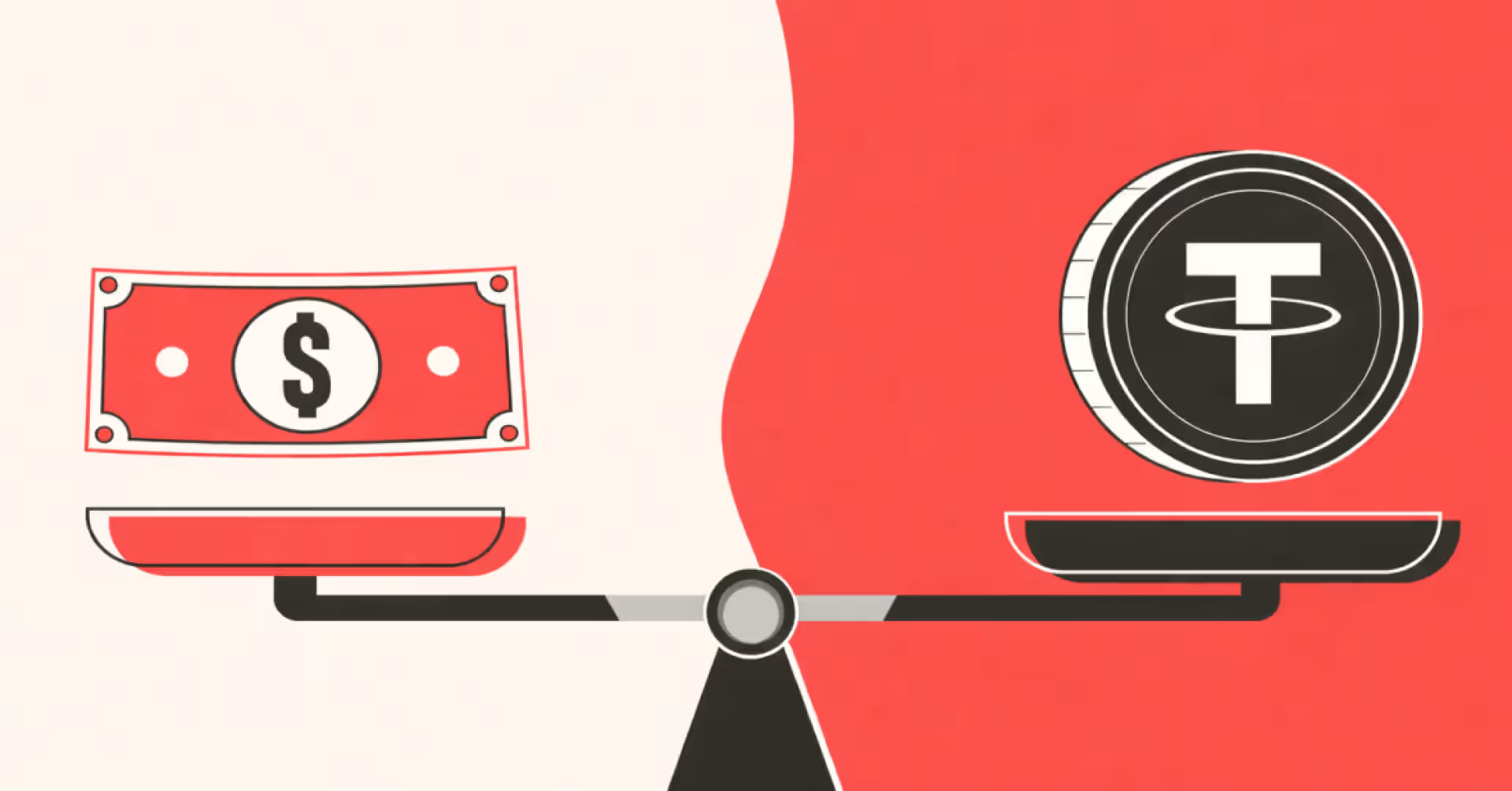
By market share, Tether is the largest stablecoin issuer. USDT remains the largest stablecoin by market capitalization.
Tether is not publicly traded. There is no Tether stock symbol on a major exchange.
For public equity exposure, Circle is the most direct listed stablecoin issuer because it trades as CRCL and issues USDC.
Risks of Stablecoin Stocks
Stablecoin-related stocks can benefit from broader adoption, but they carry distinct equity risks.
- Regulatory risk: Stablecoin frameworks may benefit compliant issuers, but evolving rules can also increase operational costs or restrict existing business models.
- Interest-rate risk: Stablecoin issuers often generate revenue from reserves. If interest rates fall, the income earned on those dollar-backed assets may decrease.
- Competition risk: Banks, fintech firms, crypto exchanges, and traditional payment networks are all vying for market share in the stablecoin and settlement space.
- Valuation risk: Equities linked to crypto infrastructure often trade at high valuations based on growth expectations. Any revenue miss or slowing growth can lead to significant price volatility.
- Peg and trust risk: The underlying business depends on user confidence in reserve transparency, reliable redemptions, and overall operational stability.
- Crypto market risk: Despite having stablecoin exposure, these stocks often correlate with broader crypto market cycles and institutional sentiment toward digital assets.
Bottom Line
Stablecoin stocks are a way to get equity exposure to the growth of digital dollars and blockchain-based settlement. CRCL gives investors exposure to Circle and USDC. COIN offers exposure through Coinbase, USDC distribution, and Base. PYPL has exposure through PYUSD. Visa and Mastercard have payment network exposure. Robinhood adds brokerage and tokenized asset exposure.
These companies should be evaluated like other public businesses. Revenue, margins, regulation, competition, balance sheet strength, and valuation all matter.
Learn more about Backpack
Exchange | Wallet | Twitter | Discord | Reddit
Disclaimer: This content is presented to you on an “as is” basis for general information and educational purposes only, without representation or warranty of any kind. It should not be construed as financial, legal or other professional advice, nor is it intended to recommend the purchase of any specific product or service. You should seek your own advice from appropriate professional advisors. Where the article is contributed by a third party contributor, please note that those views expressed belong to the third party contributor, and do not necessarily reflect those of Backpack. Please read our full disclaimer for further details. Digital asset prices can be volatile. The value of your investment may go down or up and you may not get back the amount invested. You are solely responsible for your investment decisions and Backpack is not liable for any losses you may incur. This material should not be construed as financial, legal or other professional advice.