.avif)
Tokenized equities also called tokenized stocks are blockchain tokens designed to track the price of real company shares such as Apple, Nvidia, or Tesla, and often ETFs as well. Instead of holding a share in a brokerage account, you hold a token that mirrors that share's value on-chain, where it can trade around the clock and, in many cases, move between wallets and into DeFi. This article explains what tokenized equities are, what you actually own, and the part that confuses most people how dividends are handled.
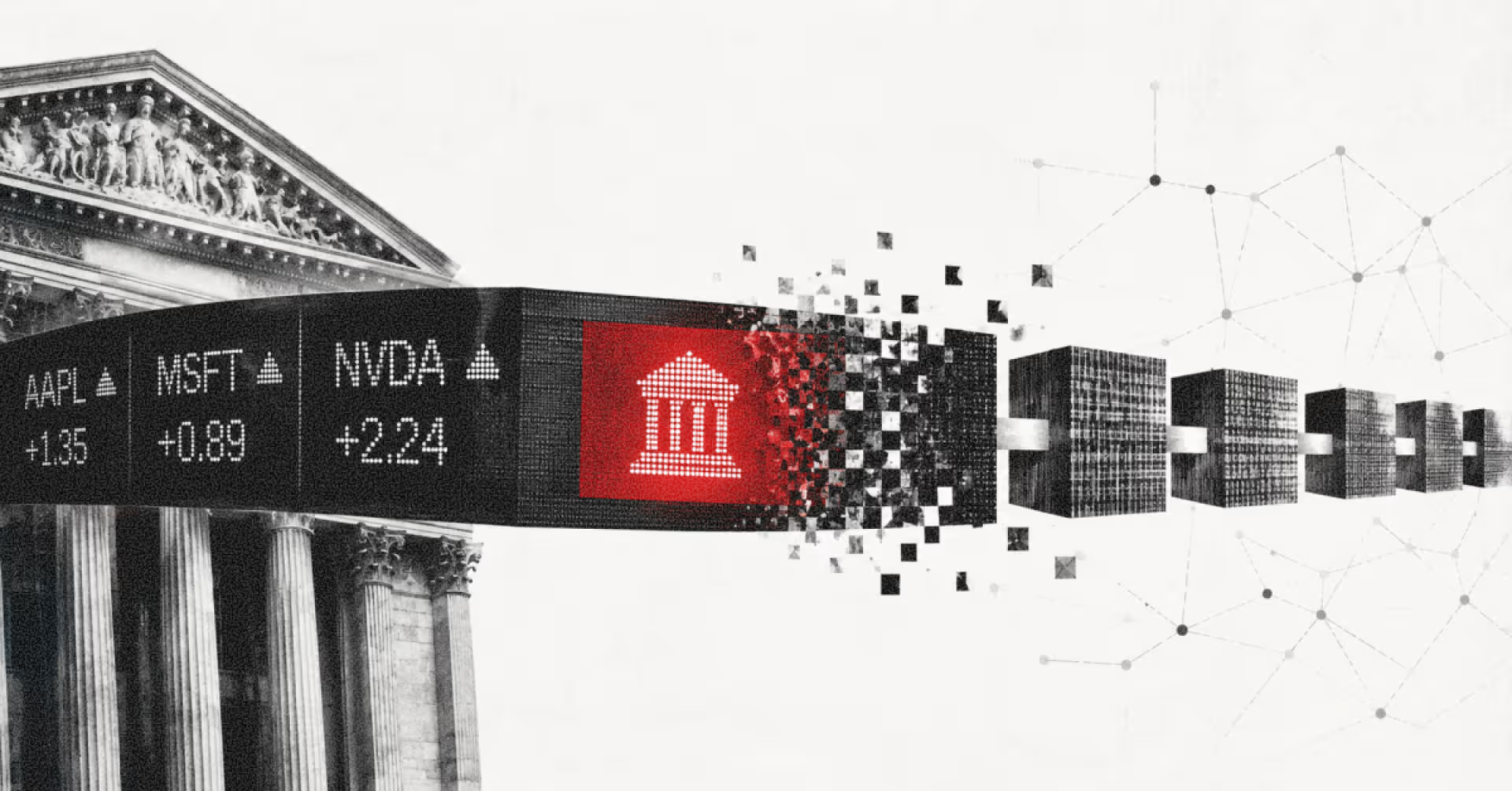
Backpack Securities uses a structure that connects traditional securities infrastructure with onchain distribution. Investors can hold eligible securities through established brokerage infrastructure, convert them into tokenized securities on Solana, and redeem tokenized securities back into the corresponding security entitlement through Backpack Securities.
What Tokenized Equities Are (And How They Work)
At the simplest level, a tokenized equity is a digital token designed to mirror the price movement of a traditional stock (like Apple or Nvidia). For reputable, asset-backed tokens, the lifecycle follows a strict 1:1 pipeline:
- The Underlying Asset: A regulated issuer purchases real shares on traditional legacy exchanges.
- Custody: These physical shares are deposited with a licensed custodian or a Special Purpose Vehicle (SPV) to secure the backing.
- Token Mints & Burns: The issuer mints tokens 1:1 against the physical shares in custody. If tokens are redeemed, they are permanently burned.
- On-Chain Ecosystem: The tokens are deployed to a blockchain (like Solana), allowing for 24/7 trading, self-custody in private wallets, and integration into DeFi protocols.
What Do You Actually Own?
Holding a tokenized stock is not inherently the same as holding a share in a traditional brokerage account. Your legal rights depend entirely on the issuer's setup:
- Synthetic / Cash-Settled Tokens: You own a derivative contract. You have zero claim on real shares and can only exit for cash or stablecoins.
- Tokenized Claims: The token represents a legal claim on an SPV that holds the physical assets.
- Traditional Security Entitlements: Real shares held via established brokerage infrastructure governed by traditional laws (like New York UCC Article 8).
Tokenized Stocks on Backpack
Backpack Securities bridges this divide by connecting traditional financial rails with on-chain distribution. On Backpack, traditional securities are held as real security entitlements under New York law. However, investors can convert them into tokenized claims on Solana for 24/7 trading, and redeem those tokens back into the underlying real shares at any time.
How Dividends Work On-Chain
When an underlying company pays a dividend, the custodian receives the cash. The issuer passes that value to token holders using one of four design patterns:
1. Reinvestment
The dividend value is automatically used to purchase more of the underlying asset.
2. Cash or Stablecoin Payouts
The issuer distributes the dividend value directly to your Web3 wallet as a stablecoin (like USDC), mimicking a traditional cash brokerage payout.
3. Price or Balance Adjustments
Commonly used in synthetic products. The token's smart contract simply shifts its internal pricing target or adjusts token supplies to artificially account for the dividend event.
4. No Dividend Support
The issuer pockets the cash flow, leaving the token holder with zero dividend benefits. This is common with unbacked synthetic or private-market tokens.
Corporate Actions (Splits, Mergers, Spinoffs)
When a company undergoes a stock split or a merger, traditional brokerages handle it automatically via legacy clearing rails. On-chain, the treatment varies heavily by issuer.
Some platforms pause trading entirely or force cash liquidations. For tokenized securities on Backpack, corporate actions are processed through proportional token balance adjustments explicitly designed to maintain exact economic equivalence with the underlying traditional stock.
Learn more about Backpack
Exchange | Wallet | Twitter | Discord | Reddit
Disclaimer: This content is presented to you on an “as is” basis for general information and educational purposes only, without representation or warranty of any kind. It should not be construed as financial, legal or other professional advice, nor is it intended to recommend the purchase of any specific product or service. You should seek your own advice from appropriate professional advisors. Where the article is contributed by a third party contributor, please note that those views expressed belong to the third party contributor, and do not necessarily reflect those of Backpack. Please read our full disclaimer for further details. Digital asset prices can be volatile. The value of your investment may go down or up and you may not get back the amount invested. You are solely responsible for your investment decisions and Backpack is not liable for any losses you may incur. This material should not be construed as financial, legal or other professional advice.