Every government makes decisions about how much to spend and how much to collect in taxes. These decisions, taken together, form what economists call fiscal policy. Whether a government is building infrastructure, cutting income taxes, or reducing public expenditure, it is using fiscal policy to shape economic outcomes. Understanding what fiscal policy is, how it works, and when it is used is essential to understanding macroeconomics and how economies are managed.
Key Takeaways
- Fiscal policy refers to government decisions on spending and taxation
- It directly affects aggregate demand and economic output (GDP)
- Expansionary fiscal policy increases spending or reduces taxes to stimulate growth
- Contractionary fiscal policy reduces spending or raises taxes to control inflation
- Fiscal policy works alongside monetary policy but is controlled by the government, not the central bank
- The multiplier effect means fiscal changes can have an outsized impact on national income
How Does Fiscal Policy Work?
Government spending directly contributes to economic output. This is captured in the national income equation:
GDP = C + I + G + NX
Where:
- C = Consumer spending
- I = Business investment
- G = Government spending
- NX = Net exports
When the government increases its spending (G), it directly raises demand in the economy. At the same time, changes in taxation influence how much households and businesses can spend or invest.
The impact of fiscal policy is often larger than the initial change due to what economists call the multiplier effect. A single increase in government spending can lead to multiple rounds of increased income and consumption throughout the economy.
Types of Fiscal Policy
Fiscal policy can be broadly divided into two types depending on the economic situation.
Expansionary Fiscal Policy
Expansionary fiscal policy is used when economic growth is slow or unemployment is high.
- Increase government spending on public projects, welfare, or services
- Reduce income taxes or corporate taxes
- Run a budget deficit to inject more money into the economy
Goal: Stimulate demand, create jobs, and restore economic confidence.
Contractionary Fiscal Policy
Contractionary fiscal policy is used when inflation is rising too quickly or the economy is overheating.
- Reduce government spending
- Increase taxes
- Move toward a budget surplus
Goal: Slow down economic activity and bring inflation under control.
These are commonly referred to as expansionary and contractionary fiscal policy and are the two core levers available to governments.
Fiscal Policy Tools
Governments use three primary tools to implement fiscal policy:
- Government spending — Direct expenditure on infrastructure, education, healthcare, and defense
- Taxation — Adjusting income tax, corporate tax, or indirect taxes like GST/VAT
- Transfer payments — Welfare benefits, subsidies, and unemployment insurance that redistribute income
Fiscal Policy in Macroeconomics
Fiscal policy is a core component of macroeconomics. It directly influences aggregate demand — the total demand for goods and services in an economy — and plays a key role in stabilizing the economy during different phases of the business cycle.
In times of crisis, governments may adopt aggressive fiscal measures to support economic activity and protect vulnerable groups. During periods of strong growth, fiscal policy may be tightened to prevent the economy from overheating.
Real-World Example
During economic downturns, governments often introduce stimulus packages that increase public spending and reduce taxes. These measures aim to boost demand, create jobs, and restore economic confidence.
2008 Global Financial Crisis: Governments across the world, including the US, UK, and India, launched large fiscal stimulus programs. Public spending was increased on infrastructure and social protection, while taxes were reduced to put more money in the hands of consumers and businesses.
Fiscal Policy vs Monetary Policy
Fiscal policy works alongside monetary policy, but the two differ in how they operate.
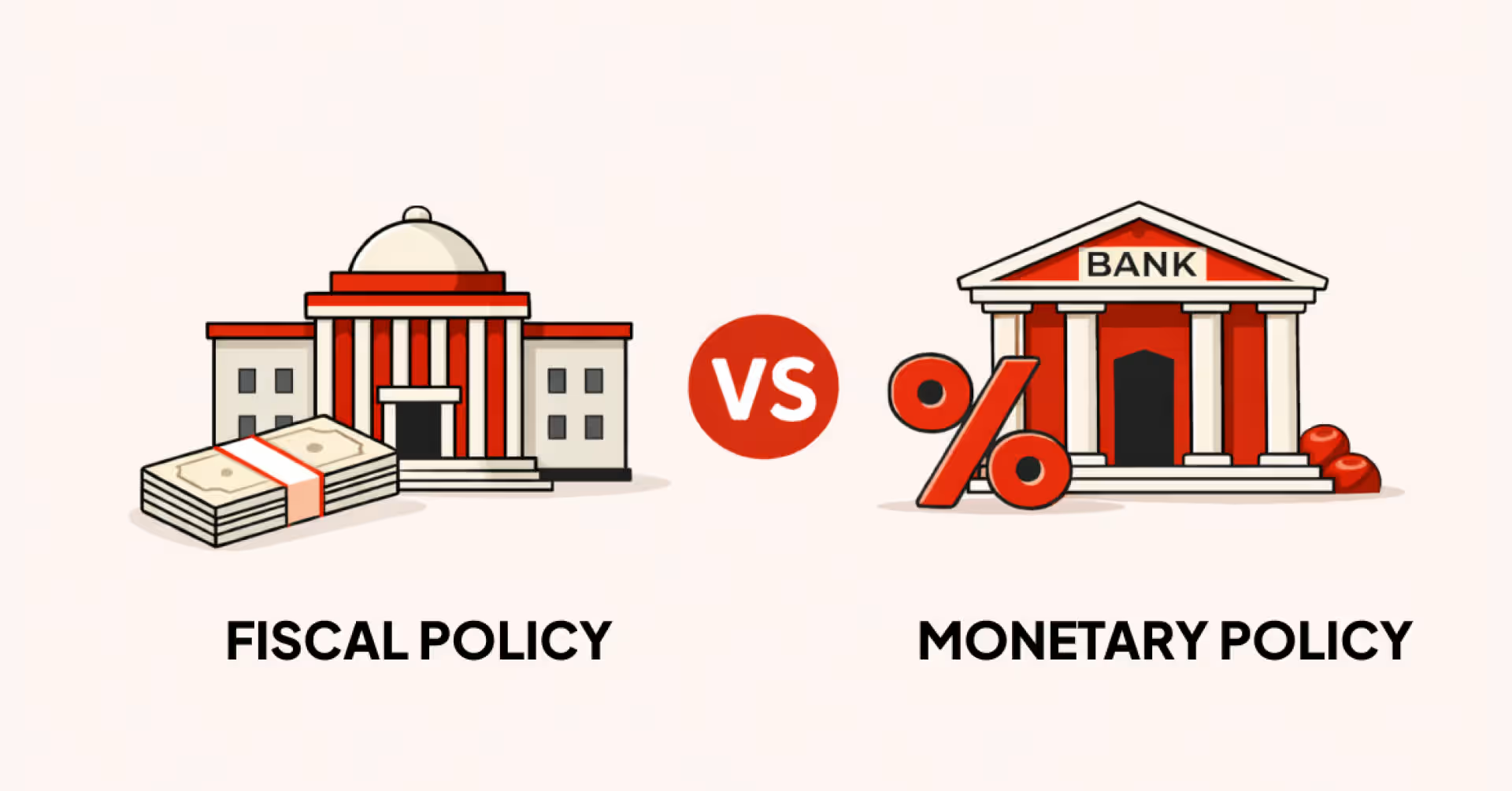
Fiscal policy involves direct government intervention through budgets and taxation, while monetary policy operates through interest rates and the money supply.
To understand the full comparison, read: Difference Between Fiscal Policy and Monetary Policy
Conclusion
Fiscal policy is a powerful tool that allows governments to directly influence economic activity. Through spending and taxation, it shapes growth, employment, and overall economic stability. Whether used to stimulate a sluggish economy or cool an overheating one, fiscal policy remains one of the most important concepts in macroeconomics.
Learn more about Backpack
Exchange | Wallet | Twitter | Discord | Reddit
Disclaimer: This content is presented to you on an “as is” basis for general information and educational purposes only, without representation or warranty of any kind. It should not be construed as financial, legal or other professional advice, nor is it intended to recommend the purchase of any specific product or service. You should seek your own advice from appropriate professional advisors. Where the article is contributed by a third party contributor, please note that those views expressed belong to the third party contributor, and do not necessarily reflect those of Backpack. Please read our full disclaimer for further details. Digital asset prices can be volatile. The value of your investment may go down or up and you may not get back the amount invested. You are solely responsible for your investment decisions and Backpack is not liable for any losses you may incur. This material should not be construed as financial, legal or other professional advice.