More often than not, economists and policymakers are concerned with two major issues in an economy inflation and unemployment. To address these, they rely on two primary tools: fiscal policy and monetary policy. Both are used to influence economic growth, stabilize markets, and manage business cycles, yet they operate in very different ways and are controlled by different institutions. Understanding the difference between fiscal policy and monetary policy is fundamental to understanding how economies are managed.
Key Takeaways
- Fiscal policy is controlled by the government through spending and taxation
- Monetary policy is controlled by the central bank through interest rates and money supply
- Fiscal policy directly boosts or reduces demand; monetary policy works indirectly through financial systems
- Both can be expansionary (to stimulate growth) or contractionary (to reduce inflation)
- Understanding monetary vs fiscal policy explains how governments and central banks respond to recessions, inflation, and crises
What Is Fiscal Policy?
Fiscal policy is the use of government spending and taxation to influence economic activity.
Governments decide:
- How much to spend across sectors like infrastructure, healthcare, education, and defense
- How much revenue to collect through taxes
- Whether to run a budget deficit or surplus
At the macro level, government spending directly contributes to economic output through GDP. When spending increases or taxes are reduced, more money flows into the economy, raising demand. When spending decreases or taxes increase, demand falls. This impact is amplified by the multiplier effect, where one round of spending leads to multiple rounds of economic activity.
For a complete breakdown, read here: What Is Fiscal Policy? Meaning, Types, and Examples
What Is Monetary Policy?
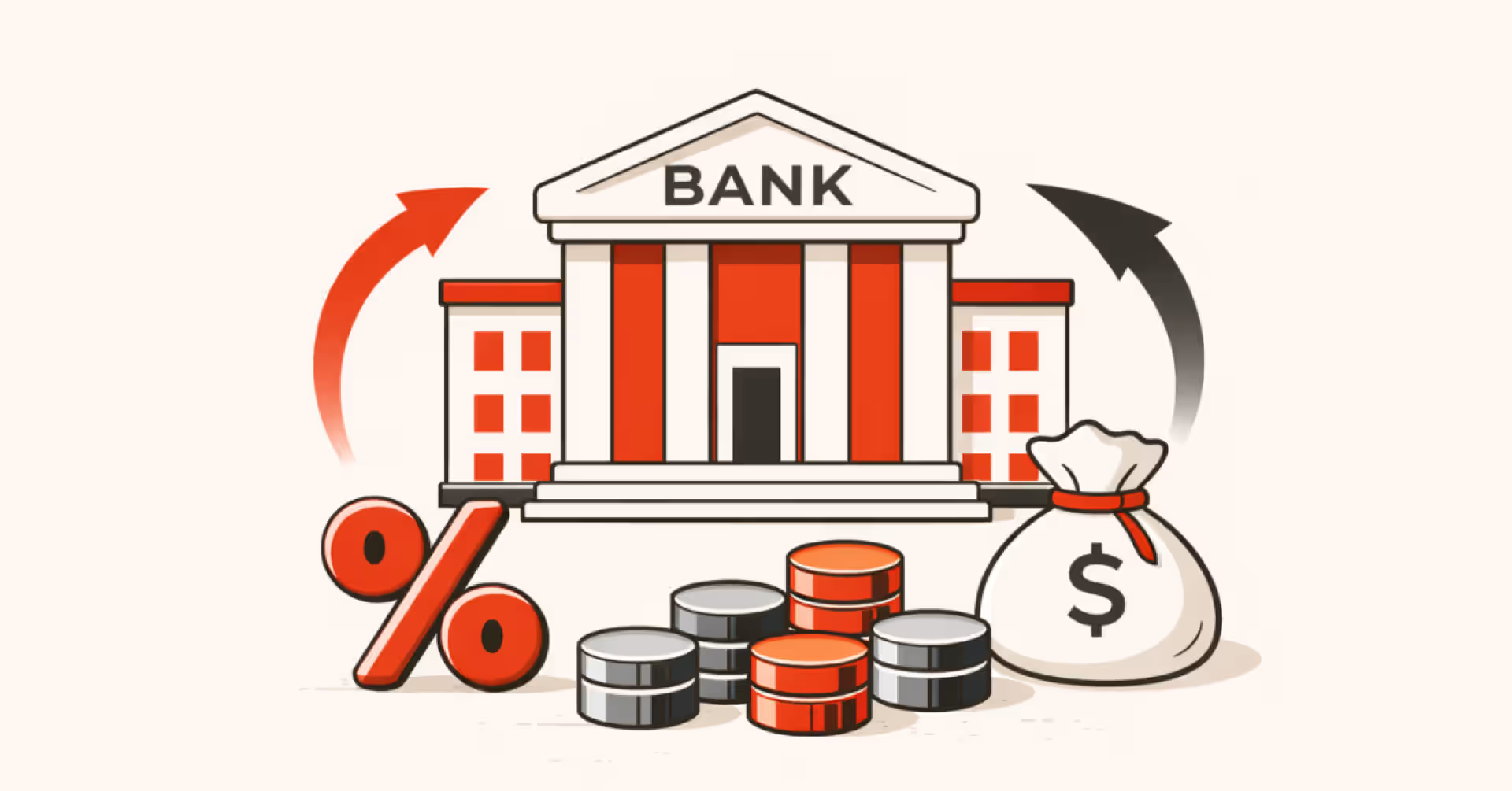
Monetary policy is the process by which a central bank controls the money supply and interest rates to influence economic activity.
Rather than spending money directly or collecting taxes, central banks control:
- Interest rates — the cost of borrowing money
- Money supply — how much money is available in the economy
- Credit availability — how much banks can lend
When interest rates are low, borrowing is cheap. Businesses invest more, consumers spend more, and economic activity rises. When rates are high, borrowing slows, reducing inflation.
For a complete breakdown, read more here: What Is Monetary Policy? Tools, Types, and Examples
Fiscal Policy vs Monetary Policy: Key Differences
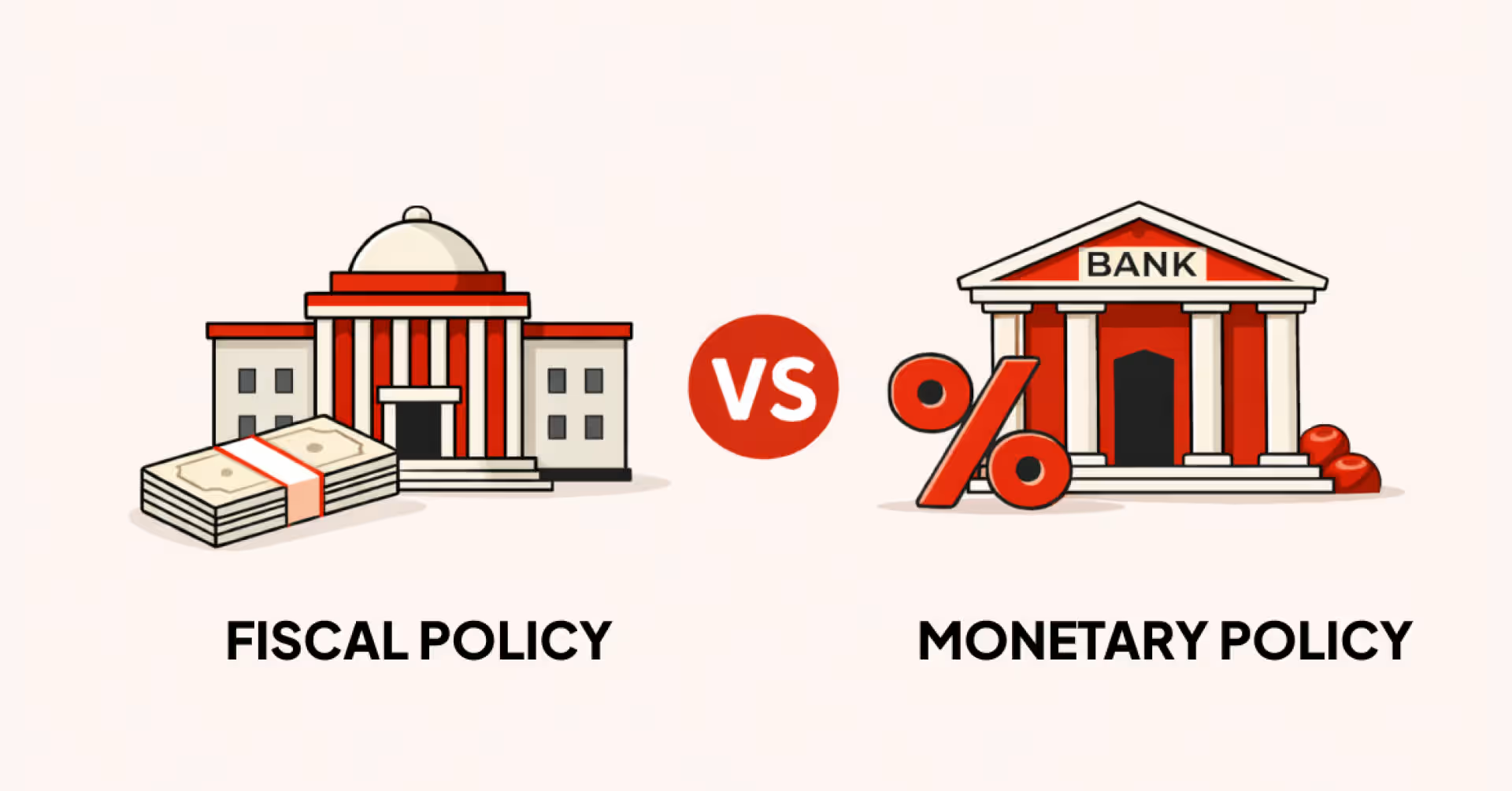
This is one of the most searched comparisons in macroeconomics, whether framed as fiscal vs monetary policy, monetary and fiscal policy, or difference between fiscal and monetary policy, the core distinction comes down to who controls it and how it works.
Expansionary and Contractionary Policies
Both fiscal and monetary policy can either stimulate or slow down the economy.
Expansionary policy is used when growth is slow or unemployment is high:
- Fiscal: increase government spending, reduce taxes
- Monetary: lower interest rates, increase money supply
Contractionary policy is used when inflation rises too quickly:
- Fiscal: reduce government spending, raise taxes
- Monetary: raise interest rates, reduce liquidity
How Do They Affect Inflation?
Fiscal policy can increase inflation when government spending pushes demand beyond the economy's capacity to produce goods and services.
Monetary policy is the primary lever for controlling inflation. Central banks raise interest rates to make borrowing more expensive, which reduces spending and brings prices down over time.
Both are often coordinated during inflationary or deflationary periods.
How Fiscal and Monetary Policy Work Together
In practice, fiscal and monetary policy are often coordinated.
During a recession:
- Governments increase spending (fiscal stimulus)
- Central banks lower interest rates (monetary easing)
This combination amplifies economic recovery.
Real-world example: During the 2008 global financial crisis, governments worldwide increased spending and cut taxes while central banks slashed interest rates and injected liquidity. This dual response helped stabilize global markets and prevent a deeper recession.
If both policies act in opposite directions, their effectiveness weakens and sends mixed signals to markets.
Fiscal and Monetary Policy in Macroeconomics
Both are foundational concepts in macroeconomics and are central to understanding how economies grow, stabilize, and recover. They are the two primary tools used to manage the business cycle — the natural rise and fall of economic activity over time.
For investors and traders, both matter directly. Shifts in government spending plans or central bank interest rate decisions can move equity, bond, and currency markets significantly.
Fiscal vs Monetary Policy in Simple Terms
- Fiscal policy = government budget decisions (spending and taxes)
- Monetary policy = central bank control of money and credit (interest rates and liquidity)
One works through public spending and taxation, the other through borrowing costs and money supply.
Conclusion
Fiscal policy and monetary policy are the two main tools used to manage an economy. One works through government budgets and taxation, while the other operates through interest rates and money supply. Understanding the difference between fiscal policy and monetary policy helps explain how economies grow, stabilize, and respond to crises — and why the decisions made by governments and central banks matter for markets, businesses, and everyday life.
Learn more about Backpack
Exchange | Wallet | Twitter | Discord | Reddit
Disclaimer: This content is presented to you on an “as is” basis for general information and educational purposes only, without representation or warranty of any kind. It should not be construed as financial, legal or other professional advice, nor is it intended to recommend the purchase of any specific product or service. You should seek your own advice from appropriate professional advisors. Where the article is contributed by a third party contributor, please note that those views expressed belong to the third party contributor, and do not necessarily reflect those of Backpack. Please read our full disclaimer for further details. Digital asset prices can be volatile. The value of your investment may go down or up and you may not get back the amount invested. You are solely responsible for your investment decisions and Backpack is not liable for any losses you may incur. This material should not be construed as financial, legal or other professional advice.