Every time a central bank raises or lowers interest rates, it is making a monetary policy decision. These decisions ripple through the entire economy — affecting how much it costs to borrow, how much businesses invest, and how much consumers spend. Monetary policy is one of the most powerful tools in macroeconomics, used by central banks around the world to maintain price stability and support sustainable economic growth. Understanding how it works, what tools it uses, and how it differs from fiscal policy is essential for anyone studying economics or financial markets.
Key Takeaways
- Monetary policy is managed by a country's central bank, not the government
- The primary tool is interest rates — lower rates stimulate borrowing; higher rates reduce inflation
- Other tools include reserve requirements and open market operations
- Expansionary monetary policy increases the money supply to stimulate growth
- Contractionary monetary policy reduces the money supply to control inflation
- Monetary policy works indirectly through the financial system, unlike fiscal policy which directly affects demand
How Does Monetary Policy Work?
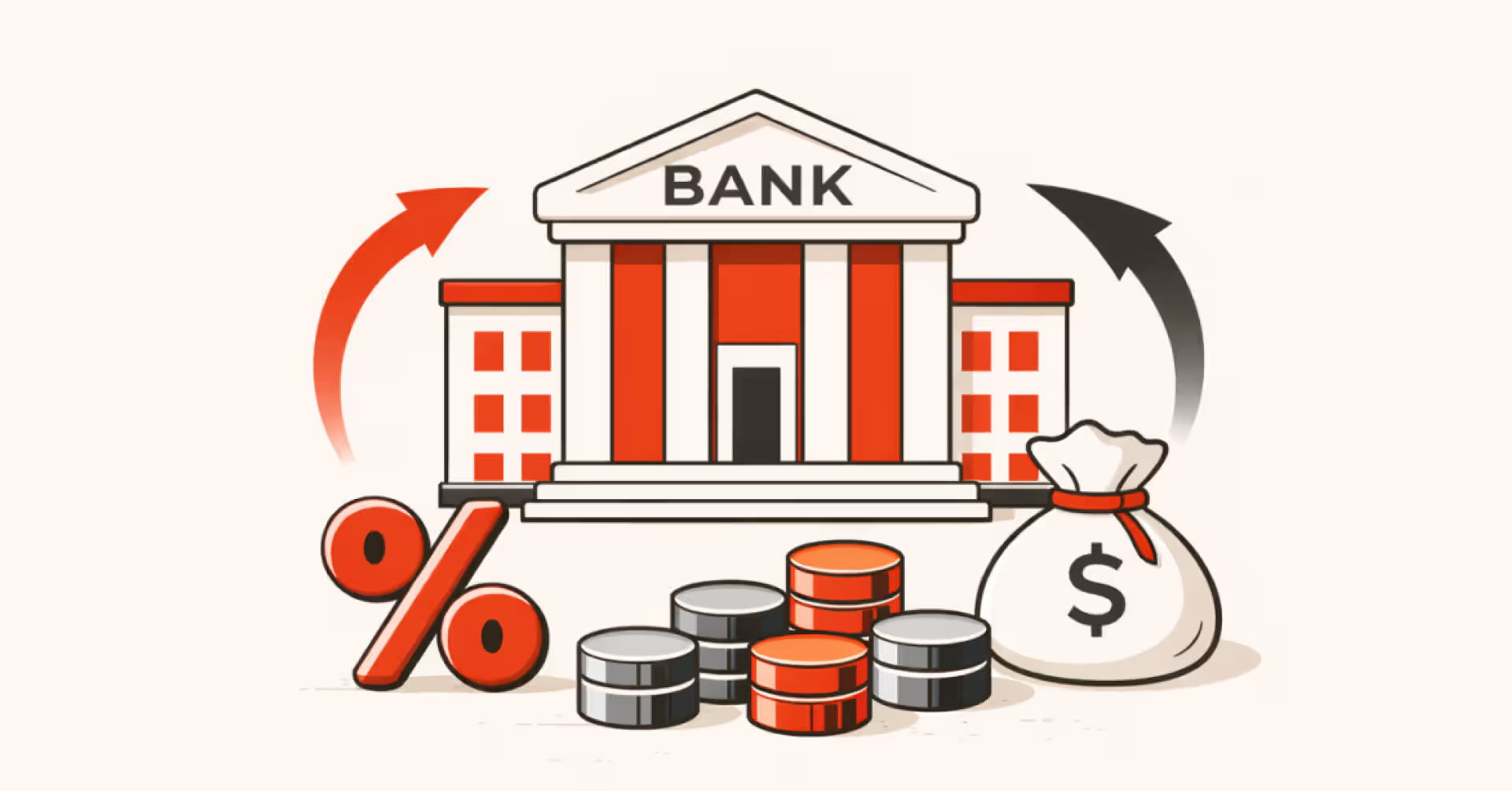
Monetary policy works by influencing how much money is available in the economy and how expensive it is to borrow.
When interest rates are low:
- Borrowing becomes cheaper
- Businesses invest more
- Consumers spend more
- Economic activity increases
When interest rates are high:
- Borrowing becomes expensive
- Spending slows down
- Inflation is brought under control
Central banks also influence how much money banks can lend and how much liquidity is available in the financial system at any given time.
Tools of Monetary Policy
Central banks use several tools to manage the economy:
1. Interest Rates
The most widely used tool. Central banks set a benchmark interest rate (such as the repo rate or federal funds rate) that influences borrowing costs across the economy.
- Lower rates → cheaper credit → more spending and investment
- Higher rates → costlier credit → reduced spending and inflation control
2. Reserve Requirements
Central banks set rules on how much money commercial banks must keep in reserve and cannot lend out. Adjusting this requirement directly affects how much credit banks can create.
3. Open Market Operations
Central banks buy or sell government securities (bonds) in the open market to control liquidity.
- Buying bonds → injects money into the system → expansionary
- Selling bonds → withdraws money from the system → contractionary
Types of Monetary Policy
Expansionary Monetary Policy
Used when the economy is slowing down or unemployment is rising.
- Lower interest rates
- Increase money supply
- Buy government securities
Goal: Stimulate borrowing, spending, investment, and economic growth.
Contractionary Monetary Policy
Used when inflation is rising too quickly.
- Raise interest rates
- Reduce money supply
- Sell government securities
Goal: Slow down demand, reduce inflationary pressure, and stabilize prices.
Monetary Policy in Macroeconomics
Monetary policy is a central concept in macroeconomics. It plays a critical role in managing inflation and ensuring economic stability over time.
Central banks constantly adjust policy based on economic indicators such as inflation rates, GDP growth, and unemployment figures. The goal is to maintain a balance between growth and price stability — stimulating the economy when needed without allowing prices to rise uncontrollably.
Unlike fiscal policy, which is subject to political processes and legislative delays, monetary policy can be adjusted relatively quickly, making it a faster-acting tool in economic management.
Real-World Example
Reserve Bank of India (RBI): The RBI regularly adjusts its repo rate , the rate at which it lends to commercial banks to manage inflation and support economic growth. When inflation rises, the RBI raises rates to cool demand. When growth slows, it cuts rates to encourage borrowing and investment.
2008 Global Financial Crisis: Central banks worldwide, including the US Federal Reserve, dramatically cut interest rates and launched quantitative easing programs — buying large quantities of government bonds to inject liquidity into frozen financial markets.
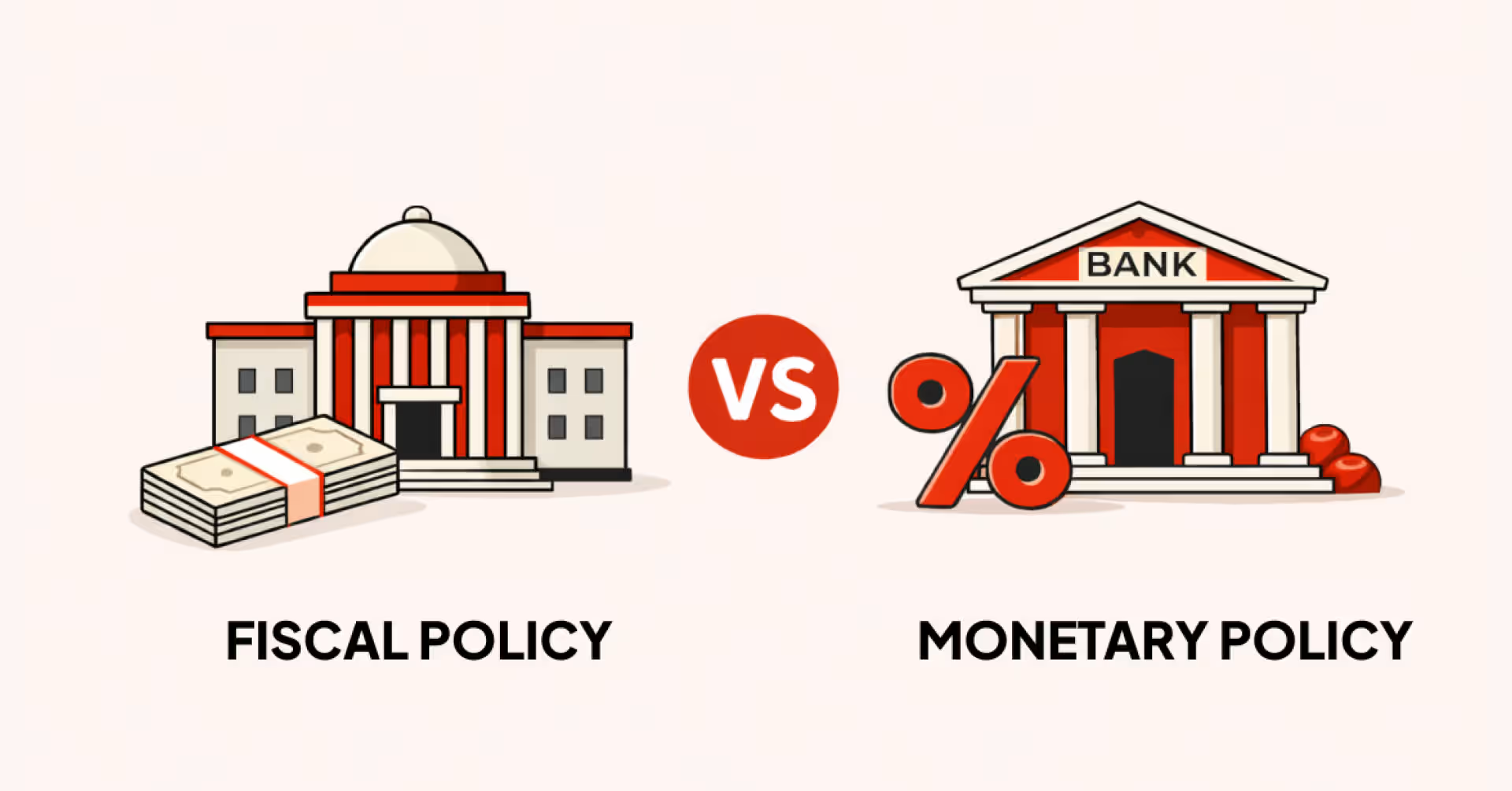
Monetary Policy vs Fiscal Policy
Monetary policy differs from fiscal policy in both control and approach.
Monetary policy is managed by central banks and works indirectly through financial systems. Fiscal policy is managed by governments and directly affects economic activity through spending and taxation.
To explore this comparison further, read more here: Difference Between Fiscal Policy and Monetary Policy
Conclusion
Monetary policy shapes the cost and availability of money in an economy. By influencing interest rates, liquidity, and credit conditions, central banks play a vital role in controlling inflation and supporting sustainable growth. Whether used to stimulate a slowing economy or rein in rising prices, monetary policy remains one of the most important and closely watched tools in macroeconomics.
Learn more about Backpack
Exchange | Wallet | Twitter | Discord | Reddit
Disclaimer: This content is presented to you on an “as is” basis for general information and educational purposes only, without representation or warranty of any kind. It should not be construed as financial, legal or other professional advice, nor is it intended to recommend the purchase of any specific product or service. You should seek your own advice from appropriate professional advisors. Where the article is contributed by a third party contributor, please note that those views expressed belong to the third party contributor, and do not necessarily reflect those of Backpack. Please read our full disclaimer for further details. Digital asset prices can be volatile. The value of your investment may go down or up and you may not get back the amount invested. You are solely responsible for your investment decisions and Backpack is not liable for any losses you may incur. This material should not be construed as financial, legal or other professional advice.