.avif)
Introduction
A single viral post can move markets. A coordinated online community can send a little-known stock soaring. These events have become increasingly common in both traditional finance and crypto, giving rise to one of the most fascinating investing phenomena of the past decade: the meme stock.
If you've traded meme coins or followed crypto communities on X, Reddit, or Discord, the idea behind a meme stock may already feel familiar. While meme stocks represent shares of real companies, their price movements are often driven as much by online sentiment and retail investor enthusiasm as by company fundamentals.
So, what is a meme stock? Why is it called a meme stock? And what can crypto traders learn from famous examples such as GameStop (GME) and AMC Entertainment (AMC)?
This guide explains how meme stocks work, why they became popular, the risks involved, and how crypto investors can apply these lessons when trading highly volatile assets.
What Is a Meme Stock?
A meme stock is a publicly traded company whose share price experiences significant volatility because of social media discussions, online communities, and retail investor activity rather than changes in the company's underlying financial performance.
Unlike traditional investments, where stock prices generally reflect earnings, revenue growth, or economic conditions, meme stocks often surge because thousands of investors collectively buy shares after a trend gains momentum online.
Although fundamentals still matter over the long term, short-term price movements can be heavily influenced by viral posts, market sentiment, and fear of missing out (FOMO).
For crypto traders, this behaviour may sound familiar. Many meme coins experience similar price movements driven by community enthusiasm, influencer attention, and online narratives.
Why Is It Called a Meme Stock?
The term meme stock comes from internet "memes," which are images, jokes, videos, or trends that spread rapidly online.
During 2021, online communities, particularly on Reddit's r/WallStreetBets, began sharing memes, investment ideas, screenshots of trading gains, and discussions around heavily shorted companies. These posts attracted millions of retail investors who collectively bought shares, causing dramatic price increases.
As these stocks became internet sensations rather than simply investment opportunities, the financial media began referring to them as meme stocks.
Today, the phrase "meme stock" describes stocks whose popularity is fueled primarily by online communities instead of traditional investment analysis.
How Do Meme Stocks Work?
Unlike traditional investing, meme stocks often follow a cycle driven by online attention and trading momentum.
A typical meme stock cycle looks like this:
Meme Stock Examples
1. GameStop (GME)
GameStop is widely considered the original modern meme stock.
In early 2021, retail investors noticed that hedge funds had built unusually large short positions against the video game retailer. As buying pressure increased, many short sellers were forced to purchase shares to limit losses, contributing to one of the most well-known short squeezes in market history.
GameStop remains one of the most recognised examples of how online communities can influence financial markets.
2. AMC Entertainment (AMC)
AMC Entertainment became another high-profile meme stock during the same period.
Retail investors rallied around the cinema chain, viewing it as both a recovery story after the COVID-19 pandemic and a heavily shorted company. Large buying volumes led to substantial price swings and widespread media attention.
AMC continues to be closely watched whenever retail trading activity increases.
Meme Stocks vs. Meme Coins
Crypto traders often compare meme stocks with meme coins because both rely heavily on community participation. However, they are fundamentally different assets.
Both asset classes can experience significant volatility, making careful risk management essential. As a neobrokerage, Backpack lets you trade meme coins and US stocks side by side in one account, so you can act on both markets without moving funds between platforms.
Risks of Investing in Meme Stocks
Meme stocks can generate extraordinary returns, but they also carry significant risks.
Common risks include:
- Extreme price volatility
- Liquidity changes
- Rapid reversals after social media hype fades
- Limited connection between price and company fundamentals
- Emotional decision-making driven by FOMO
Retail investors should understand these risks before investing and avoid committing more capital than they can afford to lose.
How to Trade Meme Stocks on Backpack
Backpack lets you buy and sell US stocks, including well-known meme stocks such as GameStop (GME) and AMC Entertainment (AMC), using a simple quote-based flow.
Before you start, make sure your Backpack account is verified (KYC), you are located in a supported region, and you have available USD in your account.
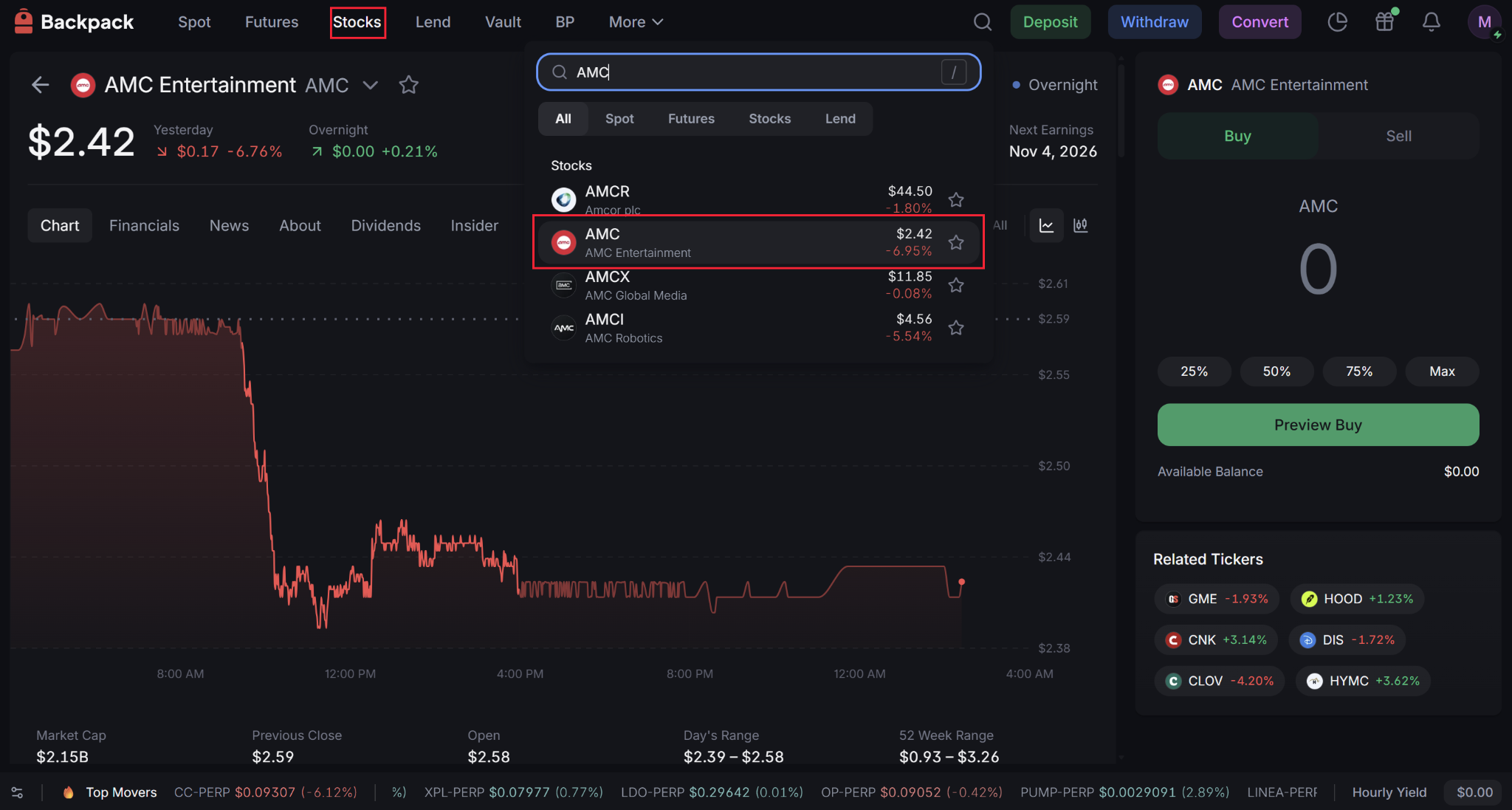
Step 1: Find the stock
From the Stocks home page, search for the company name or ticker (for example, GME or AMC). You can also browse market index cards, movers lists, or the Explore section. Select the ticker to open its detail page.
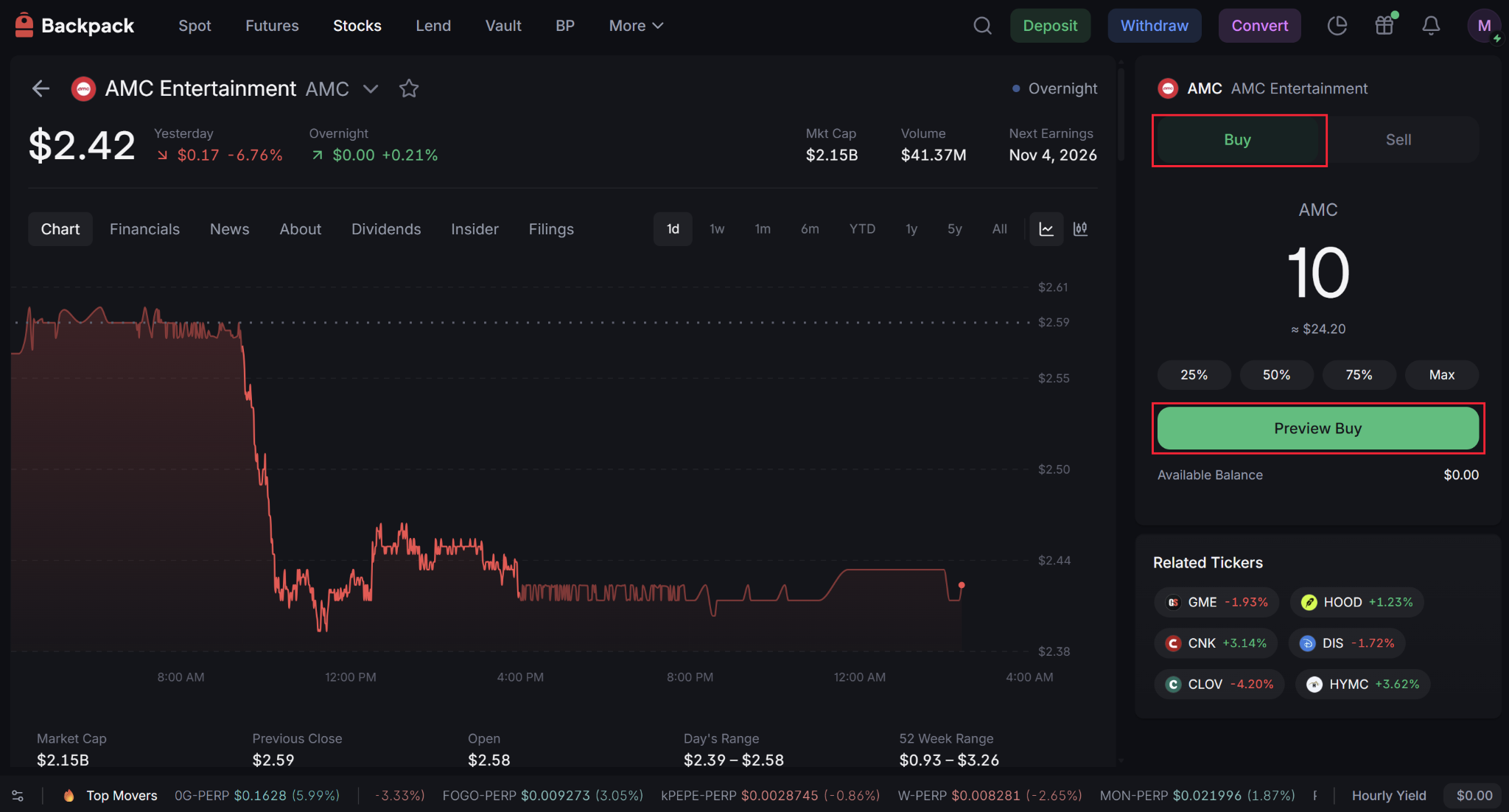
Step 2: Enter your order
Select Buy at the top of the order form and enter the number of shares you want to purchase. Quick shortcuts (25%, 50%, 75%, Max) size your order based on your available USD balance. Fractional shares are available during regular US market hours (9:30 AM–4:00 PM ET, Monday–Friday); outside these hours, orders must be placed in whole shares.
Step 3: Enable trading (first trade only)
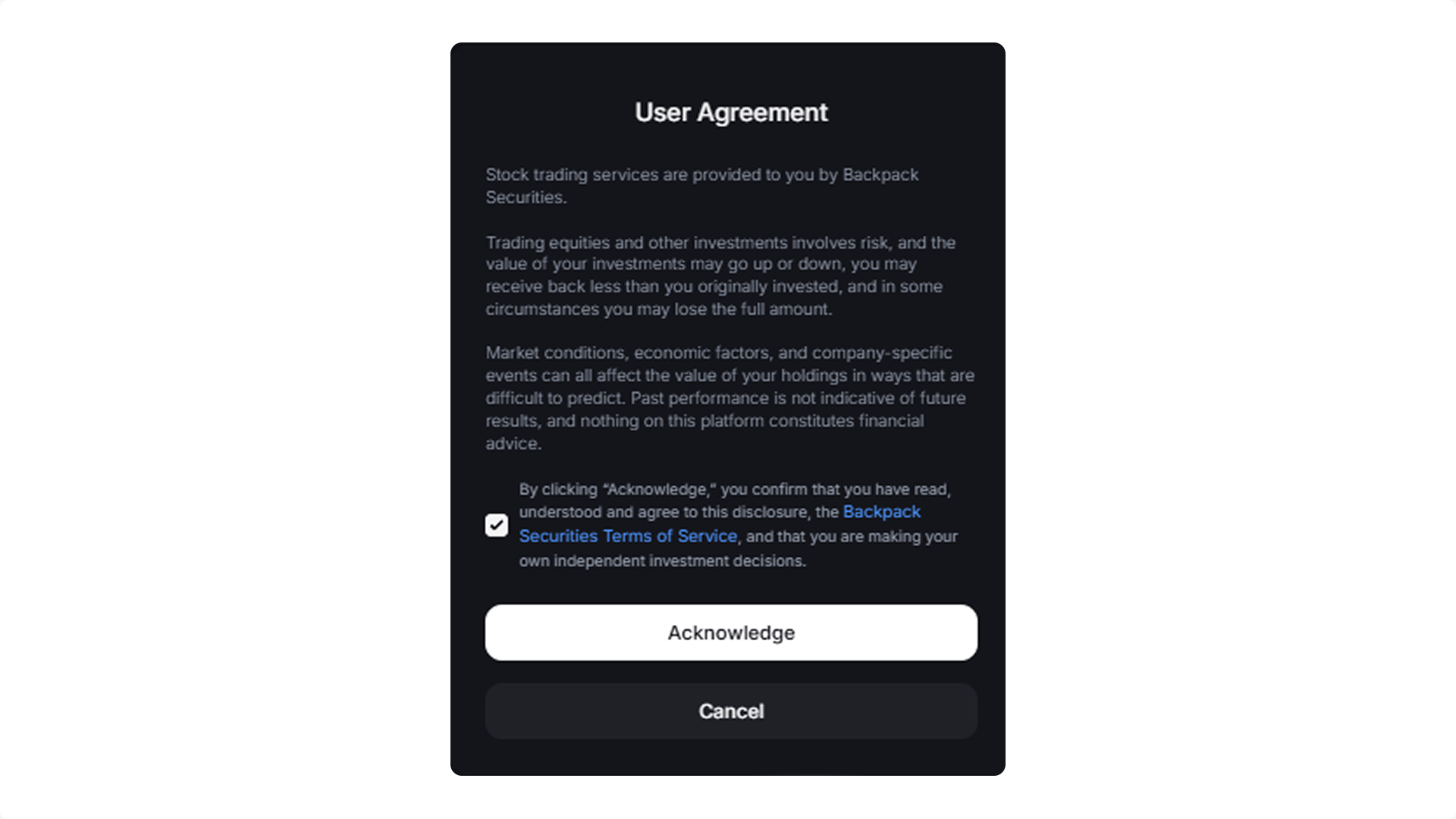
Before your first stock trade, you will need to accept a one-time User Agreement. Select Enable Trading, review the agreement, check the confirmation box, and select Acknowledge. Future orders skip this step.
Step 4: Review the quote
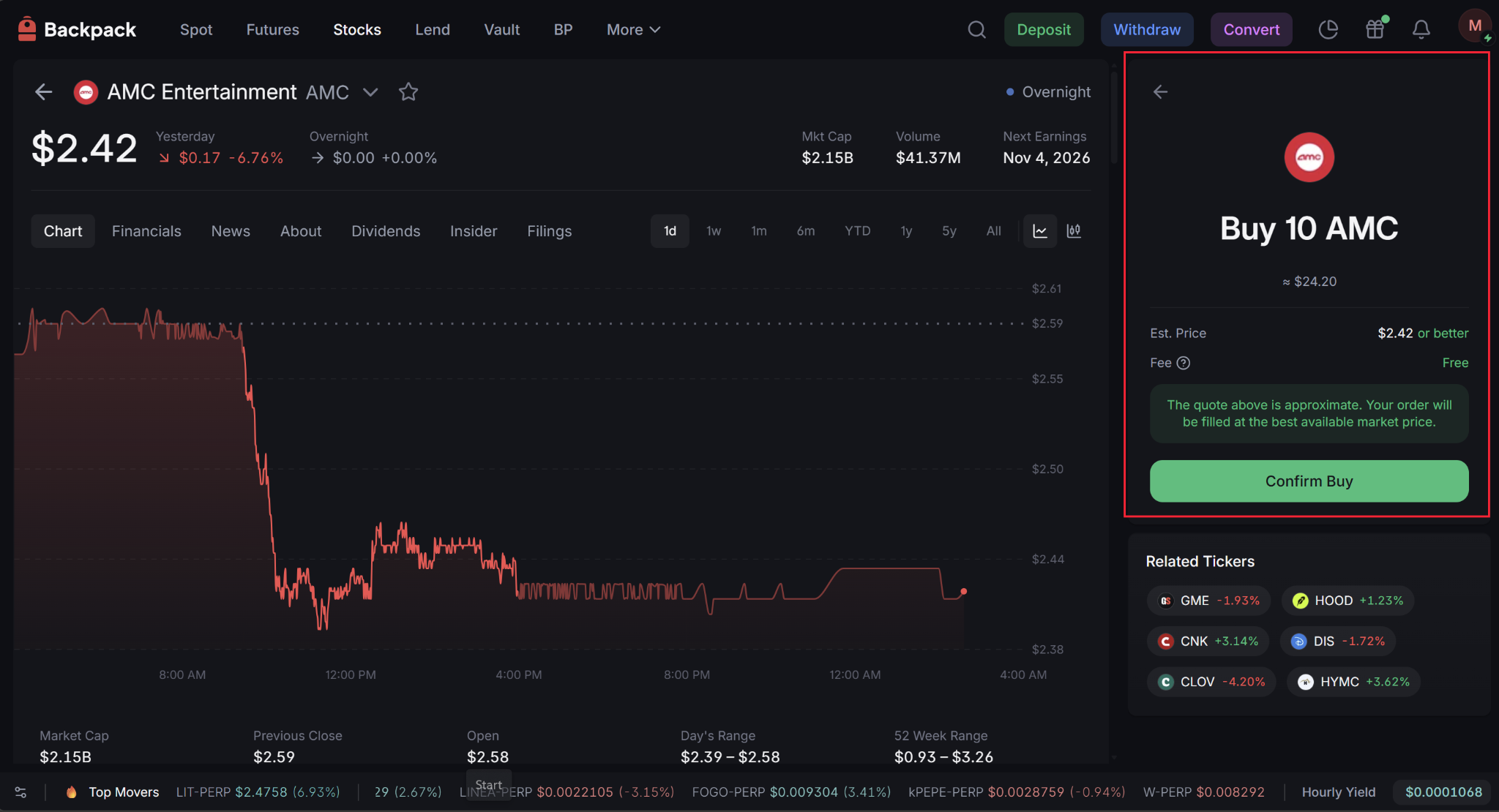
Select Preview to request a live quote. Backpack routes your order for best execution and displays an order summary with the estimated price, subtotal, and total. Quotes are valid for a few seconds and refresh automatically if they expire while you are reviewing.
Step 5: Confirm the trade
Confirm the order to execute at the quoted price. Filled trades represent real ownership held as a security entitlement.
Rise of Meme Stocks
The rise of meme stocks demonstrates how technology, social media, and retail investors have transformed financial markets. Companies such as GameStop (GME) and AMC Entertainment (AMC) showed that online communities can influence prices in ways that traditional valuation models do not always predict in the short term.
For crypto traders, the biggest takeaway is not to chase every viral trend. Instead, combine market awareness with disciplined research, thoughtful position sizing, and sound risk management. Whether you're trading cryptocurrencies, tokenized assets, or traditional equities, long-term success comes from making informed decisions rather than reacting to market hype.
Ready to explore both markets? Create a Backpack account and trade crypto and US stocks in one place.
Learn more about Backpack
Exchange | Wallet | Twitter | Discord | Reddit
Disclaimer: This content is presented to you on an “as is” basis for general information and educational purposes only, without representation or warranty of any kind. It should not be construed as financial, legal or other professional advice, nor is it intended to recommend the purchase of any specific product or service. You should seek your own advice from appropriate professional advisors. Where the article is contributed by a third party contributor, please note that those views expressed belong to the third party contributor, and do not necessarily reflect those of Backpack. Please read our full disclaimer for further details. Digital asset prices can be volatile. The value of your investment may go down or up and you may not get back the amount invested. You are solely responsible for your investment decisions and Backpack is not liable for any losses you may incur. This material should not be construed as financial, legal or other professional advice.