
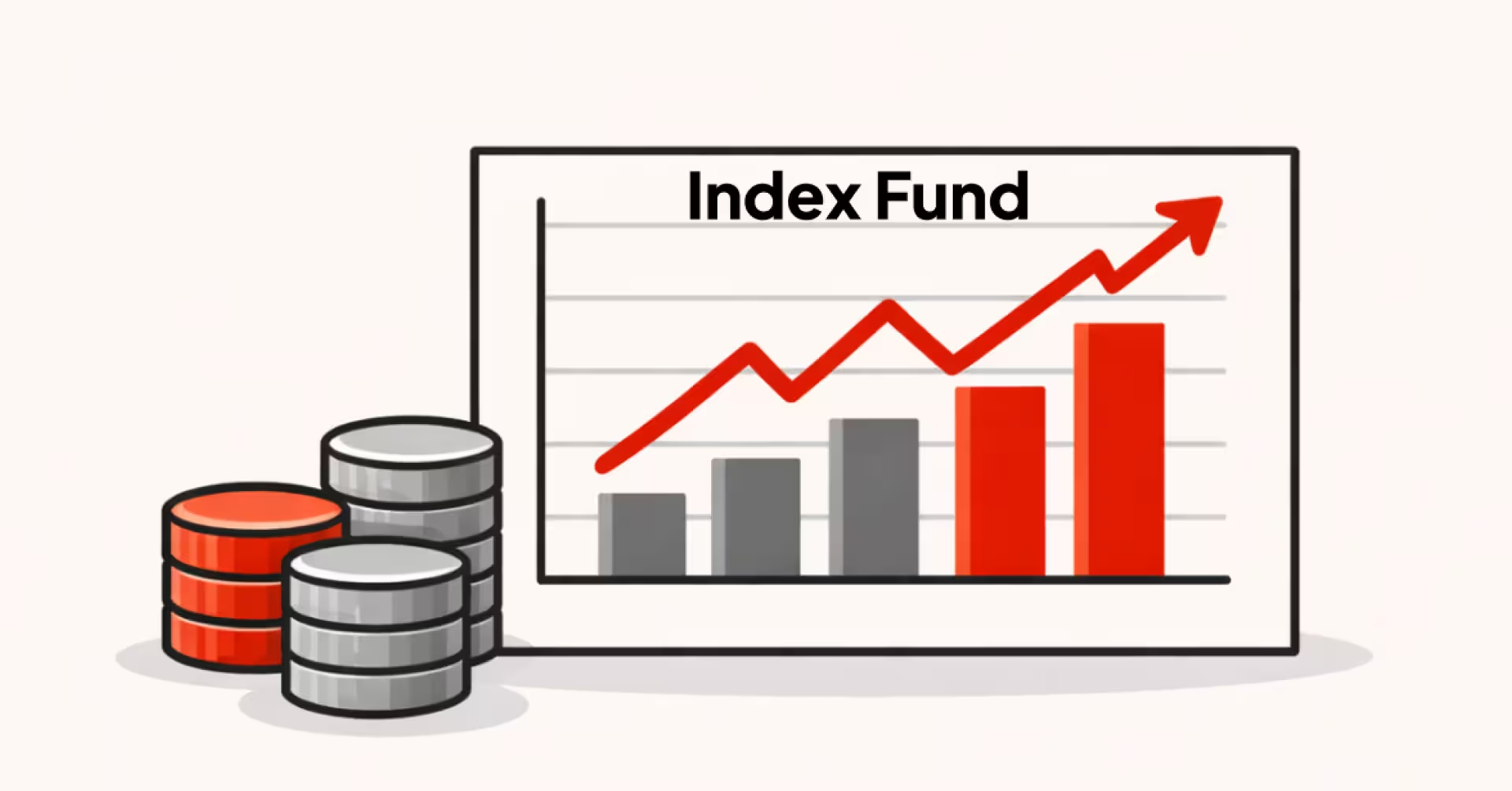
What Is an Index Fund?

Backpack Learn
Published on
April 3, 2026
Updated on
July 1, 2026

An index fund tracks a market index like the S&P 500 using a passive strategy. Learn how index funds work, how they compare to ETFs, and why investors use them.

What Is an Index Fund?

Key Takeaways:

  • An index fund tracks a specific market index by holding the same or a representative set of securities in similar proportions
  • Index funds use passive management, meaning they follow predefined rules rather than making active stock selection decisions
  • Lower fees, broad diversification, and tax efficiency are the primary structural advantages of index funds over actively managed funds
  • Index funds are available across equities, bonds, sectors, and international markets

How Does an Index Fund Work?

An index fund holds the same securities as its target index in similar proportions, so when the index rises the fund rises, and when the index falls the fund follows. It does not try to beat the market.

When investors purchase shares of an index fund, their capital is pooled with that of other investors. The fund uses this capital to acquire the securities included in its target index, weighted according to the index's methodology.

For a fund tracking the S&P 500, this means holding stock in large U.S. companies weighted by market capitalisation. If the S&P 500 rises by a given amount, the fund aims to rise by a similar amount, and the same applies in reverse. Companies with higher market values receive greater weight within the fund, meaning their price movements have a larger effect on the fund's overall performance.

The fund does not involve active day-to-day portfolio decisions. Holdings change primarily when the underlying index changes, such as when companies are added or removed, and during periodic rebalancing. That predictability is a core part of what makes index funds straightforward to understand.

What Is the Difference Between Active and Passive Management?

Index funds are a form of passive investment management. Understanding the distinction between active and passive management helps clarify why index funds are structured the way they are.

Active management involves a fund manager selecting securities with the goal of outperforming a benchmark index. This approach requires ongoing research, analysis, and frequent trading, all of which generate higher costs for the investor.

Passive management, by contrast, follows a predefined set of rules. Rather than attempting to beat the market, a passively managed fund simply tracks a specific index. Index funds follow this approach.

Because passive strategies require less active decision-making, index funds generally carry lower costs than actively managed funds. Fund managers express these costs as an expense ratio, the annual fee charged as a percentage of assets under management. Over time, even small differences in expense ratios can have a meaningful effect on long-term returns.

Why Do Investors Use Index Funds?

Index funds are widely used because of several structural characteristics that make them well-suited for long-term investing.

  • Diversification. By holding a large number of securities, index funds reduce exposure to the performance of any single company. A decline in one stock has a limited effect on the overall fund.
  • Low cost. Passive management typically results in lower fees than actively managed funds, allowing investors to retain a greater portion of their returns over time.
  • Tax efficiency. Because index funds trade infrequently, they tend to generate fewer taxable events compared to actively managed funds. This may result in lower capital gains distributions, making index funds a more tax-efficient option for investors holding them in taxable accounts.
  • Market exposure. Index funds provide broad access to defined segments of the stock market, such as large-cap U.S. equities, international stocks, or fixed-income securities, through a single instrument.
  • Simplicity. Investors can gain diversified market exposure without researching or selecting individual securities.

How Do Index Funds Track the S&P 500?

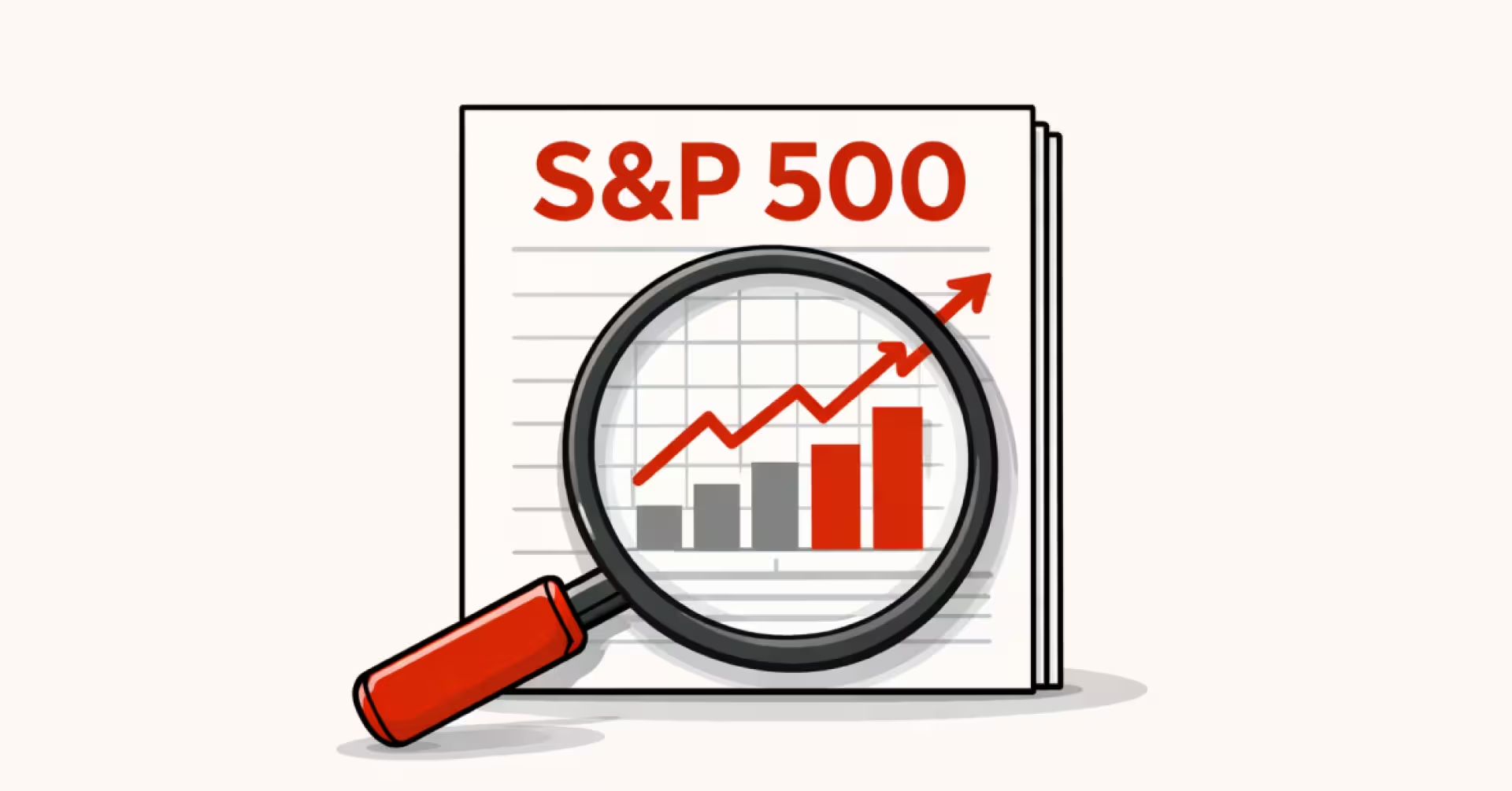
The S&P 500 is one of the most commonly tracked indexes by index funds. When investors refer to "investing in the S&P 500," they are typically referring to purchasing an index fund or ETF designed to follow the index. These funds replicate the S&P 500's performance by holding its constituent companies in proportion to their market capitalisation. For that reason, the S&P 500 is the most practical starting point for understanding how index funds work.

What Are the Types of Index Funds?

Broad market funds track large segments of the stock market. The S&P 500 is the most widely tracked index of this type.

Sector funds focus on specific industries, such as technology, healthcare, or energy, providing targeted exposure to a single segment of the economy.

International funds provide exposure to companies outside a single country or region, allowing investors to participate in foreign markets through a single instrument.

Bond index funds track fixed-income indexes rather than stock indexes, and may include government bonds, corporate bonds, or a combination of both.

Each type gives investors access to a different segment of the market through the same passive, low-cost structure.

What Are the Risks of Index Funds?

Index funds are not without risk. Because a fund tracks its index directly, it is subject to the same market conditions as the index itself. If the market declines, the fund's value declines with it.

Other limitations include lack of flexibility and tracking error. An index fund does not adjust its holdings in response to short-term market conditions the way an active manager might. Tracking error refers to small differences between the fund's performance and that of its target index, typically arising from fees, sampling methods, liquidity constraints, or the timing of trades.

The Bottom Line

An index fund is a passively managed investment vehicle designed to replicate the performance of a market index. By holding the same or a representative set of securities in similar proportions, index funds provide broad diversification at relatively low cost. Their combination of low fees, tax efficiency, and simplicity has made them one of the most widely used investment vehicles for long-term investors. Index funds are subject to market risk and will decline in value when their target index declines.

FAQs

了解更多关于Backpack的信息

交易所 | 钱包 | Twitter | Discord | Reddit

免责声明:本内容按“原样”提供,仅供一般信息和教育目的,不作任何形式的陈述或保证。不应将其解释为财务、法律或其他专业建议,也不旨在推荐购买任何特定产品或服务。您应向适当的专业顾问寻求自己的建议。如果文章由第三方贡献者提供,请注意,所表达的观点属于该第三方贡献者,不一定反映 Backpack 的观点。请阅读我们的完整免责声明以获取更多详情。数字资产价格可能波动剧烈。您的投资价值可能上涨或下跌,您可能无法收回投资金额。您对自己的投资决策负全部责任,Backpack 对您可能遭受的任何损失概不负责。本材料不应被解释为财务、法律或其他专业建议。
免责声明:此内容仅供参考,不应被视为财务建议。

相关文章

随时掌握先机
谢谢!您提交的内容已收到!
哎哟!提交表单时出了点问题。

条款

Backpack 严格履行其在《欧盟通用数据保护条例》及其他适用法律法规下保护您个人信息的义务。

提供您的电子邮件地址即表示您已阅读并理解 Backpack 隐私政策,并在此同意 Backpack 及其关联公司收集、使用、披露和处理您的个人信息。

(https://support.backpack.exchange/articles/privacy-policy)