An Optimism wallet is an Ethereum-compatible wallet configured to interact with the Optimism network. It uses the same 0x address format and private keys as Ethereum, so if you already have an Ethereum wallet, your Optimism address is identical.
But Optimism is more than just a cheaper version of Ethereum. It is the foundation of the OP Superchain, a growing network of L2 chains including Base, Mode, and others that share the same underlying infrastructure. Understanding this context helps explain why Optimism has become one of the most widely used Layer 2 networks in crypto.
This guide covers how Optimism wallets work, how Optimism compares to Arbitrum, what the OP token is actually used for, and how to get started.
Key Takeaways
- An Optimism wallet uses the same 0x address as your Ethereum wallet. If you already have an Ethereum wallet, you already have an Optimism wallet.
- Optimism is a Layer 2 network built on Ethereum, offering lower fees and faster confirmations.
- Gas fees on Optimism are paid in ETH, not OP.
- OP is the governance token of the Optimism ecosystem and powers the OP Superchain.
- Optimism is the foundation of the OP Superchain, a growing network of L2 chains including Base, Mode, and others built on the same infrastructure.
- Assets must be bridged from Ethereum before they can be used on Optimism.
What Is an Optimism Wallet?
An Optimism wallet is a crypto wallet configured to interact with the Optimism network. Because Optimism is fully EVM-compatible, it uses the same 0x address format and private keys as Ethereum. Your Ethereum address is also your Optimism address.
The wallet does not store crypto directly. It stores your private keys, which control access to assets recorded on the Optimism blockchain.
With an Optimism wallet you can send and receive ETH and OP, manage ERC-20 tokens and stablecoins, hold and transfer NFTs, interact with DeFi protocols on Optimism, and bridge assets between Ethereum and Optimism.
OP is the native governance token of the Optimism ecosystem. It is used to participate in governance decisions through the Optimism Collective, not to pay gas fees. Gas fees on Optimism are always paid in ETH.
One important distinction: although your address is the same across Ethereum and Optimism, assets exist on separate networks. Funds on Ethereum mainnet are not automatically available on Optimism. They must be bridged first.
How an Optimism Wallet Works
An Optimism wallet works the same way as an Ethereum wallet, but it interacts with the Optimism network instead of Ethereum mainnet.
When you send ETH or interact with a dApp, your wallet creates a transaction, signs it with your private key, and broadcasts it to the Optimism network. Transactions are processed on Optimism and periodically batched and submitted to Ethereum for final settlement through a system called Optimistic Rollups. The whole process typically takes a few seconds from the user's perspective.
Every transaction requires a small gas fee paid in ETH. Because transactions are processed on Layer 2 before being settled on Ethereum, fees are significantly lower than mainnet.
Because Optimism is EVM-compatible, your Ethereum address works on Optimism automatically. You do not need to create a new wallet. You just need to make sure Optimism is enabled and that you have ETH on Optimism to cover gas fees.
Optimism vs Arbitrum: Which L2 Should You Use?
Optimism and Arbitrum are the two most widely used Ethereum Layer 2 networks. Both offer lower fees and faster confirmations than Ethereum mainnet, and both use the same 0x address format. For most users, either will work well. The differences come down to ecosystem, governance, and infrastructure.
Fees and speed. Both networks offer significantly lower fees than Ethereum mainnet. In practice, fees on both are low enough that cost alone is rarely the deciding factor for most users.
Ecosystem. Arbitrum has historically had deeper DeFi liquidity, with protocols like GMX and Camelot building natively on Arbitrum. Optimism has a strong DeFi ecosystem as well, and benefits from Base, Coinbase's L2, being built on the OP Stack. This brings additional liquidity and users into the broader Optimism ecosystem.
Governance. Both networks have native governance tokens. OP holders participate in governance through the Optimism Collective, which uses a two-house system of token holders and community delegates. ARB holders govern through the Arbitrum DAO.
Infrastructure. This is where Optimism stands apart. Optimism powers the OP Superchain, a network of L2 chains built on the same OP Stack infrastructure. Base, Mode, and other chains all share this foundation, meaning activity and liquidity across the Superchain ultimately strengthens the broader Optimism ecosystem.
For users who want access to the broadest L2 ecosystem, Optimism's Superchain infrastructure makes it a compelling choice. For users focused on native DeFi protocols, Arbitrum has a strong track record.
How to Create an Optimism Wallet with Backpack
Setting up an Optimism wallet typically takes only a few minutes.
On Desktop
- Download the Backpack browser extension from the official Backpack website.

- Open the extension and select Create a new wallet.
- Enable the Optimism network from the supported networks list.

- Create a strong password.
- Write down your 12-word recovery phrase and store it securely offline.
- Confirm the recovery phrase when prompted.

On Mobile
- Download Backpack from the official App Store or Google Play listing.
- Create a new wallet.
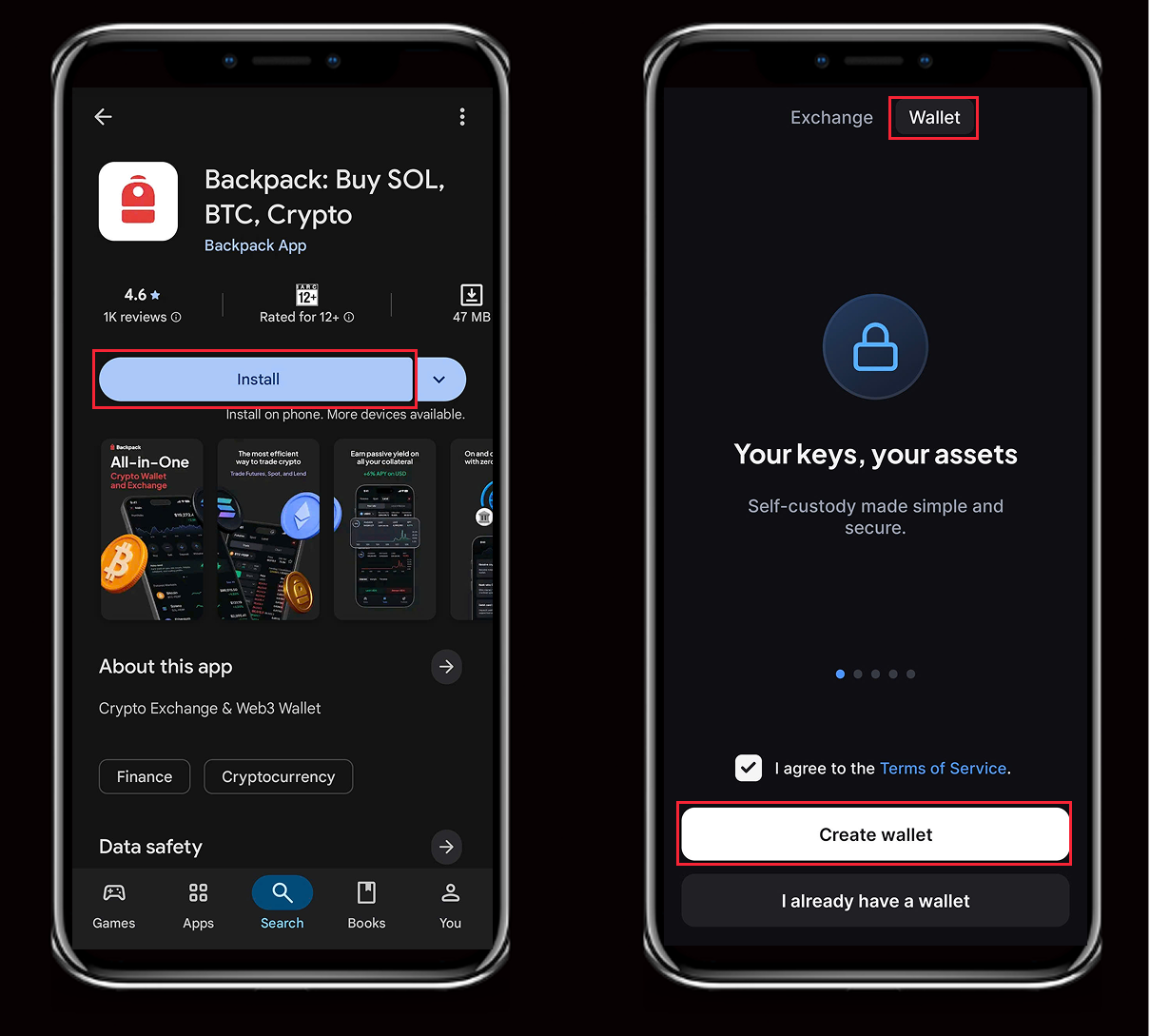
- Back up your recovery phrase securely offline.
- Enable the Optimism network.
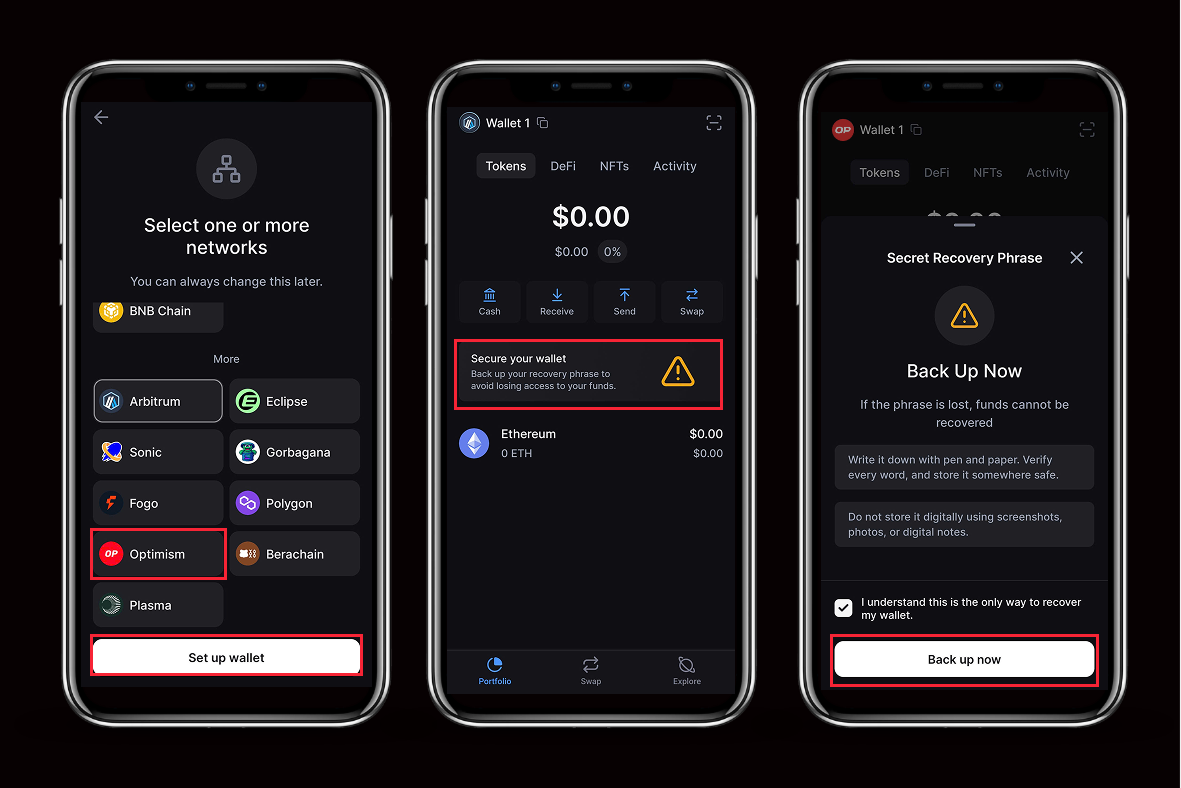
Once set up, you can transfer ETH directly from an exchange to your Optimism address, or bridge assets from Ethereum mainnet. Make sure you have ETH on Optimism before making any transactions.
What You Can Do on Optimism with Backpack
Once your Optimism wallet is set up, Backpack gives you access to:
- Integrated token swaps on Optimism with 0% protocol fees
- Cross-chain bridging via Wormhole to move assets between Optimism, Ethereum, and other networks directly within the wallet with 0% protocol fees
- DeFi positions tracking to monitor your active positions
- Trending tokens to track popular assets on Optimism
- NFT support with ERC-721 and ERC-1155 standards, including NFT locking
- Hardware wallet integration with Ledger, Trezor, and Keystone
- Direct connection to Backpack Exchange for transfers without external deposit addresses
Keeping Your Optimism Wallet Secure
An Optimism wallet inherits Ethereum's security model, but most risks come from user mistakes rather than the network itself. Because Optimism and Ethereum share the same 0x address format, incorrect network selection is the most common source of loss.
Protect your recovery phrase above everything else. Your recovery phrase controls your wallet across all EVM networks. Store it offline, never share it, and never save it digitally.
Confirm the network before sending. Optimism and Ethereum use identical addresses. Always check that Optimism is selected before sending funds or withdrawing from an exchange.
Keep ETH available for gas. Without ETH on Optimism, you cannot send tokens, interact with dApps, or revoke approvals even if you hold other assets. Always maintain a small ETH balance on Optimism.
Use trusted bridges only. Bridging from Ethereum to Optimism involves interacting with smart contracts. Only use official or well-established bridges and verify the URL carefully before connecting your wallet.
Review token approvals regularly. DeFi applications require permission to access your tokens. Periodically revoke approvals you no longer need, especially for protocols you no longer use.
Transactions on Optimism are irreversible once confirmed. Always review transaction details before signing.
Conclusion
An Optimism wallet gives you access to one of Ethereum's most widely used Layer 2 networks. It works like a standard Ethereum wallet but operates within a more scalable environment designed for lower fees and faster transactions.
The key things to remember: gas fees are paid in ETH, not OP, assets must be bridged from Ethereum before they can be used on Optimism, and always confirm the correct network before sending funds.
If you are looking for a multi-chain wallet that supports Optimism alongside Ethereum and other major networks, Backpack Wallet offers built-in swaps and bridges with 0% protocol fees, allowing users to move assets across supported networks directly from the wallet.
Learn more about Backpack
Exchange | Wallet | Twitter | Discord | Reddit
Disclaimer: This content is presented to you on an “as is” basis for general information and educational purposes only, without representation or warranty of any kind. It should not be construed as financial, legal or other professional advice, nor is it intended to recommend the purchase of any specific product or service. You should seek your own advice from appropriate professional advisors. Where the article is contributed by a third party contributor, please note that those views expressed belong to the third party contributor, and do not necessarily reflect those of Backpack. Please read our full disclaimer for further details. Digital asset prices can be volatile. The value of your investment may go down or up and you may not get back the amount invested. You are solely responsible for your investment decisions and Backpack is not liable for any losses you may incur. This material should not be construed as financial, legal or other professional advice.