What Is a Futures Contract? How It Works, Explained
A futures contract is a standardized legal agreement between two parties to buy or sell a specific asset at a predetermined price on a specified future date. The buyer is obligated to purchase the asset and the seller is obligated to deliver it, or settle the difference in cash, at expiration, regardless of where the market price stands at that time.
What makes a futures contract distinct from simply buying an asset is the binding obligation it creates: both parties must transact at the agreed price on the agreed date, making futures a tool for locking in prices rather than taking immediate ownership. Futures contracts are traded on regulated exchanges and are used by a wide range of market participants, from commodity producers managing price risk to institutional investors hedging portfolio exposure to individual traders speculating on price movements, as part of the broader practice of futures trading.
What Are the Key Components of a Futures Contract?
Every futures contract is defined by a standardized set of terms known as contract specifications. These are set by the exchange and cannot be negotiated between individual buyers and sellers. Understanding these components is essential before trading any futures contract.
Underlying asset is what the contract is based on: a physical commodity such as crude oil, gold, or wheat, a financial instrument such as a government bond or currency, or a market index such as the S&P 500 or the Nasdaq.
Contract size is the quantity of the underlying asset covered by one contract. Contract sizes are standardized by the exchange and vary significantly across different markets and asset classes.
Expiration date is the date on which the contract expires and must be settled. Futures contracts are organized by expiration month. The contract with the nearest expiration date is known as the front-month contract and typically has the highest trading volume. Traders who want to maintain exposure beyond a contract's expiration without taking or making delivery may roll their position by closing the expiring contract and opening a new one in the next available expiration month.
Settlement method defines how the contract is resolved at expiration, either through physical delivery of the underlying asset or through cash settlement, where the difference between the contract price and the market price at expiration is paid in cash. Financial futures, including index futures, typically settle in cash. Commodity futures may involve physical delivery, though most positions are closed before expiration.
Tick size is the minimum price increment by which a futures contract can move. Each tick has a defined dollar value that determines the gain or loss per contract for each minimum price movement.
Trading hours differ from stock markets. Many futures contracts trade nearly 24 hours a day, five days a week, reflecting the global nature of the underlying markets.
How Is a Futures Contract Priced?
The price of a futures contract reflects the market's expectation of where the underlying asset's price will be at expiration. It is influenced by the current spot price of the asset, the time remaining until expiration, interest rates, and storage costs for physical commodities.
As the expiration date approaches, the futures price and the spot price tend to converge. When the futures price is higher than the spot price, the market is said to be in contango, generally reflecting the cost of carrying the underlying asset until delivery, including storage and financing costs. When the futures price is lower than the spot price, the market is in backwardation, which can occur when immediate demand for the underlying asset is high relative to future supply.
For example, if a trader buys one gold futures contract at $2,000 per ounce and the price rises to $2,050 by the time they close the position, they profit from that $50 per ounce difference multiplied by the contract size. If the price falls to $1,950, they incur a loss on the same basis.
How Does Margin Work in Futures Trading?
Trading a futures contract does not require paying the full value of the contract upfront. Instead, traders are required to post an initial margin, a performance bond set by the exchange that represents a fraction of the contract's total value.
Futures positions are marked to market on a daily basis. At the end of each trading day, gains and losses are calculated based on the day's closing price and credited or debited to each trader's margin account. This daily settlement means that profits and losses are realized continuously rather than only when a position is closed.
If losses cause the margin account balance to fall below the maintenance margin, a minimum level set by the exchange, the trader receives a margin call and must deposit additional funds. Failure to meet a margin call may result in the position being liquidated by the broker.
What Is the Difference Between a Futures Contract and a Forward Contract?
Futures contracts are often compared to forward contracts. Both are agreements to buy or sell an asset at a fixed price on a future date, but they differ in structure and risk.
A forward contract is a private agreement negotiated directly between two specific parties. Its terms can be customized, but because it is not traded on an exchange, it carries counterparty risk: the risk that the other party will fail to fulfill their obligation.
A futures contract is standardized, exchange-traded, and cleared through a clearing house that acts as the counterparty to both sides of every trade. This eliminates counterparty risk and makes futures contracts fungible. Because all contracts of the same type and expiration are identical, they can be freely bought and sold on the open market.
Futures markets in the United States are regulated by the CFTC, the Commodity Futures Trading Commission, an independent federal agency responsible for overseeing commodity futures and options markets and protecting market participants from fraud and manipulation.
How a futures contract is priced
The price of a futures contract reflects the market's expectation of where the underlying asset's price will be at expiration. It is influenced by the current spot price of the asset, the time remaining until expiration, interest rates, and storage costs for physical commodities.
As the expiration date approaches, the futures price and the spot price tend to converge. When the futures price is higher than the spot price, the market is said to be in contango, generally reflecting the cost of carrying the underlying asset until delivery, including storage and financing costs. When the futures price is lower than the spot price, the market is in backwardation, which can occur when immediate demand for the underlying asset is high relative to future supply.
What Is the Difference Between Futures and Options?
Both futures and options are derivatives with expiration dates, but they differ in one fundamental way.
A futures contract is a binding obligation. Both the buyer and the seller are required to fulfill the terms of the contract at expiration, or close the position beforehand.
An options contract gives the buyer the right, but not the obligation, to buy or sell the underlying asset at a specified price before or at expiration. The buyer of an option can choose not to exercise it if the market moves against them, limiting their loss to the premium paid. This optionality does not exist in futures contracts.
What Is a Perpetual Futures Contract?
A perpetual futures contract is a type of futures contract with no expiration date. Unlike standard futures contracts, perpetual contracts do not require settlement or rollover at a fixed date and can be held indefinitely as long as the trader maintains sufficient margin.
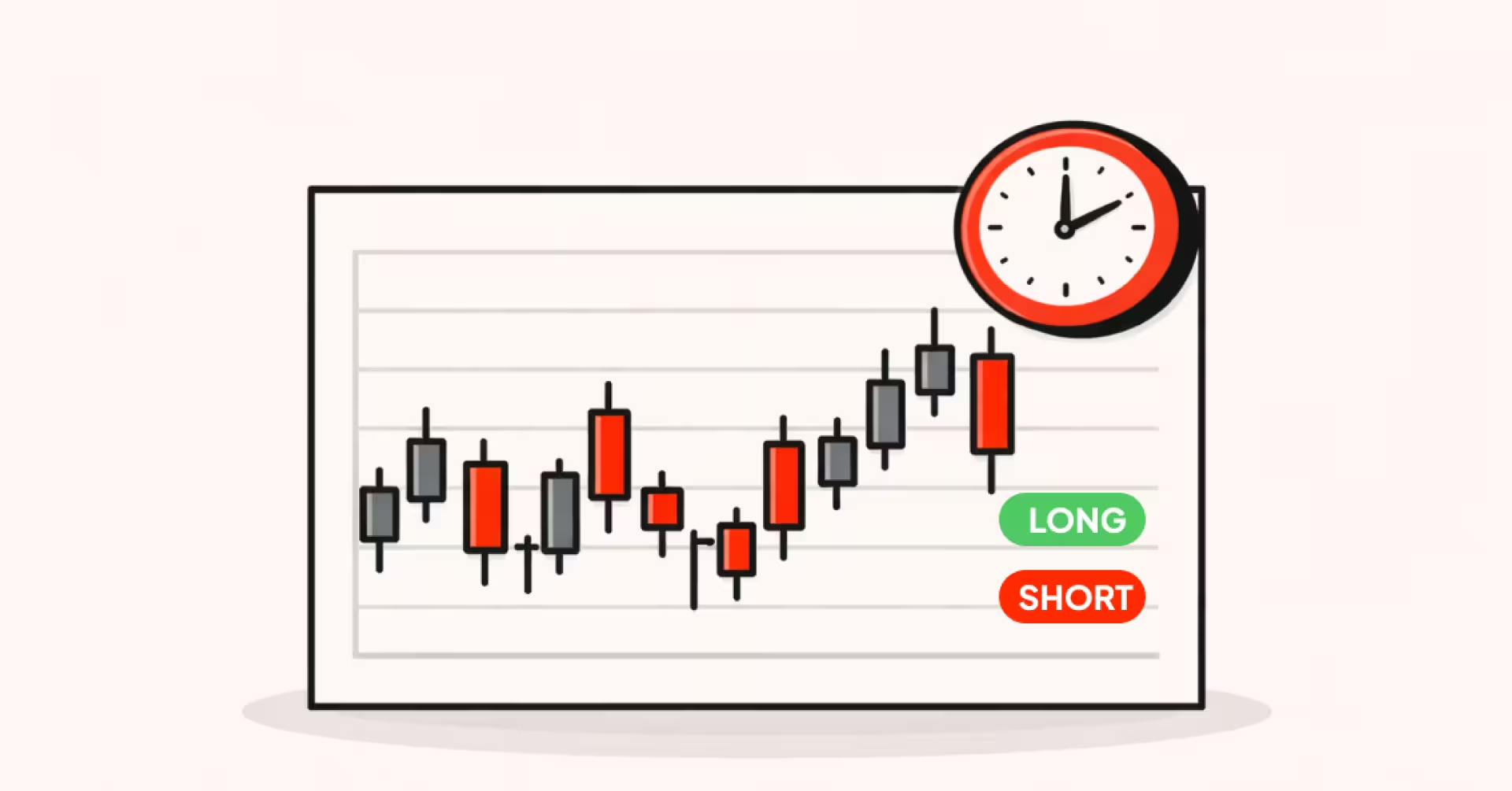
To keep the contract price aligned with the underlying spot price, perpetual futures use a funding rate mechanism: periodic payments exchanged between traders holding long positions and those holding short positions. When the contract price trades above the spot price, long holders pay short holders. When it trades below, short holders pay long holders.
Perpetual futures are most commonly used in cryptocurrency markets and are not typically available on traditional commodity or financial futures exchanges.
The Bottom Line on Futures Contracts
A futures contract is a standardized legal agreement to buy or sell a specific asset at a fixed price on a future date. Its key components, including the underlying asset, contract size, expiration date, settlement method, and margin requirements, are defined by the exchange and apply equally to all participants. Traders looking to access crypto futures can trade perpetual contracts on Bitcoin, Ethereum, and Solana on Backpack Exchange.
Learn more about Backpack
Exchange | Wallet | Twitter | Discord | Reddit
Disclaimer: This content is presented to you on an “as is” basis for general information and educational purposes only, without representation or warranty of any kind. It should not be construed as financial, legal or other professional advice, nor is it intended to recommend the purchase of any specific product or service. You should seek your own advice from appropriate professional advisors. Where the article is contributed by a third party contributor, please note that those views expressed belong to the third party contributor, and do not necessarily reflect those of Backpack. Please read our full disclaimer for further details. Digital asset prices can be volatile. The value of your investment may go down or up and you may not get back the amount invested. You are solely responsible for your investment decisions and Backpack is not liable for any losses you may incur. This material should not be construed as financial, legal or other professional advice.
.png)