Key Takeaways
- Not all "24/7 stock trading" platforms offer the same thing. Investors should understand whether they are buying actual securities, tokenized representations, or synthetic products.
- The best 24/7 trading platforms balance around-the-clock access with liquidity, ownership rights, transparent pricing, and investor protections.
- Extended-hour and weekend trading can create new opportunities, but lower liquidity can also lead to wider spreads and different execution conditions.
- As capital markets move onchain, a new generation of platforms is emerging that aims to combine traditional brokerage infrastructure with blockchain-based settlement and global access.
Introduction: Why Investors Want 24/7 Stock Trading
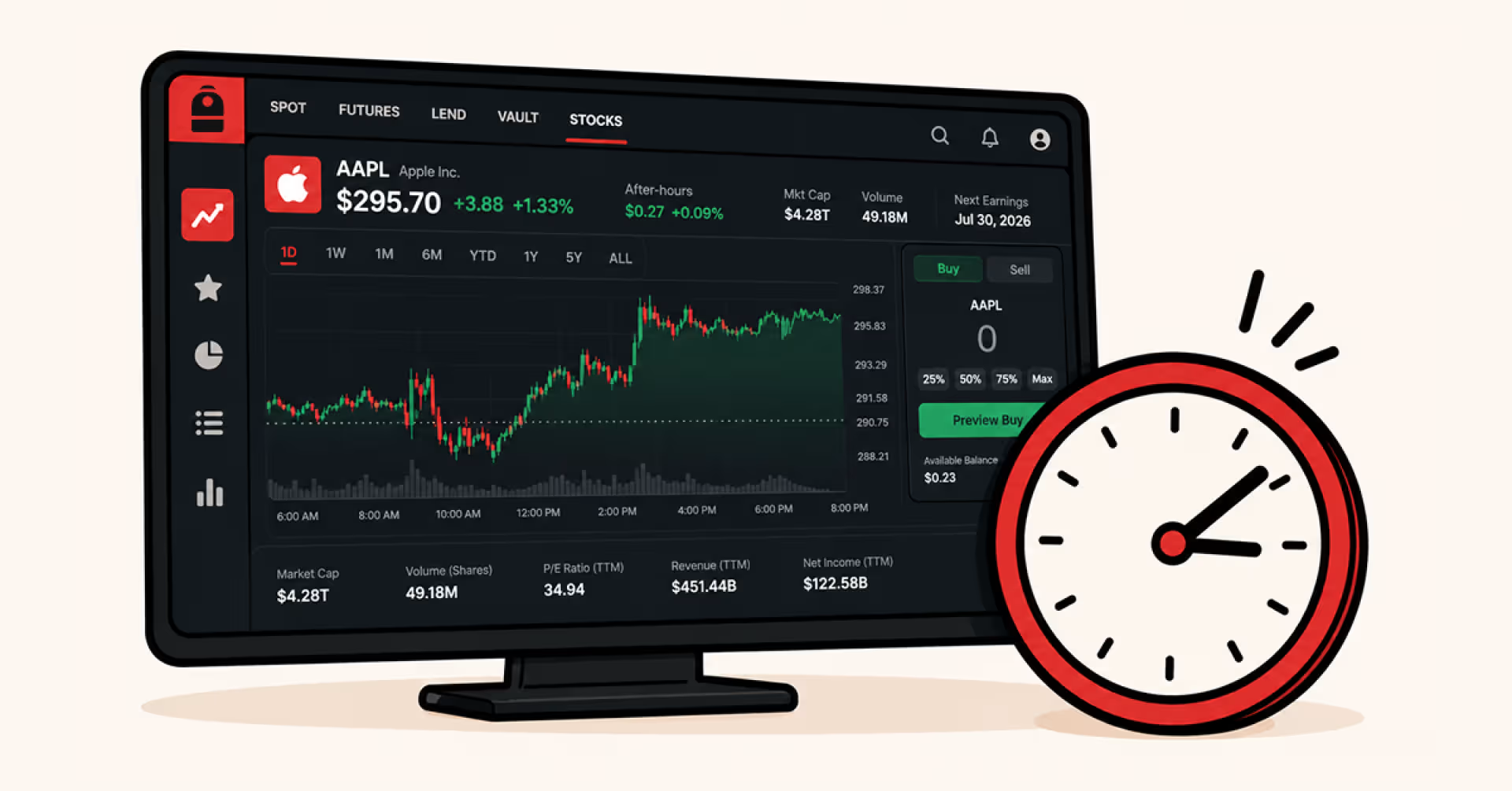
For decades, investing in U.S. stocks meant operating on Wall Street's schedule. Whether you lived in New York, Singapore, Dubai, or Buenos Aires, access to public markets was largely tied to U.S. market hours. That model is beginning to change.
Just as stablecoins made U.S. dollars available globally and around the clock, many market participants believe stocks are following a similar path. As blockchain infrastructure matures and financial markets become increasingly digital, investors are demanding the ability to buy and sell equities whenever opportunity arises, not just during traditional trading sessions.
The result is a growing race among brokers, exchanges, and financial technology companies to offer some form of 24/7 stock trading.
What Does "24/7 Stock Trading" Actually Mean?
One of the most common misconceptions is that all 24-hour stock trading platforms work the same way.
In reality, there are several different approaches:
Understanding these differences is important because they affect everything from pricing and settlement to ownership rights and liquidity.
Four Factors to Evaluate Before Choosing a 24/7 Trading Platform
The most useful way to evaluate 24/7 trading platforms is not by asking which platform is "best."
Instead, ask four questions.
1. What Asset Are You Actually Buying?
This is arguably the most important question.
Some products offer direct ownership or security entitlements tied to underlying shares. Others provide synthetic exposure designed to track the economic performance of a stock without conveying the same ownership structure.
Investors should understand whether they are:
- Purchasing a security entitlement in real shares
- Buying a tokenized representation
- Trading a derivative
- Trading a synthetic instrument
The answer can affect taxation, transferability, corporate actions, and how the position behaves over time.
2. Where Does Liquidity Come From?
Markets only function efficiently when buyers and sellers can meet.
Some 24/7 venues source liquidity from traditional exchanges, market makers, and brokerage infrastructure. Others rely entirely on internal order flow or limited market participants.
Deep liquidity often results in:
- Better pricing
- Smaller spreads
- Faster execution
- Reduced slippage
This becomes especially important during overnight and weekend trading sessions when participation may be lower.
3. How Does Settlement Work?
Traditional stock markets operate on settlement cycles.
Newer market models are introducing infrastructure designed to support faster settlement and real-time movement of capital.
Investors increasingly evaluate:
- Settlement speed
- Funding flexibility
- Access to fiat and stablecoins
- Ability to move assets across different systems
These factors may influence both convenience and capital efficiency.
4. Is the Platform Built for Global Access?
One reason 24/7 stock trading has gained traction is that demand for U.S. equities extends far beyond the United States.
Many international investors want access to:
- U.S. technology companies
- Publicly traded growth stocks
- Private market opportunities
- Dollar-denominated assets
As a result, platforms increasingly compete on availability, funding options, and accessibility for users around the world.
The Rise of Continuous Markets
Many observers compare today's evolution of capital markets to the rise of stablecoins.
Stablecoins expanded global access to U.S. dollars by bringing cash and Treasury-backed assets onto blockchain infrastructure. Increasingly, market participants expect similar innovation in equities, with stocks becoming more accessible, more portable, and available around the clock.
Supporters of this model argue that future capital markets will emphasize:
- Real-time settlement
- Continuous price discovery
- Cross-border accessibility
- Unified digital infrastructure
- Global participation in U.S. markets
As demand grows, both traditional financial institutions and crypto-native companies are investing heavily in tokenized securities infrastructure and 24/7 market access.
A New Generation of Platforms: Why Backpack Stands Out
Most platforms offering 24-hour access to stocks focus on extending trading hours. Backpack takes a broader approach, rethinking how brokerage infrastructure works in a world where markets, payments, and investors are increasingly global.
Unlike many products designed primarily to provide stock price exposure, Backpack is built around real securities infrastructure where investors receive security entitlements tied to underlying U.S. equities governed under New York law rather than simply gaining synthetic exposure to a stock's performance. This distinction is important because ownership structure can affect everything from corporate actions and dividends to transfers and long-term investor rights.
Backpack also combines traditional brokerage functionality with blockchain-native infrastructure. Investors can fund accounts using fiat currency or stablecoins, trade select U.S. stocks around the clock, and access tokenized versions of eligible securities that can move onchain while remaining connected to underlying brokerage-held assets.
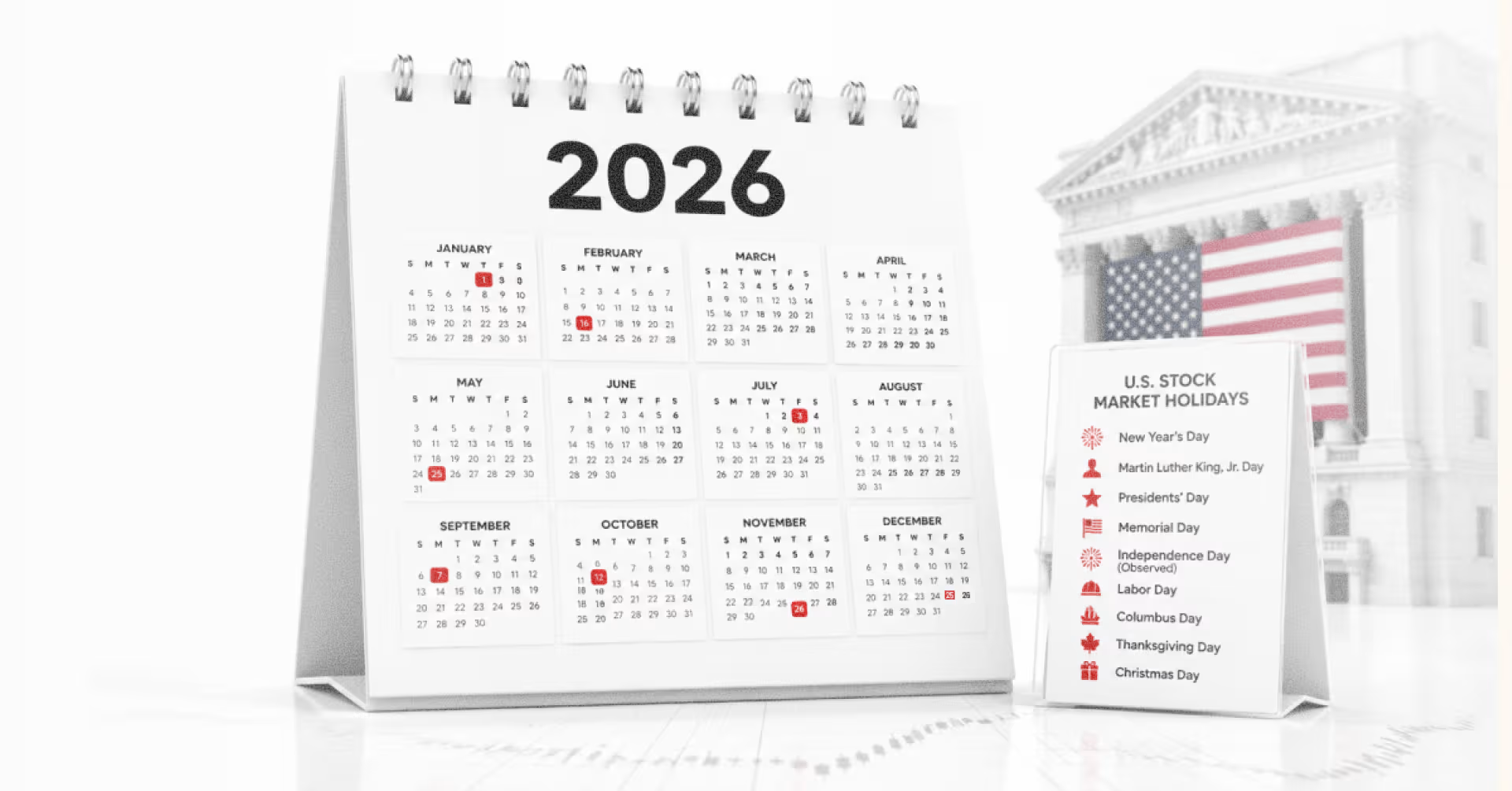
Another differentiator is market access. While many brokers offer extended-hours trading, Backpack supports continuous trading sessions that span overnight markets, pre-market, regular market hours, after-hours trading, and for some securities, weekends and market holidays. This allows investors in more than 150 countries and regions to access U.S. equities on schedules that better match their local time zones.
The platform's account structure is also distinct from traditional models. Stocks, crypto assets, lending products, and derivatives can exist within a unified account environment rather than requiring separate products, balances, or funding rails. Backpack describes this model as a "neobrokerage," designed around continuous markets and unified capital rather than the fragmented account structures common across traditional finance.
Perhaps most importantly, Backpack is one of the few platforms that combines four features that have historically been difficult to find in the same place:
For investors evaluating 24/7 trading platforms, that combination of real ownership structures, traditional market liquidity, blockchain connectivity, and continuous market access represents one of the most ambitious attempts to modernize how people access U.S. capital markets. As global demand for American equities continues to grow, platforms that can combine those features without requiring investors to sacrifice ownership or market integrity may be best positioned to define the next generation of brokerage services.
Common Misconceptions About 24/7 Stock Trading
"24/7 means pricing is always identical to market hours."
Not necessarily. Trading outside regular market sessions often involves lower liquidity, which can lead to wider spreads and different pricing dynamics.
"All tokenized stocks are the same."
Different tokenized equity products may have different ownership structures, redemption mechanisms, and legal rights.
"24/7 trading is only for crypto investors."
Increasingly, traditional brokerage and market infrastructure providers are pursuing continuous access to equities, reflecting broader investor demand.
The Bottom Line
The best platforms for 24/7 stock trading do more than extend market hours. They help investors access markets when they want, while maintaining transparency around ownership, liquidity, settlement, and execution.
As U.S. capital markets continue expanding beyond traditional trading sessions, investors should look beyond the headline promise of "24/7 trading" and focus on what they're actually buying, how trades are executed, and what rights come with ownership. The platforms that succeed will likely be those that combine global access and modern infrastructure without sacrificing the foundations that investors expect from traditional securities markets.
Learn more about Backpack
Exchange | Wallet | Twitter | Discord | Reddit
Disclaimer: This content is presented to you on an “as is” basis for general information and educational purposes only, without representation or warranty of any kind. It should not be construed as financial, legal or other professional advice, nor is it intended to recommend the purchase of any specific product or service. You should seek your own advice from appropriate professional advisors. Where the article is contributed by a third party contributor, please note that those views expressed belong to the third party contributor, and do not necessarily reflect those of Backpack. Please read our full disclaimer for further details. Digital asset prices can be volatile. The value of your investment may go down or up and you may not get back the amount invested. You are solely responsible for your investment decisions and Backpack is not liable for any losses you may incur. This material should not be construed as financial, legal or other professional advice.