
What Is After-Hours Stock Trading?

Backpack Learn
发布于
August 28, 2026
更新于
August 29, 2026

After-hours stock trading is the buying and selling of stocks after the 4:00 p.m. ET close. Learn session times, why prices move, and the main risks.

What Is After-Hours Stock Trading?

After-hours stock trading is the buying and selling of stocks after the regular U.S. market closes at 4:00 p.m. Eastern Time. It is part of extended-hours trading and takes place through electronic trading venues. Session times, eligible securities, order types, routing, and liquidity depend on the broker or platform.

Key Facts

  • Regular U.S. stock-market hours generally run from 9:30 a.m. to 4:00 p.m. ET on trading days.
  • Conventional after-hours trading begins after 4:00 p.m. ET; many venues operate until 8:00 p.m. ET, although broker schedules vary.
  • After-hours markets usually have lower liquidity, wider bid-ask spreads, and greater price volatility than the regular session.
  • Earnings releases, company guidance, mergers, management changes, and macro news can move stocks after the closing bell.
  • Limit orders can provide price control but do not guarantee execution.
  • After-hours trading is not the same as 24/7 trading: U.S. equities still depend on venue-specific sessions, while many crypto markets operate continuously.

When Does After-Hours Trading Take Place?

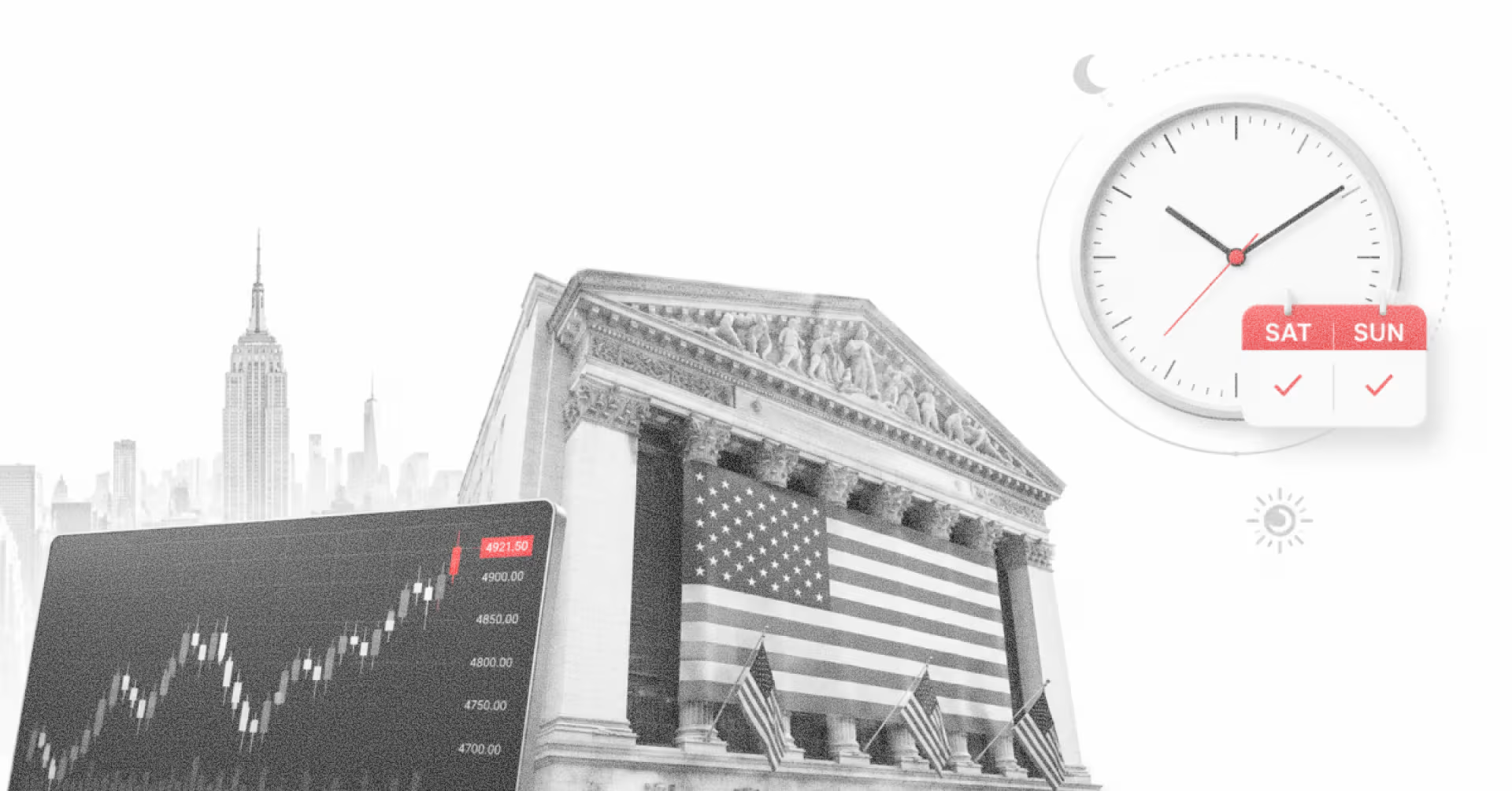
Regular U.S. stock-market hours generally run from 9:30 a.m. to 4:00 p.m. Eastern Time, Monday through Friday, excluding market holidays.

After-hours trading starts after the regular close. Many venues run until 8:00 p.m. ET, although some brokers offer shorter sessions. Pre-market trading takes place before 9:30 a.m. ET, while overnight trading can cover additional venue-specific hours.

The exact schedule matters because “extended hours” is not one universal market. Two platforms can offer different securities, order types, prices, and liquidity at the same time.

How Does After-Hours Trading Work?

After the closing bell, orders continue to interact through electronic trading systems. A trade executes only when a compatible buyer and seller are available on a venue the broker can access.

Many brokers restrict extended-hours orders to limit orders. A limit order sets the highest price a buyer will pay or the lowest price a seller will accept. It can prevent an execution outside that price, but it cannot guarantee that the order will fill.

Why Do Stocks Move After Hours?

Stocks often move after hours because companies release material information after the regular session. Earnings, revenue guidance, mergers, product announcements, management changes, and regulatory developments can all change investor expectations.

Economic and geopolitical events can also move prices while the primary U.S. exchanges are closed. The first after-hours reaction is not necessarily the next day’s opening price because new information and new orders can arrive before the regular session begins.

What Are the Main Risks of After-Hours Trading?

Lower liquidity

Fewer buyers and sellers are generally active outside regular hours. Orders may fill slowly, fill only partially, or not execute.

Wider spreads

The difference between the highest bid and lowest ask can widen. A wider spread increases the effective cost of entering or exiting a position.

Greater volatility

A smaller number of orders can create larger price moves. Volatility can be especially high immediately after earnings or breaking news.

Different prices across venues

Extended-hours markets are not always fully connected. The displayed price on one venue can differ from another, and neither price guarantees where the stock will open in the next regular session.

Different order rules

Available securities, accepted order types, routing, and order-expiration rules can differ from regular trading. Check the platform’s extended-hours disclosures before placing an order.

After-Hours Trading Example

Suppose a stock closes the regular session at $100. After an earnings release, the after-hours market shows a $96 bid and a $98 ask.

A limit order to buy at $97 executes only if a seller becomes available at $97 or lower. If the lowest ask remains $98, the order does not fill. The limit controls the maximum purchase price, but it does not eliminate execution risk or prevent the market from moving afterward.

Does After-Hours Trading Change the Official Closing Price?

No. The official closing price comes from the regular-session closing process. Trades completed afterward are reported as extended-hours activity.

An after-hours quote can show how traders are reacting to new information, but it does not determine the next day’s opening price.

Is After-Hours Trading the Same as Overnight Trading?

No. After-hours trading conventionally refers to the period immediately after the 4:00 p.m. ET close. Overnight trading uses additional venue-specific sessions beyond the conventional after-hours window.

A broker may group these sessions together in its interface, so users should check the displayed session and order rules rather than relying only on the label.

Can Non-U.S. Investors Trade U.S. Stocks After Hours?

Some platforms provide eligible non-U.S. residents with access to U.S. extended-hours sessions. Availability depends on residency, identity verification, local rules, the broker, and the security.

Eastern Time also shifts between standard time and daylight saving time, so the corresponding local trading hours can change during the year.

How Is After-Hours Stock Trading Different From Crypto Trading?

Crypto spot markets generally operate continuously, including weekends. U.S. stocks have a primary weekday session, with pre-market, after-hours, and overnight access provided through specific venues.

Continuous trading does not mean constant liquidity. Both crypto markets and extended-hours stock markets can experience wider spreads and sharper price moves during quieter periods.

How Does After-Hours Trading Relate to Backpack Securities?

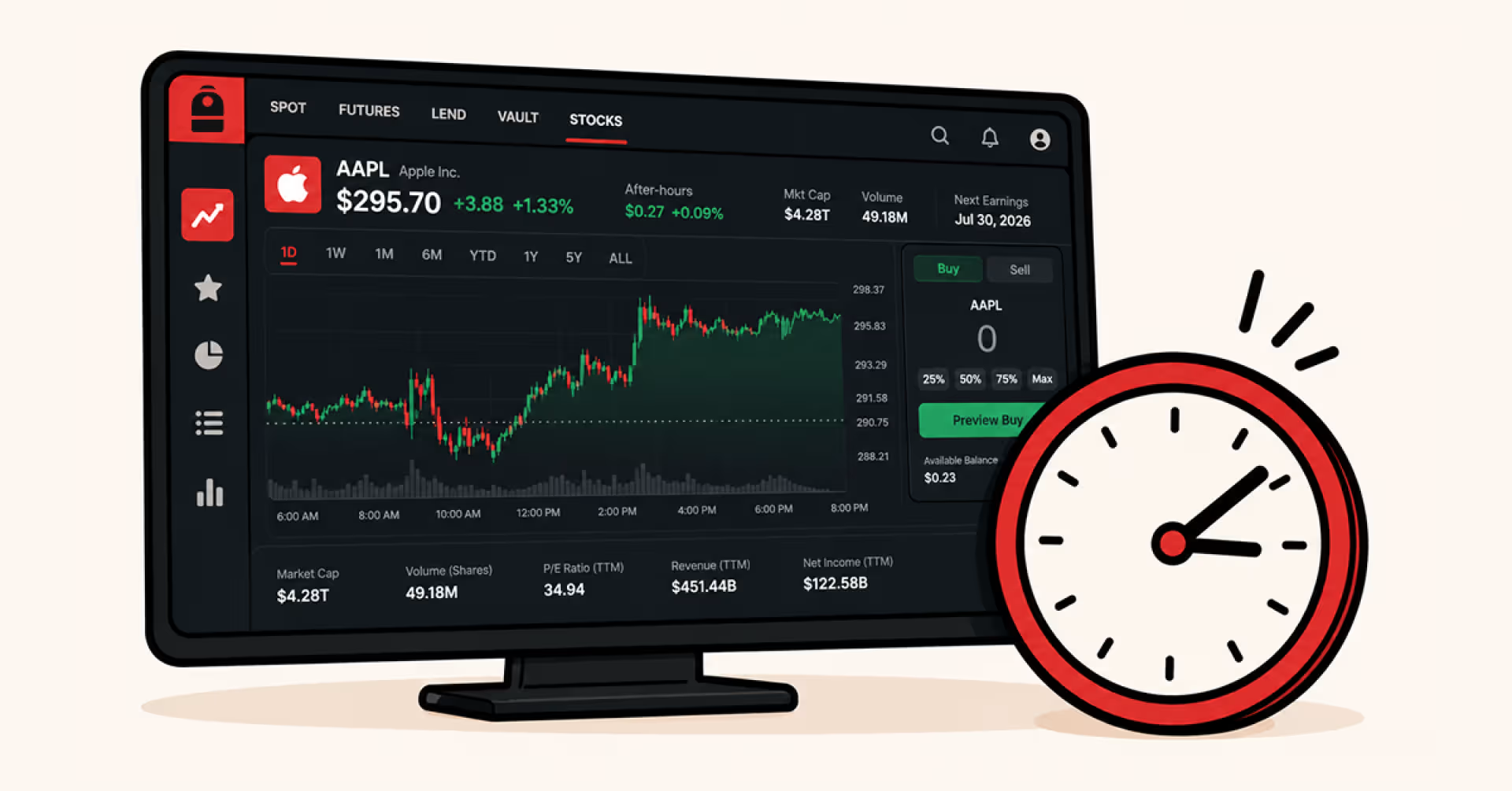
Traditional securities on Backpack trade 24/5 through traditional securities infrastructure, and a select group of tickers trades 24/7, including weekends. Eligible traditional securities can also be tokenized and withdrawn to Solana as tokenized securities issued by Backpack.

Tokenized securities issued by Backpack trade 24/7 on Solana. This is a different market structure from conventional after-hours trading: the tokenized security uses onchain settlement and self-custody, while the traditional security uses brokerage infrastructure.

The distinction matters for readers comparing “extended hours” with “always-on” markets. Longer access can change when a product trades, but it does not eliminate liquidity, volatility, execution, or product-structure risk.

The Bottom Line

After-hours trading lets investors respond to earnings and other news after the regular U.S. market closes. The trade-off is a thinner and less connected market where spreads can be wider, prices more volatile, and execution less certain. When comparing extended-hours stock trading with 24/7 tokenized or crypto markets, distinguish trading availability from liquidity and from the legal structure of the asset itself.

FAQs

Can every stock be traded after hours?

No. Availability depends on the broker, venue, security, liquidity, and the user’s region.

Are fractional shares available after hours?

Sometimes. Platforms can restrict fractional orders to regular hours or support them only for selected securities.

Is the after-hours price the next opening price?

No. It is a live extended-hours quote. The next regular-session opening price can be higher or lower.

Are limit orders risk-free after hours?

No. Limit orders provide price control, but they do not eliminate volatility, liquidity, or execution risk.

了解更多关于Backpack的信息

交易所 | 钱包 | Twitter | Discord | Reddit

免责声明:本内容按“原样”提供,仅供一般信息和教育目的,不作任何形式的陈述或保证。不应将其解释为财务、法律或其他专业建议,也不旨在推荐购买任何特定产品或服务。您应向适当的专业顾问寻求自己的建议。如果文章由第三方贡献者提供,请注意,所表达的观点属于该第三方贡献者,不一定反映 Backpack 的观点。请阅读我们的完整免责声明以获取更多详情。数字资产价格可能波动剧烈。您的投资价值可能上涨或下跌,您可能无法收回投资金额。您对自己的投资决策负全部责任,Backpack 对您可能遭受的任何损失概不负责。本材料不应被解释为财务、法律或其他专业建议。
免责声明:此内容仅供参考,不应被视为财务建议。

相关文章

随时掌握先机
谢谢!您提交的内容已收到!
哎哟!提交表单时出了点问题。

条款

Backpack 严格履行其在《欧盟通用数据保护条例》及其他适用法律法规下保护您个人信息的义务。

提供您的电子邮件地址即表示您已阅读并理解 Backpack 隐私政策,并在此同意 Backpack 及其关联公司收集、使用、披露和处理您的个人信息。

(https://support.backpack.exchange/articles/privacy-policy)