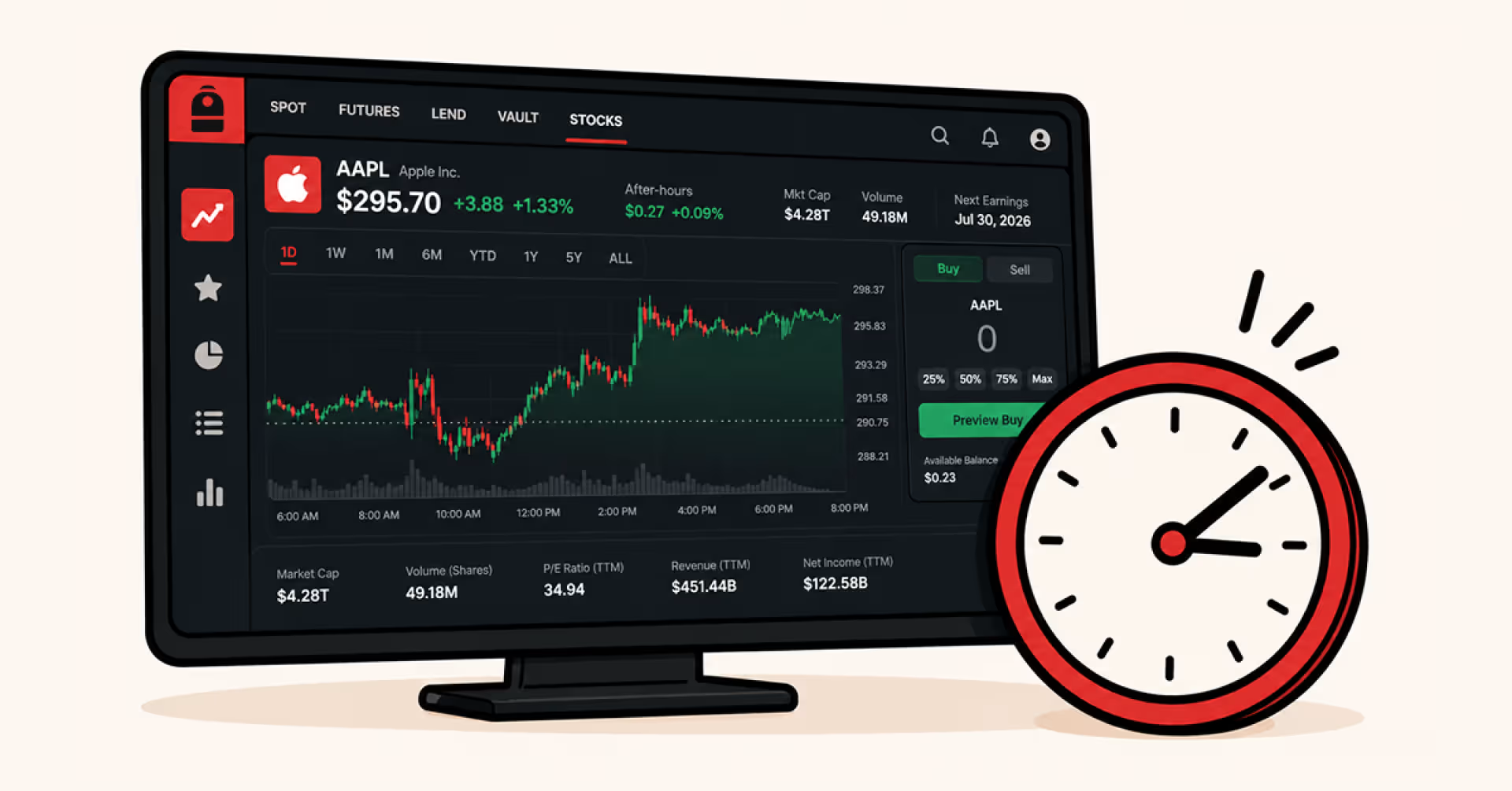

After-hours stock trading is the buying and selling of stocks after the regular U.S. market closes at 4:00 p.m. Eastern Time. It is part of extended-hours trading and takes place through electronic trading venues. Session times, eligible securities, order types, routing, and liquidity depend on the broker or platform.
Key Facts
- Regular U.S. stock-market hours generally run from 9:30 a.m. to 4:00 p.m. ET on trading days.
- Conventional after-hours trading begins after 4:00 p.m. ET; many venues operate until 8:00 p.m. ET, although broker schedules vary.
- After-hours markets usually have lower liquidity, wider bid-ask spreads, and greater price volatility than the regular session.
- Earnings releases, company guidance, mergers, management changes, and macro news can move stocks after the closing bell.
- Limit orders can provide price control but do not guarantee execution.
- After-hours trading is not the same as 24/7 trading: U.S. equities still depend on venue-specific sessions, while many crypto markets operate continuously.
When Does After-Hours Trading Take Place?
Regular U.S. stock-market hours generally run from 9:30 a.m. to 4:00 p.m. Eastern Time, Monday through Friday, excluding market holidays.
After-hours trading starts after the regular close. Many venues run until 8:00 p.m. ET, although some brokers offer shorter sessions. Pre-market trading takes place before 9:30 a.m. ET, while overnight trading can cover additional venue-specific hours.
The exact schedule matters because “extended hours” is not one universal market. Two platforms can offer different securities, order types, prices, and liquidity at the same time.
How Does After-Hours Trading Work?
After the closing bell, orders continue to interact through electronic trading systems. A trade executes only when a compatible buyer and seller are available on a venue the broker can access.
Many brokers restrict extended-hours orders to limit orders. A limit order sets the highest price a buyer will pay or the lowest price a seller will accept. It can prevent an execution outside that price, but it cannot guarantee that the order will fill.
Why Do Stocks Move After Hours?
Stocks often move after hours because companies release material information after the regular session. Earnings, revenue guidance, mergers, product announcements, management changes, and regulatory developments can all change investor expectations.
Economic and geopolitical events can also move prices while the primary U.S. exchanges are closed. The first after-hours reaction is not necessarily the next day’s opening price because new information and new orders can arrive before the regular session begins.
What Are the Main Risks of After-Hours Trading?
Lower liquidity
Fewer buyers and sellers are generally active outside regular hours. Orders may fill slowly, fill only partially, or not execute.
Wider spreads
The difference between the highest bid and lowest ask can widen. A wider spread increases the effective cost of entering or exiting a position.
Greater volatility
A smaller number of orders can create larger price moves. Volatility can be especially high immediately after earnings or breaking news.
Different prices across venues
Extended-hours markets are not always fully connected. The displayed price on one venue can differ from another, and neither price guarantees where the stock will open in the next regular session.
Different order rules
Available securities, accepted order types, routing, and order-expiration rules can differ from regular trading. Check the platform’s extended-hours disclosures before placing an order.
After-Hours Trading Example
Suppose a stock closes the regular session at $100. After an earnings release, the after-hours market shows a $96 bid and a $98 ask.
A limit order to buy at $97 executes only if a seller becomes available at $97 or lower. If the lowest ask remains $98, the order does not fill. The limit controls the maximum purchase price, but it does not eliminate execution risk or prevent the market from moving afterward.
Does After-Hours Trading Change the Official Closing Price?
No. The official closing price comes from the regular-session closing process. Trades completed afterward are reported as extended-hours activity.
An after-hours quote can show how traders are reacting to new information, but it does not determine the next day’s opening price.
Is After-Hours Trading the Same as Overnight Trading?
No. After-hours trading conventionally refers to the period immediately after the 4:00 p.m. ET close. Overnight trading uses additional venue-specific sessions beyond the conventional after-hours window.
A broker may group these sessions together in its interface, so users should check the displayed session and order rules rather than relying only on the label.
Can Non-U.S. Investors Trade U.S. Stocks After Hours?
Some platforms provide eligible non-U.S. residents with access to U.S. extended-hours sessions. Availability depends on residency, identity verification, local rules, the broker, and the security.
Eastern Time also shifts between standard time and daylight saving time, so the corresponding local trading hours can change during the year.
How Is After-Hours Stock Trading Different From Crypto Trading?
Crypto spot markets generally operate continuously, including weekends. U.S. stocks have a primary weekday session, with pre-market, after-hours, and overnight access provided through specific venues.
Continuous trading does not mean constant liquidity. Both crypto markets and extended-hours stock markets can experience wider spreads and sharper price moves during quieter periods.
How Does After-Hours Trading Relate to Backpack Securities?
Traditional securities on Backpack trade 24/5 through traditional securities infrastructure, and a select group of tickers trades 24/7, including weekends. Eligible traditional securities can also be tokenized and withdrawn to Solana as tokenized securities issued by Backpack.
Tokenized securities issued by Backpack trade 24/7 on Solana. This is a different market structure from conventional after-hours trading: the tokenized security uses onchain settlement and self-custody, while the traditional security uses brokerage infrastructure.
The distinction matters for readers comparing “extended hours” with “always-on” markets. Longer access can change when a product trades, but it does not eliminate liquidity, volatility, execution, or product-structure risk.
The Bottom Line
After-hours trading lets investors respond to earnings and other news after the regular U.S. market closes. The trade-off is a thinner and less connected market where spreads can be wider, prices more volatile, and execution less certain. When comparing extended-hours stock trading with 24/7 tokenized or crypto markets, distinguish trading availability from liquidity and from the legal structure of the asset itself.
Learn more about Backpack
Exchange | Wallet | Twitter | Discord | Reddit
Disclaimer: This content is presented to you on an “as is” basis for general information and educational purposes only, without representation or warranty of any kind. It should not be construed as financial, legal or other professional advice, nor is it intended to recommend the purchase of any specific product or service. You should seek your own advice from appropriate professional advisors. Where the article is contributed by a third party contributor, please note that those views expressed belong to the third party contributor, and do not necessarily reflect those of Backpack. Please read our full disclaimer for further details. Digital asset prices can be volatile. The value of your investment may go down or up and you may not get back the amount invested. You are solely responsible for your investment decisions and Backpack is not liable for any losses you may incur. This material should not be construed as financial, legal or other professional advice.