What is a brokerage account
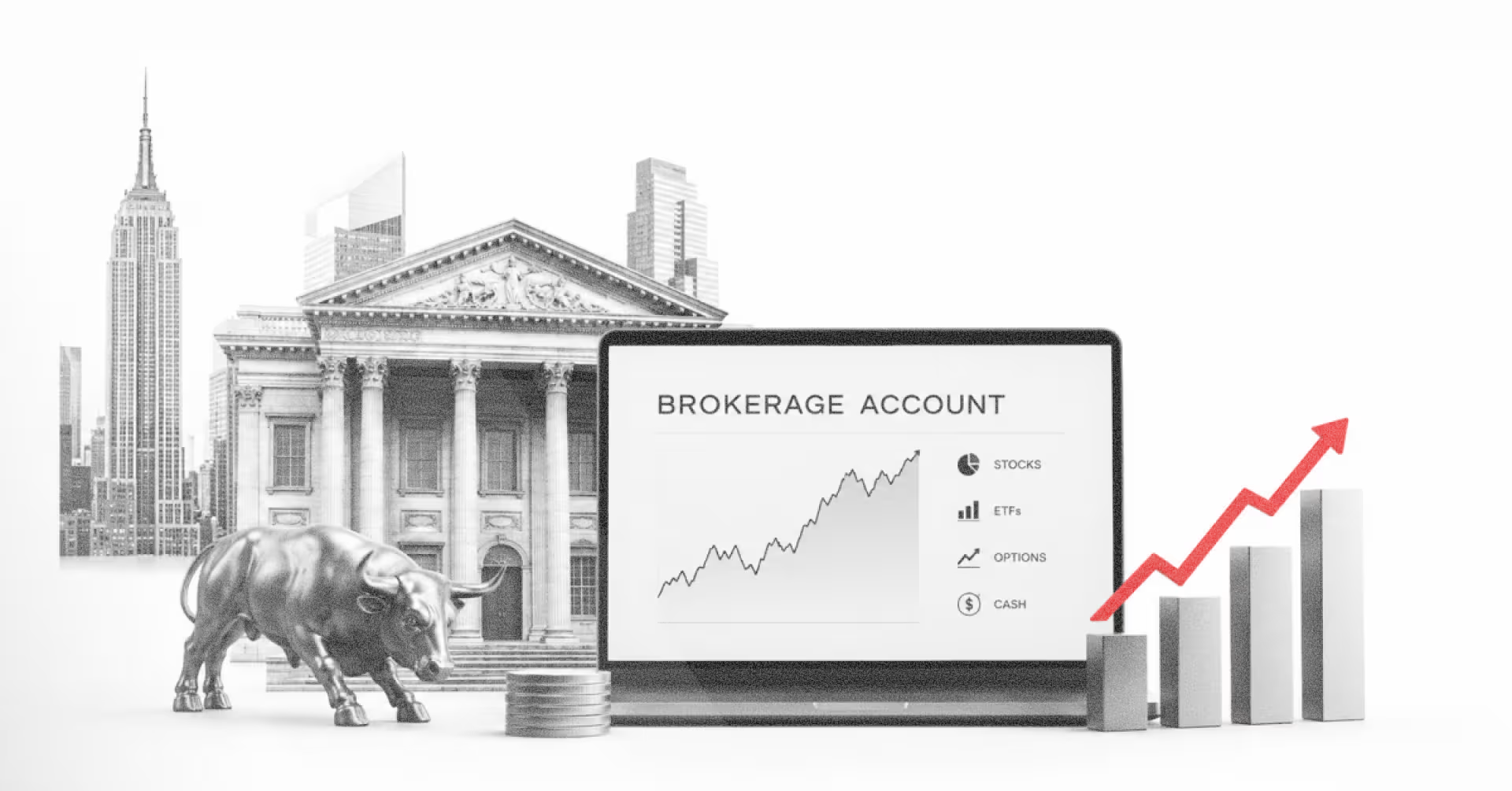
A brokerage account is an investment account that lets you buy, hold, and sell investment products like stocks, exchange-traded funds (ETFs), and bonds. A licensed broker operates the account on your behalf, keeping custody of the securities you own and processing your trades on financial markets. Unlike a bank account that holds cash for spending, saving, or paying bills. A brokerage account holds investments and lets you trade them. Cash you put into a brokerage account is used to buy securities, which then grow or lose value with the market.
How a brokerage account works
A brokerage account operates through a straightforward flow:
Open. You apply with a licensed broker, verify your identity, and agree to the account terms. The broker uses your information to comply with financial regulations and determine which products and features you can access.
Fund. You transfer money into the account from your bank, or on brokers that support it, from a stablecoin wallet. Traditional transfers typically settle in one to three business days.
Invest. You use your account balance to buy stocks, ETFs, or other supported securities. When your order fills, the shares appear as a balance in your account.
Hold. The broker keeps custody of your securities. You receive any dividends and corporate actions without needing to hold physical certificates yourself.
Sell. When you sell, the shares leave your account and the proceeds return as available cash. You can reinvest, keep the cash in the account, or withdraw it.
Types of brokerage accounts
Brokerage accounts vary along a few dimensions.
Cash accounts vs margin accounts. In a cash account, you pay the full amount for each investment purchase using your own funds. This is the standard account type for most retail investors and carries no borrowing risk.
A margin account allows you to borrow money from the broker to buy securities, using the account itself as collateral. Margin can amplify both gains and losses. Not all brokers offer margin for all products.
Individual vs joint accounts. An individual account has one owner. A joint account has two or more owners, typically spouses or family members, often used for shared financial goals or estate planning.
Traditional Brokerage vs Backpack Securities. While traditional brokerages fund exclusively via bank transfers and settle in fiat cash sweeps that typically offer minimal returns, Backpack Securities advances this model by pairing the complete structural trust of a regulated broker-dealer with the modern efficiency of blockchain technology. Investors on the platform experience the exact same ironclad safety, regulatory compliance, and real asset ownership governed as authentic security entitlements offered by legacy brokers. However, Backpack elevates this traditional experience by introducing stablecoin funding rails, native integration with self-custody wallets, optional tokenization of held stocks, and the ability to automatically earn yields up to 6.8% on the entire USD balance. By retaining every protective strength of a traditional brokerage and augmenting it with blockchain infrastructure, Backpack delivers maximum institutional safety alongside the benefits of 24/7 global markets, instant onchain conversion, and a unified portfolio.
Backpack Securities currently supports US-listed stocks and ETFs, spanning individual companies across the market plus ETFs tracking equity indices, commodity products, and regional benchmarks. On Backpack, users can also hold and trade cryptocurrencies alongside stocks in the same account.
How to choose a brokerage account
Five criteria matter most when choosing a brokerage account in 2026.
1. What you can invest in. Stocks and ETFs are standard offerings. Bonds and mutual funds vary by broker. Confirm the broker supports what you plan to buy.
2. Trading hours coverage. Traditional brokers operate only during regular US market hours (9:30am to 4:00pm Eastern, Monday through Friday). Some now offer 24/5 continuous trading. In July 2026, Backpack Securities launched the first 24/7/365 market for real US equities, extending trading through weekends and holidays.
3. Fractional shares. The ability to buy less than a full share. This matters when share prices for individual stocks range from single digits to several thousand dollars.
4. Funding methods. Standard funding is via ACH bank transfer or wire. Some brokers also accept stablecoin deposits, which settle in seconds without a bank intermediary.
5. Yield on idle cash. Not all brokers pay competitive yield on your uninvested cash by default. Some require you to manually opt into a money market fund or pay for a subscription tier. On Backpack Securities, uninvested USD can earn up to 6.8% APY through Auto Lend, which automatically generates yield on idle balances.
How to open a brokerage account
Opening a brokerage account typically takes 15 to 30 minutes online and involves three steps.
1. Identity verification (KYC). Provide legal name, date of birth, government-issued ID, and residential address. Some brokers also ask for employment status or tax residency.
2. Account funding. Transfer your initial deposit via ACH, wire, or stablecoin (where supported). Bank transfers take a few business days; stablecoin deposits settle in seconds.
3. First trade. Place your first order once funds arrive. Orders in liquid stocks during regular hours typically fill within seconds.
Eligibility varies by jurisdiction. Check the broker's supported regions before starting.
Are brokerage accounts safe?
Brokerage accounts carry two types of protection worth understanding.
Broker insolvency protection. Two mechanisms protect brokerage assets from broker failure. First, brokers are required to hold customer securities in segregated custody, separate from the broker's own assets. Second, in the US, the Securities Investor Protection Corporation (SIPC) covers up to $500,000 per account (including up to $250,000 in cash) as a backstop if a member broker fails and there is a shortfall.
Legal ownership framework. Traditional US brokerage accounts hold shares as security entitlements under UCC Article 8, with New York law commonly governing due to DTC's New York location. This grants specific rights including dividends, corporate actions, and the ability to transfer positions between regulated brokers through ACATS and DTCC. Backpack Securities uses the same UCC Article 8 framework.
Verify the broker's regulatory registration and protection details before opening an account.
Learn more about Backpack
Exchange | Wallet | Twitter | Discord | Reddit
Disclaimer: This content is presented to you on an “as is” basis for general information and educational purposes only, without representation or warranty of any kind. It should not be construed as financial, legal or other professional advice, nor is it intended to recommend the purchase of any specific product or service. You should seek your own advice from appropriate professional advisors. Where the article is contributed by a third party contributor, please note that those views expressed belong to the third party contributor, and do not necessarily reflect those of Backpack. Please read our full disclaimer for further details. Digital asset prices can be volatile. The value of your investment may go down or up and you may not get back the amount invested. You are solely responsible for your investment decisions and Backpack is not liable for any losses you may incur. This material should not be construed as financial, legal or other professional advice.